


- Opinion
- 31 de October de 2025
- No Comment
- 14 minutes read
Can inclusive education be exclusionary?

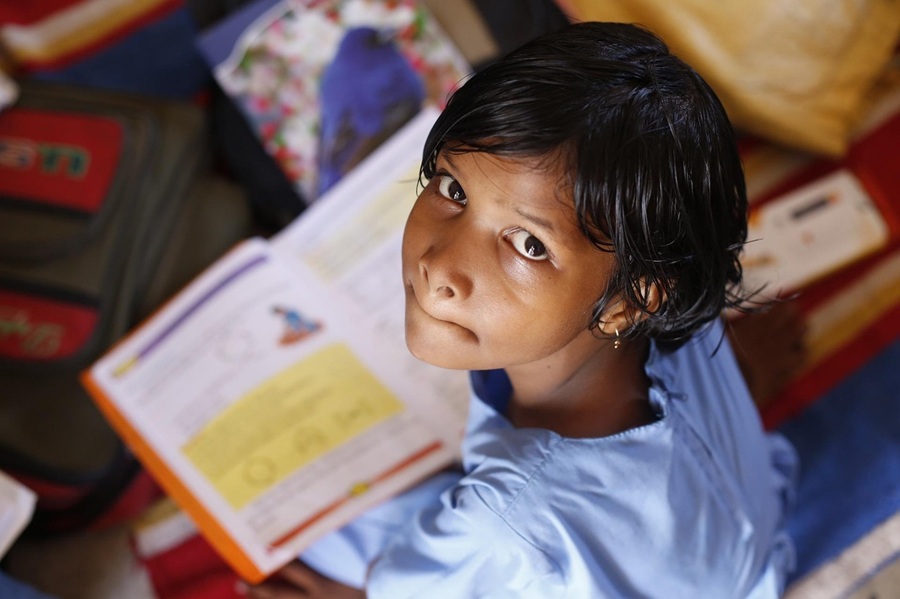
Only a school that ensures all its students learn to read and write can truly claim to be inclusive. / Photo: AkshayaPatra Foundation -Pixabay
Reflections for a truly equitable education
Teaching children to read and write well is the most effective inclusion policy there is


Miguel Ángel Tirado
— “I’ll sign it, Inspector. Please, exclude my son for a short while each day so I can work with him, because I can no longer afford the private therapy centre I take him to once a week for his specific language disorder”. — “I’m afraid we can’t do that”, the form tutor replies. “We follow Universal Design for Learning (UDL,1) — I’m not entirely sure what that entails — and your son progresses in class alongside his peers”. But I am desperate. He is already in Year 4.
This real case led me to question how so-called politically correct inclusion is conceived and applied today. A school may describe itself in its educational project as open, welcoming, and inclusive, yet, without intending to, it may exclude pupils even while they share the same classroom. At a time when more and more students are being labelled — in a perverse therapeutic approach to teaching — one must ask: what if, in the name of inclusion, we are building new forms of exclusion?
The word inclusion has become an educational slogan, rarely subjected to critique for fear of appearing exclusionary. Yet it is essential to define what it truly means to include, and, above all, what pedagogical conditions make it possible. I propose returning to the core of learning: identifying the factor that most determines academic success, and from there analysing the practices that effectively enhance it. Let us first examine the situation.
According to the most recent data from the Ministry of Education (2), 74.1% of students receiving educational support in 2023–24 did so for specific needs other than disability or severe disorders. The most frequent were socio-educational vulnerability (40.7%), learning disorders (27.7%), and mild or moderate language and communication disorders (8.0%).
Although the Ministry does not disaggregate learning disorders by type, clinical literature shows that difficulties in learning to read and write constitute the majority of diagnoses, with dyslexia being the most common, at an approximate prevalence of 80% (3). Moreover, both socio-educational vulnerability and language disorders directly impact reading and writing acquisition. Other less prevalent needs — such as late integration into the education system, delayed maturity, or lack of proficiency in the language of instruction — are also related to linguistic development and essential literacy skills. Thus, almost three out of four educational support needs are directly or indirectly linked to reading and writing difficulties. In other words, most are not severe or inevitable difficulties but preventable ones.
These data invite us to look beyond the classroom. If a large proportion of learning difficulties are avoidable, we must ask which external factors influence their emergence and persistence. Research is conclusive: socioeconomic context remains the most powerful predictor of school performance, closely linked to the development of reading comprehension. This is repeatedly confirmed by international studies such as PISA and PIRLS, which show how students’ socioeconomic and cultural backgrounds explain much of the variation in academic results between and within countries.
Poverty is consistently associated with lower cognitive and linguistic stimulation at home, increasing the risk of developmental delays and subsequent school difficulties. Fortunately, it does not determine destiny: there is no direct cause-effect relationship (poverty = educational need), though a complex web of risk factors accumulates and increases the likelihood of learning obstacles. Understanding this interaction is essential for designing educational policies and practices capable of compensating, from the school, for inequalities of origin.
Furthermore, neuroscience has confirmed that environment leaves its mark on the brain (4). Early experiences, the language children hear at home, and the educational level of parents influence the development of brain areas that support language and reading (5). Social inequality therefore affects not only educational opportunities but also the biological foundations of learning.
Children from vulnerable backgrounds generally hear fewer words, participate in fewer conversations, and receive less positive reinforcement at home than their peers from more advantaged environments (6). Consequently, the language gap begins before children even enter school, and if schools do not intervene, they tend to widen it: the so-called Matthew effect (“to him who has, more will be given” (7)). Children who read more learn more, while those who read less become trapped in a cycle of cumulative disadvantage.
In this context, if schools do not compensate for initial inequalities, who will? It seems hardly inclusive to wait for difficulties to emerge in order to label a dysfunction that could have been prevented — or even worsened — through omission. If we know that most educational needs relate to early literacy difficulties, why does quality teaching of reading and writing not take priority? Paradoxically, in a law that invokes equity and inclusion as fundamental principles, the term literacy is restricted to digital literacy (8).
Teaching reading and writing well is not merely a didactic concern; it is a matter of social justice. When a child does not develop oral language skills or master the basic tools of written language, the rest of the curriculum becomes an insurmountable challenge. When the education system fails to provide effective instruction, what appears to be an individual problem is, in fact, a structural failure.
Reading is not simply decoding letters, but without decoding, reading is impossible. The same applies to writing: without sufficient fluency, written composition and organisation of ideas are hindered. Neither reading nor writing is acquired naturally: they must be taught. Empirical evidence is extensive and consistent: we not only know what fosters learning, but this learning must be explicit, systematic, structured, and sequenced. Discovery-based methods for learning to read or write are ineffective, as the students most disadvantaged by this approach are precisely those with the greatest difficulties.
Every minute counts. Early assessment of phonological awareness — the ability to recognise and manipulate speech sounds — in early childhood education allows intervention before difficulties appear or consolidate. Early detection and intervention are therefore among the most powerful equity policies a school can implement. Without assessment, teaching is blind: future challenges are not identified, and the risk of exclusion rises.
Research consistently shows that explicit and systematic teaching of phonological skills at early ages is highly effective for reading and writing acquisition. Its relevance is such that this component is central to educational intervention across a wide variety of disorders and learning difficulties, regardless of origin: dyslexia, ADHD, delays in reading acquisition, or developmental language disorders. If so, why wait for an educational need to become evident? Why delay the educational response? Teaching well benefits all.
Moreover, comprehension, reasoning, and connecting ideas depend on knowledge. Thus, knowledge acquisition is crucial in school, and vocabulary acquired in early childhood and lower primary is a robust predictor of later academic success. Similarly, to compose written ideas, one must first have ideas; the broader, more diverse, and deeper the vocabulary, the greater the capacity for thinking and expression.
Therefore, if reading and writing are the privileged tools for learning and critical thinking, a school is more inclusive the better it guarantees these skills and ensures a shared culture of knowledge, in which all students have real access to the understanding that allows them to make sense of the world. True inclusion consists of offering opportunities for relevant knowledge and cultural progress to all, regardless of social background or individual characteristics.
In response to the question posed in the title, inclusion can be exclusionary when it becomes an empty slogan, when priorities shift from learning to ideology, when support is mistaken for non-teaching, or diversity is confused with lowering standards. Inclusion that does not teach, excludes. Inclusion is measured not by what a law or school project states, but by how many students actually learn and progress. From this perspective, teaching reading and writing well is undoubtedly the most powerful — and most humane — way to open the door of knowledge to all.
A school that, despite raising the banner of inclusion, fails to systematically develop phonological skills in early childhood to avoid structured methodologies; that adopts a whole-language approach as its primary reading method for being more “innovative”; or that does not rigorously assess student progress for fear of affecting emotional well-being, is, in fact, excluding. Worse still, it may be aggravating latent learning disorders or even creating new educational needs.
Conversely, a school that emphasises prevention, early intervention, and explicit, sequenced, and progressive teaching of reading and writing, using these tools as means to acquire knowledge, promotes equity.
Only a school that ensures all its students learn to read and write can truly claim to be inclusive.
Notes and references:
(1) Despite its widespread adoption in recent educational legislation, Universal Design for Learning (UDL) still lacks a solid and consistent empirical foundation to support some of the most popular assumptions associated with it —for instance, the idea that each pupil learns best when they can choose their preferred format and adapt access to information or the expression of what they have learned to their supposed learning style. I conducted an in-depth analysis of this issue: Tirado Ramos, M. A. (2023). Decodificando el Diseño Universal para el Aprendizaje: ¿Qué evidencia empírica lo respalda? Supervisión 21, 68(68). https://doi.org/10.52149/Sp21/68.3
(2) Ministerio de Educación y Formación Profesional (2024). Estadística de las enseñanzas no universitarias. Alumnado con necesidad específica de apoyo educativo. Curso 2023-2024. Madrid: Subdirección General de Estadística y Estudios. https://www.educacionfpydeportes.gob.es/eu/servicios-al-ciudadano/estadisticas/no-universitaria/alumnado/apoyo.html
(3) Gatell Carbó, M. (2022). La dislexia evolutiva: revisión de la evidencia y de las prácticas de intervención educativa. Pediatría Integral, 26(1), 21–33. https://www.pediatriaintegral.es/publicacion-2022-01/trastorno-especifico-del-aprendizaje/
(4) Taylor, E. K., Abdurokhmonova, G. y Romeo, R. R. (2023). Socioeconomic Status and Reading Development: Moving from «Deficit» to «Adaptation» in Neurobiological Models of Experience-Dependent Learning. Mind, brain and education : the official journal of the International Mind, Brain, and Education Society, 17(4), 324–333. https://doi.org/10.1111/mbe.12351
(5) Noble, K. G., Houston, S. M., Brito, N. H., Bartsch, H., Kan, E., Kuperman, J. M., Akshoomoff, N., Amaral, D. G., Bloss, C. S., Libiger, O., Schork, N. J., Murray, S. S., Casey, B. J., Chang, L., Ernst, T. M., Frazier, J. A., Gruen, J. R., Kennedy, D. N., Van Zijl, P., Mostofsky, S. y Sowell, E. R. (2015). Family income, parental education and brain structure in children and adolescents. Nature neuroscience, 18(5), 773–778. https://doi.org/10.1038/nn.3983
(6) Hart, B. y Risley, T. R. (1995). Meaningful differences in the everyday experience of young American children. Paul H Brookes Publishing. https://psycnet.apa.org/record/1995-98021-000. This pioneering longitudinal study revealed the unequal linguistic exposure of children according to their family’s socioeconomic background and its impact on later language development.
Gilkerson, J., Richards, J. A., Warren, S. F., Montgomery, J. K., Greenwood, C. R., Kimbrough Oller, D., Hansen, J. H. L. y Paul, T. D. (2017). Mapping the Early Language Environment Using All-Day Recordings and Automated Analysis. American journal of speech-language pathology, 26(2), 248–265. https://doi.org/10.1044/2016_AJSLP-15-0169. This research confirmed the differences in both the quantity and quality of children’s language, highlighting the importance of conversational turns as a predictor of cognitive development.
Gilkerson, J., Richards, J. A., Warren, S. F., Oller, D. K., Russo, R., & Vohr, B. (2018). Language Experience in the Second Year of Life and Language Outcomes in Late Childhood. Pediatrics, 142(4), e20174276. https://doi.org/10.1542/peds.2017-4276 This study showed that the frequency of verbal interactions between 18 and 24 months of age predicts linguistic and cognitive abilities a decade later.
(7) Stanovich, K. E. (1986). Matthew effects in reading: Some consequences of individual differences in the acquisition of literacy. Reading Research Quarterly, 21(4), 360–407. https://doi.org/10.1598/RRQ.21.4.1
(8) “At this stage, the process of digital literacy begins (…)” p. 12 del Real Decreto 95/2022, de 1 de febrero, por el que se establece la ordenación y las enseñanzas mínimas de la Educación Infantil. Boletín Oficial del Estado, 28, de 2 de febrero de 2022. https://www.boe.es/buscar/act.php?id=BOE-A-2022-1654
Source: educational EVIDENCE
Rights: Creative Commons