


- HistoryHumanities
- 19 de May de 2026
- No Comment
- 5 minutes read
Nativitat Yarza Planas, teacher, first female mayor and militiawoman

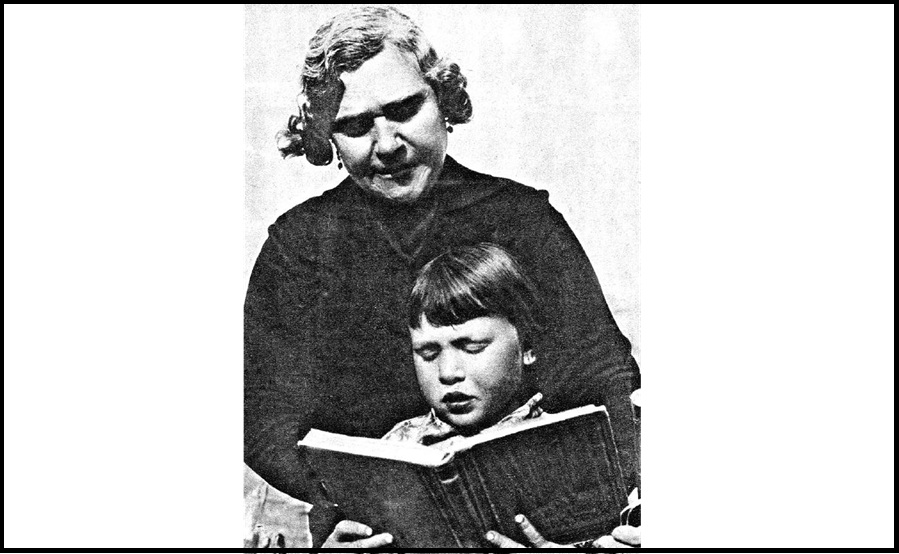
Wikimedia / originally posted to Flickr as La pucelana Natividad Yarza Planas [ march 1934, the first female mayor]


Soledad Bengoechea
Nativitat Yarza (Valladolid, 1872 – Tolosa de Llenguadoc, 1960), a schoolteacher by profession, became Spain’s first female mayor and was, in every sense, an extraordinary woman. Extraordinary for attaining the office of mayor in a society overwhelmingly dominated by men. Extraordinary for doing so in a rural setting (until then, the few women who had occupied similar positions had merely presided over interim management committees, such as those established during the Dictatorship of Primo de Rivera). Extraordinary, finally, because at the age of sixty-four she went to the front as a militiawoman.
Natividad was born on a symbolic date: 24 December 1874, Christmas Eve – perhaps this is why she was given the name Natividad. Spain was then governed by the First Spanish Republic, proclaimed on 11 February 1873. The regime proved short-lived, surviving only until 29 December 1874, when the pronunciamiento of General Martínez-Campos ushered in the Bourbon Restoration. The first republican experiment in Spanish history was brief and marked by acute political instability. During its first eleven months, four Presidents of the Executive Power succeeded one another, all belonging to the Federal Democratic Republican Party. On 3 January 1874, General Pavía – commander of the New Castile military region, headquartered in Madrid – entered the Spanish Cortes accompanied by the Civil Guard and carried out a coup d’état that left the First Republic and its federal project fatally weakened. The coup paved the way for the establishment of a Unitary Republic under the dictatorship of General Francisco Serrano, leader of the conservative constitutional party.
When Natividad was only two years old, her family settled in Barcelona. In 1904, already aged thirty-two, she took an important step by beginning her teacher training. Two years later, she embarked upon her career as a teacher in various schools across Catalonia and Aragon.
A committed republican, Natividad joined the Radical Socialist Republican Party following the proclamation of the Second Republic in 1931. There she met Marcel·lí Domingo – who had taken part in the founding of ERC (Esquerra Republicana de Catalunya), though he ultimately chose to remain within the Radical Socialist Republican Party, whose supporters were particularly hostile towards Catalan nationalism. Domingo, the party’s leader, would become both a mentor and a close friend to her. In 1931, together with Irene González, Júlia Balagué, Magdalena Alabart, Josefa Ferrer, Francesca Quelart, Teresa Sabadell and Isabel Jornet, Yarza promoted the creation of the Asociación Femenina Republicana Victoria Kent. Kent herself, born in Málaga in 1891, had been the first woman to practise law in Spain and the first woman in the world to appear before a Supreme Military and Naval Court.
After the defeat of the left-wing parties in the elections of November 1933, the Radical Socialist Republican Party dissolved. Natividad nevertheless remained deeply engaged in political life and stood for the mayoralty of Bellprat, where she worked as a teacher, in the municipal elections of 1934, heading the list of Esquerra Republicana de Catalunya. In doing so, she achieved the distinction of becoming the first woman in Spain to be elected mayor through universal suffrage.
Two years later, in a Europe increasingly overshadowed by the rise of fascism, sections of the Spanish military rebelled against the young Republic. Natividad, already sixty-four years old, volunteered to fight in defence of the constitutional order. She enlisted in the column led by José del Barrio, composed of PSUC militants, which departed from Barcelona on 24 August 1936. She went to the Aragon front, in the area around Tardienta and Huesca, where she undertook supply duties for the trenches.
Source: educational EVIDENCE
Rights: Creative Commons