


- Opinion
- 5 de October de 2026
- No Comment
- 7 minutes read
There is no education without ambition

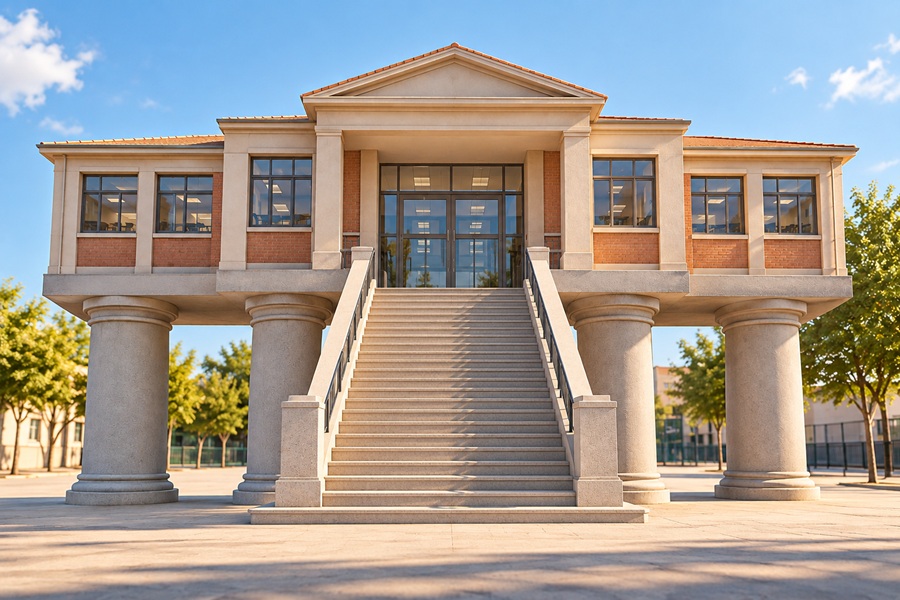
Image generated using AI.
THE GREAT SCAM. Opinion column by David Cerdá


If there is one word that has suspiciously disappeared from educational vocabulary, it is this: ambition. We are well supplied with “motivation”, “empowerment” and “employability”, but to aspire—to know more, go further, master what is difficult, stop being who one is in order to become someone better—is a verb that has fallen out of use. Yet education without ambition amounts to almost nothing. Ambitio comes from ambire: to go around, traverse, go here and there in search of something; this was the term the Romans used for the bustle of someone going around the city seeking votes and honours.
Before it became a sin, ambition was literally movement towards what one does not have. An ambitious education consists precisely in that: setting someone in motion towards their highest potential.
There is a cruelty in demanding too much, when the impossible is demanded or those who cannot keep up are abandoned. But there is also a cruelty of condescension, more presentable because it disguises itself as empathy. It consists in lowering the bar while congratulating oneself on being so sensitive. The truth is that the vulnerable must be given more, not less. More teachers, more time, more grants, better classrooms, books, additional support, guidance, material security, whatever is needed; but they must also be held to high standards. The child of a cultured and affluent family will survive a mediocre school—at home, every shortfall will be made up for—but not the child who comes from what Montero Glez calls the bottom end of life’s slide. Sending a vulnerable young person into the labour market with a qualification certifying knowledge that no one had the courage to demand of them is not inclusion but a swindle; condescension towards the disadvantaged is lollipop classism. For the vulnerable, a pass given as a gift is a promissory note for misery.
Ambition is, then, a teacher’s duty. Anyone who teaches takes on a particular obligation: to take the other person’s potential seriously. Sometimes that means supporting them, repeating an explanation, finding another way or giving more time; at other times, saying “this still isn’t good enough” and handing the work back or failing them. There is a particular nobility in refusing to lower standards. The teacher who makes reasonable demands and refuses to lower standards on the basis of social background knows what they are doing.
In March 1794, just a few days before his death, Condorcet wrote to his daughter that, without a mind formed, extended and strengthened by methodical studies, fatigue and weariness with one’s own mediocrity would eventually prevail. Here, the reader finds three verbs that promise no comfort. Condorcet also believed in human perfectibility and understood education as the means by which we progressively emancipate ourselves from ignorance. I do not know when we decided that such confidence in human possibilities, intrinsic to genuinely republican education, was inhumanly aggressive.
Part of that ambition has to do with the kind of work one can aspire to. In Stand and Deliver, Jaime Escalante insists on teaching advanced calculus to Latino pupils at a poor high school in Los Angeles. What is interesting is not the familiar Hollywood message of overcoming adversity; it is the moral premise: their background does not entitle the teacher to expect less of them. But if our ambition is confined to employability, we fail to honour our profession. Condorcet points out that our mission is twofold, technical and moral: to form a competent workforce and enlightened citizens. John Stuart Mill likewise insists that the university should not simply produce lawyers, doctors or engineers, but capable, well-educated human beings, prepared to combat fallacies, seek the truth and form their own judgements. That is the other side of ambition, and perhaps its greater part: that the electrician be more than an electrician, the doctor more than a doctor and the engineer more than an engineer. That they should know how to find information online without being herded, enjoy Bach or Galdós if they please, detect a statistical falsehood, understand a profound aspect of human tragedy, argue without repeating mantras and participate judiciously in public life. Schools, secondary schools and universities are much more than institutions devoted to workforce training.
Let us champion an ambitious school. Ambitious first and foremost in what it demands of itself: it should demand funding, stability, good teachers, authority, time and all the means it needs. And ambitious immediately afterwards in what it demands of its pupils, because it would be obscene to demand a great deal only to offer them little. There is no contradiction between caring and demanding; in education, genuine care includes high expectations. Nor are equality and excellence opposed; excellence treated as something reserved for the rich is precisely a factory for producing inequality. Let us once again back young people who are intellectually and emotionally robust, civically engaged and armed with language and knowledge to become fully human. We still have time to trade the post-PISA bewilderment for a return to our forgotten ideal of civilisation. An ideal is not a utopia; it is an indispensable beacon. “Ah, but a man’s reach should exceed his grasp, / Or what’s a heaven for?” writes Robert Browning in his poem “Andrea del Sarto”
Source: educational EVIDENCE
Rights: Creative Commons