


- Cover
- 21 de October de 2026
- No Comment
- 22 minutes read
Marta Mazzocco: “Mathematics is, to a large extent, a game”
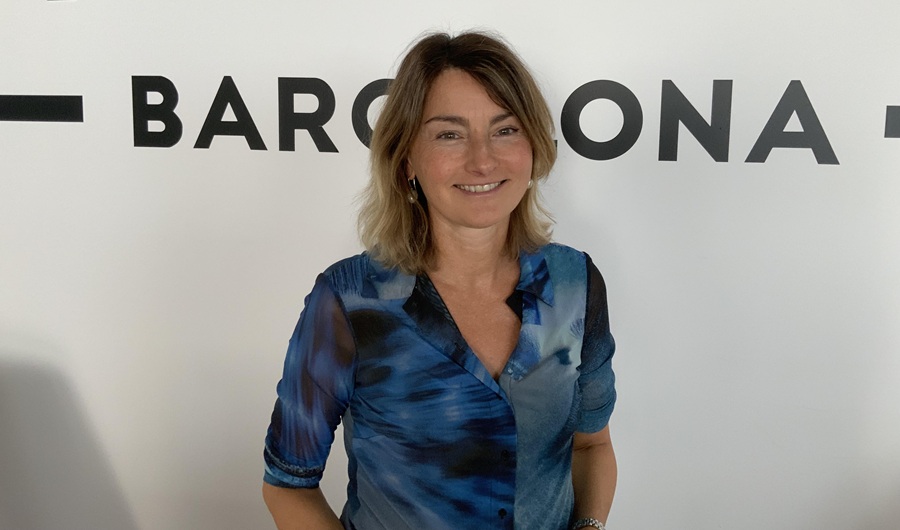
Marta Mazzocco. / Photograph courtesy of the author.


Since 2024, Marta Mazzocco has been an ICREA Research Professor in Barcelona at the Universitat Politècnica de Catalunya (UPC), where she co-founded the SYMCREA excellence unit with Eva Miranda. A mathematical physicist, she works on integrable systems at the intersection of analysis, geometry, mathematical physics and algebra. She received her PhD from SISSA in Trieste in 1998 and subsequently held positions at MSRI in Berkeley, Oxford, Cambridge, Manchester, Loughborough and Birmingham, where she founded the Geometry and Mathematical Physics group.
She has secured around €2 million in research funding, was a European Mathematical Society (EMS) Distinguished Speaker at the Poisson 2024 conference, and is a member of the scientific advisory board of arXiv, the prestigious open-access scientific repositiory.
Marta, first of all, thank you very much for speaking to Educational Evidence. To begin with, could you tell us a little about your career and how you came to work in mathematics and, in particular, to pursue research in Barcelona?
I have always liked mathematics. In my first year of primary school, I had a very young teacher who got us playing with set theory, and that is where my love of the subject began. Although my parents practically forced me to attend the classical lyceum, traditionally considered the best kind of school in Italy, I decided to study physics. I arrived completely unprepared: my classmates talked about epsilons and deltas, while I barely knew what a function was! During my PhD, I met my husband, who was then a postdoc in statistical mechanics. When it came time to apply for postdoctoral positions, we looked at a map of the world together and put little flags in the places where each of us had colleagues in our field. There were three places where our flags overlapped: the United States, the United Kingdom and Japan. Since we felt deeply European, we chose the UK (although I spent eight months in Berkeley), and we ended up living there for 25 years! A lot changed during that time…
Did Brexit affect you?
It certainly did. Fourteen years of Conservative government seriously damaged the economy and left universities in a very precarious position. Brexit normalised certain xenophobic attitudes, and the atmosphere became difficult to bear. We began looking for a way out, and ICREA offered me one: a fantastic job in an extraordinary city. Here, together with Eva Miranda, I was able to set up SYMCREA, an excellence unit at the interface between geometry and mathematical physics, and to find a highly stimulating scientific environment in a city where life is a pleasure.
You describe your field as “mathematical physics” and work on problems motivated by physics but leading to abstract mathematical structures. What exactly is mathematical physics, and how does it differ from pure mathematics or theoretical physics?
That is a difficult question, because the boundaries are not clear-cut. I would say that theoretical physics seeks to build models that explain and predict natural phenomena, and often using methods that are not mathematically rigorous but nevertheless work. Pure mathematics, by contrast, develops structures for their own sake, exploring their internal coherence and beauty, without needing an external motivation. Mathematical physics lies between the two. It starts from problems arising in physics, such as equations, symmetries or models, and studies them with full mathematical rigour. The fascinating thing is that, in doing so, geometric, algebraic and analytical structures of unexpected beauty emerge. They fit together in an almost providential way, making the problem solvable in some sense. That is precisely the essence of integrable systems, my area of research.
“Unexpected beauty is the moment when structures that seemed to belong to different worlds turn out to be the same thing, seen from different angles”
What is this “unexpected beauty” that you say you look for when solving problems?
For me, unexpected beauty is the moment when structures that seemed to belong to different worlds turn out to be the same thing, seen from different angles. You start with a specific problem, such as a nonlinear differential equation, and suddenly the geometry of a symmetry group, an algebraic structure or a construction inspired by physics emerges, with everything fitting together in a way no one could have foreseen. That feeling that “this cannot be a coincidence” is what I call beauty.
Can beauty also guide us towards new discoveries? Could you give an example?
One example that shaped my career was my doctoral thesis. I was studying the algebraic solutions of the sixth Painlevé equation, a difficult nonlinear differential equation, and it turned out that they could be classified using reflection groups — groups generated by geometric reflections, as in the symmetries of regular polyhedra such as the icosahedron. So a problem in analysis ended up speaking the language of geometry and algebra, which no one had expected…
So, to answer your first question, yes, I believe beauty can guide discovery. When a structure is too elegant to be accidental, it often suggests that there is a deeper theory behind it that we have yet to understand. Many mathematicians and physicists have followed that intuition, and it often works. Beauty is a compass, though, not a proof: it tells you where to look, but then you have to do the rigorous work to check that your intuition was right. Sometimes what seemed beautiful turns out to be false, and that too is part of the job.
“Sometimes what seemed beautiful turns out to be false, and that too is part of the job”
A significant part of your career has been devoted to the Painlevé equations you mentioned, which have very rich mathematical properties. What is special about these equations, and why do they remain important more than a century after they first appeared?
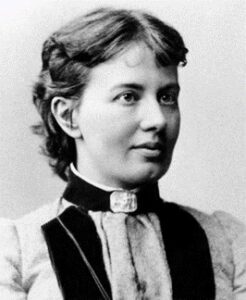
To understand the Painlevé equations, we have to go back to Sofia Kovalevskaya in the late nineteenth century. While studying the motion of a spinning top (a rigid body rotating about a fixed point under gravity), she investigated when a system of nonlinear differential equations could be considered integrable. Her approach was to examine the solutions as functions of complex time and determine whether they could be represented locally by Laurent series, with movable singularities restricted to poles. This analysis led her to discover a new integrable case, which now bears her name. It was a profound way of identifying integrability: not by looking at the form of the equations, but at the analytic behaviour of their solutions.
But they are called the Painlevé equations, aren’t they?
Soon afterwards, Paul Painlevé and his collaborators applied this idea to second-order nonlinear differential equations, asking which ones had the property that their movable singularities were always poles — that is, they had no movable branch points. Their work led to the six Painlevé equations, numbered I to VI, whose solutions are known as the Painlevé transcendents. For nonlinear equations, these play a role comparable to that of classical special functions, such as Bessel and Airy functions, in the theory of linear equations. What makes these equations special is that, despite being nonlinear, they have an extraordinarily rich structure. They can be described in terms of isomonodromic deformations of linear differential systems, in which certain monodromy data remain constant. This connects them with the geometry of moduli spaces, symmetries associated with reflection groups, and algebraic structures such as double affine Hecke algebras, which are among the subjects I work on.
This is getting a bit advanced, starting with the spinning top… (laughs). For readers without a mathematical background…
They remain important more than a century later because they continue to appear in very different contexts: random matrix theory, statistical mechanics, quantum gravity, string theory and integrable systems. They also continue to raise open questions and have applications in many fields, including quantisation and problems related to mirror symmetry. This is why they continue to attract new generations of researchers.
Fascinating. Your research reveals creative connections between forms and objects that, at first sight, seem to belong to different worlds. How creative and rewarding is it to discover such connections in research?
For me, it is one of the greatest satisfactions of this profession, and I think it is also where the most creative part of mathematics lies. AI companies such as OpenAI seem to think that mathematical research consists of following rules and performing calculations, or that its aim is to prove a conjecture or solve a famous problem. But the proof itself does not interest me. What matters to me is the method: if solving a problem requires inventing new tools, looking at things differently and opening up a path that others can follow, then the problem is worth tackling. If, on the other hand, the solution comes from a technical argument, with no new ideas and no wider use, I am indifferent to it, even if the result is correct.
“What matters to me is something else: realising that two objects that seemed to have nothing to do with each other are actually one and the same, seen from different angles”
And is that what makes it creative?
What matters to me is something else: realising that two objects that seemed to have nothing to do with each other are in fact two different ways of looking at the same thing. That is where powerful methods emerge, because they bridge two worlds and allow techniques to be transferred from one to the other — and no algorithm can prescribe that. It takes imagination, intuition and sometimes a great deal of patience, because the insight often comes after spending a long time thinking about a problem without making any apparent progress.
Pierre Deligne put it very simply in an interview after receiving the Abel Prize: in mathematics, “it is always very nice when two different frames of mind come together”. He explained that in algebraic geometry one can draw on the intuition of algebra, where equations are manipulated, and that of geometry, where figures are drawn; what is fruitful is to bring the two to bear on each other. That is exactly the experience I am talking about.
But more generally, beyond those personal moments of ecstasy, research today is a social, team-based endeavour, isn’t it?
Yes, it is profoundly collective work. Mathematics has a very long tradition of this. Bertrand Russell describes the community founded by Pythagoras as a shared way of life in which men and women were admitted on equal terms. Property was held in common, and even scientific discoveries were regarded as collective. I like to think that some of that spirit is still alive. These connections are almost never made by one person alone: they emerge from conversations with colleagues working in geometry, algebra, analysis or physics, each of whom brings a different way of looking at things. That is why I think it is so valuable to build groups in which these disciplines can engage with one another, as we have tried to do in SYMCREA.
“Teichmüller theory studies precisely this: the set of all possible geometric shapes that can be given to the same surface”
In 2008, you began working on Teichmüller theory and later on its quantum version. How would you explain to a non-mathematician what Teichmüller theory studies and what it means to “quantise” a structure? Is it related to quantum computing?
Imagine the surface of a doughnut, or a pretzel with two holes. For a topologist, all versions of that surface are “the same”: you can stretch and deform it without tearing it. But if you want to measure it, using distances and angles, there are many different ways to do so: a doughnut can be fat or thin, with a large or small hole. Teichmüller theory studies precisely this: the set of different conformal structures that can be given to the same surface. It is like a map in which each point represents a different shape, and two points are close together if the shapes are similar.
A shared map…
Exactly, but what is surprising is that this space is a very rich mathematical object. For example, describing a conformal structure on a surface with two holes requires six real parameters, and the space of all such structures has its own geometry, with symmetries arising from the different ways the surface can be mapped onto itself. At the same time, these structures can be described algebraically, connecting the theory with hyperbolic geometry, symmetry groups and differential equations. The theory also has applications in physics: surfaces can represent, for example, the worldsheets traced out by strings as they evolve through spacetime, and Teichmüller theory provides a natural framework for studying the possible geometries of these surfaces.
And how do you connect it with quantum theory?
The simplest way to explain quantisation is to think of it as adding information. Imagine a restaurant with ten tables. One day, the owner receives two bookings for six people; on another day, six bookings for two people. In both cases, there are twelve diners, but the number of free tables is not the same: in the first case, eight tables remain free; in the second, only four. Ordinary multiplication — two times six or six times two — only sees the total number of people and cannot distinguish between the two situations. What is missing is additional information, and quantisation consists precisely in adding it.
The product is deformed into a series of terms: the first remains the usual product, that is, the total number of diners, while the second takes into account how many tables are left free. As a result, the order of the factors begins to matter: “two bookings of six” and “six bookings of two” are no longer the same. This is the phenomenon known in quantum physics as non-commutativity, and the parameter that measures how far we move away from the ordinary product is, roughly speaking, Planck’s constant.
“The simplest way to explain quantisation is to think of it as adding information”
I’ll remember that example. On a different subject, why do you think so many mathematicians are leaving academia to work in banks or consultancies these days? Is research so poorly paid, or are those sectors simply much better paid?
I think both are true, but money is not the whole story. Research is less well paid than jobs in banks or consultancies, especially at the beginning of a career, but the biggest factor is the personal sacrifice it demands. A young mathematician often spends years moving from one temporary contract to another, with enormous uncertainty about what will happen when each one ends. And that often means moving to another country, or even another continent, every two or three years, with all that entails for partners, family and friends. Banks and consultancies, by contrast, offer better salaries and, above all, security and stability; mathematicians are also highly valued in those sectors. I am not surprised that many people, after a PhD or a couple of postdocs, decide that taking that route is worthwhile. It seems a perfectly reasonable decision to me.
And what keeps you in research?
Staying in research requires a great deal of passion, as well as ability and a little luck. But that passion is fuelled by something very powerful: the joy and exhilaration that mathematics brings are immense. Finally understanding something that had eluded you, seeing an unexpected connection emerge or discovering a new idea fills you with an energy that few professions can offer. And being able to devote your life to this, surrounded by colleagues and students who share the same curiosity, is an immense privilege. So despite the difficulties, it has been worth it for me, and I continue to encourage anyone who feels that calling to give it a try.
We are also living at a time when artificial intelligence has made a major entrance into mathematics. Do you think AI could change the way mathematicians conduct research?
Yes, I think AI is already changing the way we work, although in a more modest and practical way than is often claimed. I mainly use it for three things. The first is symbolic and computational support: checking calculations that we used to do by hand or with traditional computer algebra tools, spotting errors more quickly and suggesting alternative simplifications. The second is reading the literature: in my field, different areas overlap and often use similar but distinctive terminology, and AI can help me digest and connect technical papers from several subdisciplines much faster than I could by reading them all myself. The third is the more routine side of writing: correcting typos, checking references and adapting a text to the precise format required by a journal. These tasks do not require new ideas, but they take up a great deal of time, and that is where these tools are useful to me. What distinguishes them from earlier tools such as Mathematica or arXiv search engines is that they combine natural-language processing and reasoning with technical and symbolic capabilities in a single workflow, reducing the effort involved in constantly switching between calculation, reading and writing.
Then there are recent cases involving the Navier–Stokes equations, or the AI-assisted discovery of various new structures or conjectures, announced by some companies…
I am very sceptical about recent announcements by AI companies claiming to have solved open problems. I refuse to call them papers: they are mostly press releases and, to a large extent, publicity stunts. They often consist of a series of claims unsupported by any logical argument. And even when there is a logical argument, it comes back to what I said earlier: applying rules and carrying out calculations. They do not invent new methods or introduce new ideas, and to me that is what gives a solution and a proof their value.
What do you think will remain uniquely human in mathematical discovery, and what will become the domain of machines?
The most creative aspects will remain human: deciding which questions are worth asking, seeing that two different worlds are connected, and creating a new method that others can then use. Machines will increasingly take on calculations, checking and searching, leaving us more time to think. We will see how far they can go, but so far I have not seen anything resembling a new idea.
“Machines will increasingly take on calculations, checking and searching, leaving us more time to think”
For teachers: do you think mathematics lessons motivate students, or is the subject still taught as something very difficult and boring? What would you recommend to mathematics teachers?
I think a great deal of progress has been made over the past twenty or thirty years. There is now much more effort to bring mathematics closer to everyday life and to motivate students, and that shows. There is still work to do, and in some classrooms mathematics is still presented as something difficult and boring, but the trend is positive. My main recommendation to teachers would be to put the playful side of mathematics at the centre. Mathematics is, to a large extent, a game: there are puzzles, challenges, surprising patterns and the pleasure of discovering that something fits together. That happened to me in my first year of primary school, when a very young teacher got us playing with sets, and that is where my love of the subject began. A good teacher can awaken that curiosity in any child, and once it is awakened, the effort required to learn stops being a burden and becomes part of the fun.
What advice would you give students who get stuck when doing mathematics?
The first thing I would tell them is that getting stuck is almost never a question of ability. It often stems from a bad experience: a teacher who presented mathematics as a set of rules to memorise, left no room for mistakes or made anyone who asked a question feel stupid. If that has happened to you, it is not your fault. It is important to understand this, because anyone who believes they are “no good at maths” shuts the door on themselves before they have even tried.
That does a great deal of harm in education, of course.
I would then tell them that mathematics is built step by step, and that a gap in what came before can block everything that follows. If you lose your way, go back without feeling embarrassed to the point where you still understood. I arrived at university completely unprepared myself: my classmates talked about epsilons and deltas, as I mentioned earlier, and I barely knew what a function was. That did not stop me from becoming a mathematician. But I had to go back and build up the foundations. I would also tell them to ask questions—even ones that seem silly — and encourage them to allow themselves to make mistakes. Mathematicians get things wrong all the time, and there is no discovery without failed attempts. Finally, I would urge them to look for the playful side of mathematics: puzzles, challenges and patterns. When mathematics stops being an obligation and becomes a game, the block often begins to lift.
Finally, after years of working on highly abstract problems, is there a subject or problem that still surprises or excites you as much as when you started?
Always! That sense of surprise has never faded for me: whenever I understand something new or see an unexpected connection emerge, I feel the same excitement I felt at the beginning. I think that is what keeps me in this profession. The day that stops happening, I will retire and turn to other things that bring me joy, such as cooking or playing mahjong. Fortunately, that day has not yet arrived.
If I may say so, you can see that passion in your eyes. Marta, thank you very much for your time.
You’re very welcome, and thank you. My best wishes to all the readers of Educational Evidence.
Source: educational EVIDENCE
Rights: Creative Commons