


- History
- 18 de September de 2026
- No Comment
- 21 minutes read
150 years of the Institución Libre de Enseñanza (II). The regeneration project of Spanish liberalism

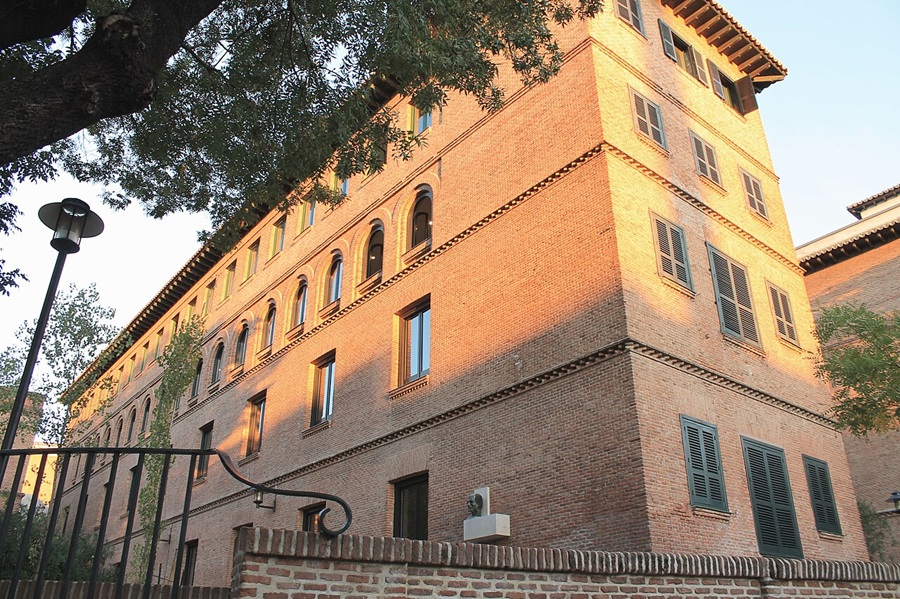
Residencia de Estudiantes, Madrid. / Photograph: Luis García, CC BY-SA 3.0 es, https://commons.wikimedia.org/w/index.php?curid=36701368
Photographs: Fundación Ortega Marañón, Instituto Norteamericano de Madrid, Residencia de Estudiantes.



Felipe J. de Vicente Algueró
The period that began after the Disaster of 1898 was to prove the most fruitful for institucionism. Krausism itself had changed. The image of the stern, austere Krausist disappeared. Galdós, a sympathiser of the Krausists, portrayed one of them in La familia de León Roch (1876) as a man tormented by conflicts of conscience. More critically, Juan Valera devoted a novel to Krausism: Asclepigenia (1878), a woman who had been in love with Proclus and who embodied the prototype of the sad, gaunt and badly dressed Krausist.
Positivism was now triumphant and exerted an influence on Krausist philosophy: the great metaphysical and religious questions receded into the background. Science took first place and, with it, education. There was also a new element: a fascination with the Anglo-Saxon world, especially English education. Giner came into contact with this world through his friend Gumersindo de Azcárate, whose second wife was of British descent. But those who did most to familiarise him with British customs were the Riaño family, Juan Francisco and Emilia, friends of the Azcárates. It was Emilia who introduced Giner to his admiration for English culture. The Riaños lived the English way in their homes in Toledo and Madrid. Giner loved staying with them and was a regular at Doña Emilia’s salon. The prosaic, mediocre and even vulgar milieu of Madrid society paled beside the Riaños’ refined way of life. Giner eventually came to speak and write English correctly.
Giner used to say that Germany produced scholars, while England produced gentlemen. That was why he never ceased encouraging his followers to travel to England, above all to learn about the English educational model—not so much that of the state schools as that of the elegant boarding schools, with particular interest in the Colleges of Oxford. English customs took such firm root in Giner that his breakfast invariably included porridge, which he supplemented with garlic soup.
1898 was a political milestone in Spain and in institucionism. Giner never took a direct part in politics; he was neither a member of parliament nor a senator, but many institucionists became prominent politicians of the period. The first of them was Joaquín Costa, whom Giner helped during his difficult early years in Madrid by giving him work at the Institución. Costismo owed much to institucionism. Moret and Montero Ríos were institucionists and went on to serve as presidents of the government.
The institucionists had a project for regenerating Spain: the project of Spanish liberalism. It was what Vicente Cacho, the first great expert on the Institución, called the “moral of Science”. Against the revolutionary morality of socialists and anarchists and the traditionalist morality of Carlism, the liberals (the “third Spain”) offered an alternative: education as a transformative instrument. But it was not simply a matter of taking schooling to every corner of the country. There was something more: the need to train an elite of scientists and intellectuals educated at foreign universities who could modernise the Spanish university and form a governing class capable of replacing the corrupt politicians of the system of political patronage known as caciquismo.
The institucionists had close ties with the Liberal Party and, later, also with the Partido Reformista founded by Melquiades Álvarez in 1912. In a sense, it represented a synthesis of the institucionists’ regenerationist ideals: a democratisation of the Monarchy. A British-style Monarchy. For the time being, there would be no need to resort to a republic if the King were willing to change the Constitution. Azaña initially joined this project, though he soon abandoned it, while Ortega above all threw himself into politics with his Liga para la Educación Política (League for Political Education) (1913) and his book Meditaciones del Quijote (1914), the germ of what came to be known as the Generation of 1914. He also admired Giner, whom he regarded as a “secular saint”. Melquiades Álvarez was a professor at the University of Oviedo, where there was the most important cluster of Krausists after Madrid. Leopoldo Alas “Clarin”, a professor at Oviedo, had been a pupil of Giner, for whom he had extraordinary esteem.
Through sympathetic politicians, institucionism gradually achieved some of its aims. In 1900, the Ministerio de Instrucción Pública y Bellas Artes (Ministry of Public Instruction and Fine Arts) was created by the government headed by the Conservative Silvela. This was one of the old demands of institucionism. Much has been made of the educational work of the Second Republic, as though nothing had been done before it. This is false. The Ministry’s achievements were by no means negligible. Teacher-training programmes were reformed; the primary-school inspectorate was created (a very important instrument); teachers ceased to depend on local councils (which paid them late and badly) and became state civil servants; a career structure was established for them; and many schools were created—obviously fewer than were needed.
But the Ministry’s great achievement in these years, inspired by Giner, was the Junta de Ampliación de Estudios e Investigaciones Científicas (Board for Advanced Studies and Scientific Research), created by the minister Amalio Giménez in 1907. For years, scholarships had already been awarded for study both in Spain and abroad. Now a dedicated body was created not only to send scholarship holders to other universities but also to promote scientific research in Spain. For readers who are curious, the end of the article contains a list of some of the Junta’s scholarship recipients.
The Junta wanted to contribute to the country’s scientific modernisation, since Spain lagged far behind the most advanced European countries. To this end, it began awarding scholarships to students and teachers so that they could broaden their knowledge abroad. The first scholarships were awarded in 1910. By 1936, around 2,000 Spaniards had gone to the best foreign universities to further their studies. The first president of the Junta’s governing board was Santiago Ramón y Cajal, winner of the 1906 Nobel Prize in Medicine, who remained president until 1934, although he devoted little time to the post. He did not come from the Krausist tradition and was not sympathetic to it. The Junta’s secretary and its real driving force was José Castillejo (1877–1945), a Krausist and disciple of Giner, whom he had met at the University of Madrid and who proposed him for the post; Castillejo held it throughout the Junta’s entire existence. Castillejo was the archetype of the institucionist intellectual, from a bourgeois family that enabled him to study Law until he secured a chair in Roman Law. And, naturally, he married an Englishwoman, Irene Claremont, who went on to become a distinguished psychologist.
Castillejo’s organisational ability soon translated into new initiatives linked to the Junta, with the creation of new, specifically national research bodies that were intended to contribute to domestic scientific research through the work of scholarship holders returning from abroad. These were the Junta’s principal creations:
Centro de Estudios Históricos (Centre for Historical Studies), created in 1910 and directed by Menéndez Pidal, with several sections devoted to the Spanish language, Classical languages, literature, art and history.
Instituto Nacional de Ciencias Físico Naturales (National Institute of Physical and Natural Sciences), also created in 1910 and directed by Ramón y Cajal. It incorporated the Museo de Ciencias Naturales (Natural History Museum); the Instituto de Física y Química (Institute of Physics and Chemistry), directed by Blas Cabrera; the Museo de Antropología (Museum of Anthropology); and the Laboratorio de Investigaciones Biológicas (Laboratory of Biological Research).
Asociación de Laboratorios (Association of Laboratories), created in 1910 and directed by Leonardo Torres Quevedo, with the aim of securing collaboration among various laboratories that already existed.
Other bodies linked to the Junta included: the Mathematics Seminar, the Palaeontological and Prehistoric Commission, and the Escuela Española en Roma (Spanish School in Rome) for Archaeology and History.
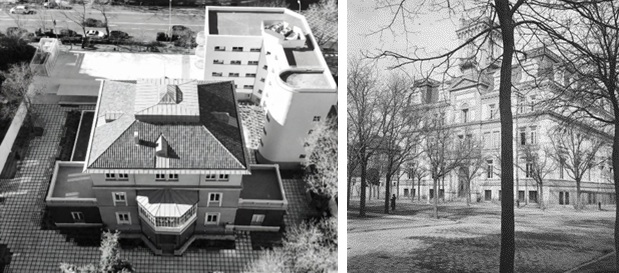
But undoubtedly the most distinctive and best-known creation of the JAE was the Residencia de Estudiantes, founded in 1910. It began with fifteen residents in a villa on Calle Fortuny owned by the Instituto Internacional de Boston, run by a group of energetic North American Protestant missionaries, who lent it to the Junta for the residence until it moved to the Altos del Hipódromo, at the end of Calle Serrano, the Colina de los Chopos, as Juan Ramón Jiménez, an occasional guest of the residence, called it. Its director until the end (1936) was Alberto Jiménez Fraud (1883–1964), another man who emerged from the institucionist group. A young gentleman from Málaga, Jiménez Fraud arrived in Madrid in 1905 with a letter of recommendation for Giner, who was also from Málaga. He soon entered Giner’s inner circle and that of his successor at the head of the Institución, Manuel Bartolomé Cossío, marrying his daughter Natalia, who had likewise been sent to England to acquire the manners of a lady. Cossío and Jiménez Fraud admired the British education system. Jiménez Fraud made several trips to England between 1907 and 1909. Perhaps he was the greatest dandy of them all.
The villa on Calle Fortuny became the Residencia de Señoritas, its female equivalent. Its director was María de Maeztu, one of Ortega’s outstanding pupils, a feminist avant la lettre who did not come from the Krausist tradition, as she was a practising Catholic. Inspired by the atmosphere of the Institución, the residences sought to be a home where students, teachers and men of culture lived together. The model was the British colleges. Good manners, elegance and even a certain degree of refinement were valued. There was no luxury in the rooms, but there was good taste. The tables always had clean tablecloths, crockery and glassware comme il faut. Much as in the Giner-Cossío household: when Giner spotted a small stain on the table linen, he cleaned it himself.
The Residencia de Estudiantes hosted the finest of Spanish intellectual life at the time: Ortega, Azorín, Unamuno, D’Ors, Marañón… And European intellectuals too; among those who gave lectures there were Einstein, Howard Carter, Marie Curie, Keynes and Le Corbusier… Some also stayed at the Residencia de Señoritas. From 1913 onwards, a publishing house operated there, whose first book was Ortega’s Meditaciones del Quijote, published in 1914. There were musical evenings, one with García Lorca at the piano, and film evenings, with Buñuel as commentator. An exquisite, somewhat snooty education designed to form the elite that was to modernise Spain.
The last great creation of the institucionists, after Giner’s death (1915), was the Instituto-Escuela, created in 1918 when Santiago Alba, one of the leading figures on the left wing of liberalism, was Minister of Public Instruction. This educational institution brought the Institution’s pedagogical model into public education. It should be noted that there had always been some secondary-school professors among the Krausist group, for example Giner’s brother Hermenegildo, who spent some time teaching in Barcelona. It was housed in the new building constructed by the Instituto de Boston on the plot adjoining the Residencia de Señoritas. In addition to educating young students, the Instituto-Escuela aimed to train secondary-school teachers, constituting a pioneering experiment in the Spanish education system. All the Instituto-Escuela’s methods were based on those followed at the Institución. Following the Instituto-Escuela model, similar centres were established in Barcelona, Valencia and Seville.
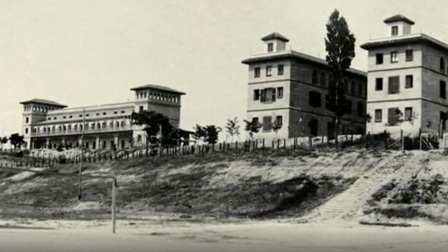
The regenerationist project of Spanish liberalism failed, swallowed up by the two blocs that ultimately plunged the country into the Civil War. In 1936, the Institution’s work was subjected to a purge, and although its directors remained in place, control was tightened. After 18 July, in an attempt to avoid worse consequences, the Residencia de Señoritas flew the American flag, thanks to its links with the Instituto de Boston. At the Residencia de Estudiantes, the British flag was flown because it had housed a group of English students. Ortega rushed there for refuge, but militiamen led by María Zambrano forced him to sign a declaration of allegiance to the Republic. As soon as he could, he fled Spain. Juan Ramón Jiménez did the same, making use of his good relationship with Azaña. Melquiades Álvarez, with whom Ortega had taken his first steps in politics, was murdered by militiamen a few days after the war began, in Madrid’s Modelo prison.
Unamuno, who admired Giner and eventually had a room at the Residencia for his trips to Madrid, referred to the “hunos and hotros” — “the ones and the others”. There were “hunos and hotros” at the Institución too. When the war broke out, the Machado brothers, Antonio and Manuel, found themselves on opposite sides. Both had been pupils at the Institución. Antonio lavished praise on the anarchist Líster, while Manuel was devoted to Franco. In the final government of the Republican zone, there was an institucionist minister, no less a person than Bernardo Giner de los Ríos, Don Francisco’s nephew. On the other side, in Franco’s first government, there was another former pupil of the Institución: Pedro González Bueno. It is clear, then, that the Institución did not manage to ensure that all its pupils became good liberals. But that happens in even the best of families.
The Junta de Ampliación de Estudios became the Consejo Superior de Investigaciones Científicas (Higher Council for Scientific Research), following a rigorous purge of professors. The Residencia de Estudiantes became a residence for researchers working for the Council until, after extensive remodelling, it reopened its doors in 1986 as a cultural centre and residence for lecturers, where I have been fortunate enough to stay several times. The Residencia de Señoritas became a women’s Colegio Mayor and later the headquarters of the Fundación Ortega Marañón. In the post-war period, the Instituto Internacional de Boston housed the United States Embassy, and in the 1950s the Colegio Estudio. María de Maeztu (shaken by the murder of her brother Ramiro), Jiménez Fraud and Castillejo (whom the militiamen were looking for in order to kill) fled when the war broke out. All three died outside Spain. Although they could have returned, they built professional lives abroad, with occasional trips back. They fitted into neither of the two Spains.
Yes, there were genuine liberals in Spain (are there any left?). It was one of the first countries to have a liberal constitution, and a very advanced one for its time. But liberal culture never took root in society, as it did in England. Marañón used to say that being a liberal is, above all, an attitude, and other attitudes flourished here. The institucionists form part of the Spanish liberal tradition that began with the Cortes of Cádiz. They were not the only ones, but they were important. They all wanted Spain to become a liberal democracy. At least, they tried. In Marxist terminology, they would be described as bourgeois. But things might have turned out better for us if those liberal bourgeois had prevailed over the “hunos and hotros”.
Final note
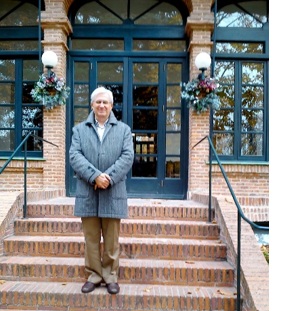
These articles would not have been possible without the author’s relationship with Professor Vicente Cacho Viu (1929–1998), Professor of History in Barcelona and at the Complutense. Cacho was a pioneer in the rigorous study of the Institución, with his work La institución Libre de Enseñanza. Orígenes y etapa universitaria. It was published in 1962, when the Institución was still suffering under the curse of Francoism. Professor Cacho later devoted himself to the study of the intellectual history of Spanish liberalism, and I caught his enthusiasm for the subject. I have not forgotten our conversations in Barcelona and Madrid, in his office at the Fundación Ortega Marañón. He gave me access to the Foundation (of which he was a trustee) and arranged a meeting with Soledad Ortega, the master’s daughter and honorary president of the Board of Trustees. My thanks also go to Professor Esteban Ayala (1938–2018) of Greenwich University; our long conversations at his home in London and in San Sebastián after his retirement helped me understand the Institución’s Anglo-Saxon background and the educational system that inspired it. For this article I have drawn above all on Jiménez Landi’s monumental four-volume work La Institución Libre de Enseñanza y su ambiente. On Spanish liberalism, I have written two books: Viva la Pepa. Los frutos del liberalismo español and El catolicismo liberal en España, in which I deal at length with Krausism, the Institución and its regeneration project.
LIST OF SOME JAE SCHOLARSHIP RECIPIENTS
(Source: José Luís Abellán, Historia crítica del pensamiento español, vol. V-2)
| MEDICINE Severo Ochoa, Francisco Grande Covián, Rodríguez Lafora, Pío del Río Ortega, Jiménez Díaz, Teófilo Hernando, Isaac Costero, Felipe Jiménez de Asúa, Luís Calandre, Pedro Ara, Laín Entralgo, Sixto Obrador, Orts Lorca, Pérez Lorca, Rof Carballo, Varela Gil, Novoa Santos, López Ibor |
| PEDAGOGY Lorenzo Luzurriaga, Manuel Bartolomé Cosío, José Castillejo, Luís de Zulueta, Rodolfo Llopis, Luis Álvarez Santullano, Virgilio Hueso, Ángel Lorca, Rosa Sensat, Félix Martí Alpera, A. Rubiés, Pedro Roselló |
| GEOGRAPHY, HISTORY AND ART Eduardo de Hinojosa, Pere Bosch Gimpera, Manuel Gómez Moreno, Claudio Sánchez-Albornoz, Ciriaco Pérez Bustamante, Ramón Carande, Manuel de Terán, Castelao, Francisco Esteve, Francisco Murillo y Herrera, Elías Tormo, González Martí, Timoteo Pérez Rubio, Joaquín Folch i Torres, Ernesto Halffter, Ruíz Casaux, Rafael Benedito, Adolfo Salazar, Nicanor Zabaleta, Regino Sainz de la Maza, Conrado del Campo |
| PHYSICS, CHEMISTRY, BIOLOGY AND MATHEMATICS Enrique Moles, Blas Cabrera, Esteban Terradas, Eduardo Hernández Pacheco, José Royo Gómez, José Cuatrecasas, Gabriel Martín Cardoso, Julio Rey Pastor |
| PHILOSOPHY Julián Besteiro, Ortega y Gasset, García Morente, Xabier Zubiri, Bonilla San Martín |
| LINGUISTS AND WRITERS Navarro Tomás, Juan Corominas, Emilio García Gómez, Antonio Machado, Rafael Alberti, Ramón Pérez de Ayala |
More:
150 Years of the Institución Libre de Enseñanza (I). The Origins
Source: educational EVIDENCE
Rights: Creative Commons