


- Cover
- 10 de September de 2026
- No Comment
- 21 minutes read
150 Years of the Institución Libre de Enseñanza (I). The Origins
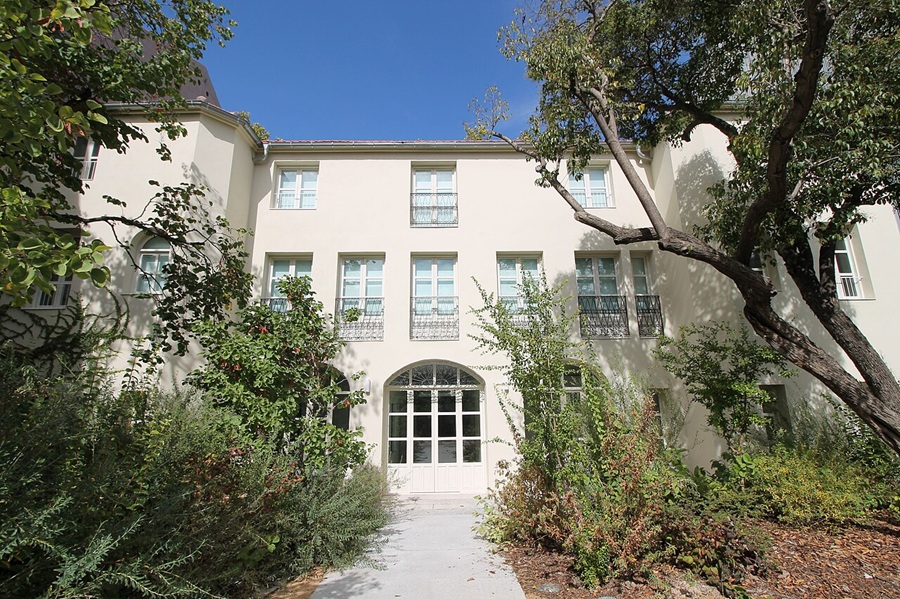
South façade of the house of Giner and Cossío, at no. 8 of the former Paseo del Obelisco in Madrid. / Photograph: Luis García, CC BY-SA 4.0, Wikimedia Commons, https://commons.wikimedia.org/w/index.php?curid=63287023
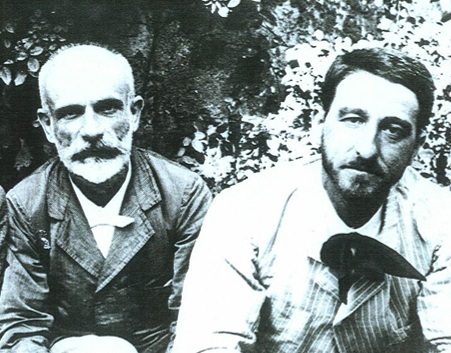
Following photographs: ILE Photographic Archive, Giner de los Ríos Foundation.


Felipe J. de Vicente Algueró
On 29 October 1876, a modest private educational institution opened its doors on Calle Esparteros in Madrid: the Institución Libre de Enseñanza (Free Institution of Education). Its inaugural academic ceremony was presided over by its first rector, Laureano Figuerola, a Catalan who had settled in Madrid, a progressive liberal who had served as a minister during the Democratic Sexenio (1868–1874). A few months earlier, in June, the Constitution of 1876 had been approved, with Article 11 recognising freedom of education. But the driving force behind the Institution was Francisco Giner de los Ríos (1839–1915). Its founders sought to establish a free university in which professors would enjoy complete freedom in teaching and research. They failed in that endeavour, and the Institution subsequently became a school providing primary and secondary education, paving the way for an educational model intended not only to renew Spanish education but also to train the regenerative elites who would reshape Spain.
To understand the origins of the Institution, we must go back to Julián Sanz del Río (1814–1869), who introduced Krausism to Spain. Krause (1781–1832) was a relatively obscure German philosopher who was nevertheless destined to become the intellectual reference point for several generations of Spanish thinkers. Sanz del Río initially studied at the seminary in Córdoba, although he did not pursue the priesthood. He went on to study Law, obtaining his doctorate in 1836, but his true vocation was Philosophy. In 1843, Don Julián received a government scholarship to continue his philosophical studies in Germany, building on the knowledge he had acquired at the seminary. The mission had another purpose as well: to find in European philosophy a solid intellectual foundation for Spanish liberal progressivism. Sanz was not a direct disciple of Krause, who had died by the time he arrived in Germany, but he followed in the master’s footsteps through the German philosopher’s earliest and most accomplished disciples. In Belgium, where he stopped before travelling on to Germany, he met Henrich Ahrens (1808–1874), with whom he established a close relationship and from whom he absorbed one of the most important strands of Krausism: the Philosophy of Law.
It was not until 1854 that he was appointed Professor of Philosophy at the University of Madrid, becoming the leader of a small but active group of followers of his philosophy: the Krausists. Among the first intellectuals influenced by Krausist ideas were liberal economists such as Eusebio María Del Valle and Laureano Figuerola. Others influenced by Sanz — and by Krause — from the outset included Francisco de Paula Canalejas, uncle of the liberal politician José Canalejas, and politicians from the Democratic Party such as Nicolás Salmerón. But the circle closest to Sanz del Río, besides Salmerón, consisted of young professors such as Fernando de Castro, Gumersindo de Azcárate and, above all, Francisco Giner de los Ríos. Castro was a priest, while Azcárate and Giner were committed Catholics, until Krausism altered the course of their religious lives.
What were the ideas of the Spanish Krausists? In 1860, Sanz del Río published Ideal de la Humanidad para la vida (The Ideal of Humanity for Life), a short work that purported to adapt Krause’s ideas but was, in reality, little more than a translation of several articles by the German philosopher. The book became a handbook for the Krausists and the philosophical foundation of a Hispanic liberalism that distanced itself, at least to some extent, from the Catholic tradition so prominent, for example, in the Cortes of Cádiz. It drew on Krause, but also on the ideas of Heinrich Ahrens, whose interests lay more strongly in the Philosophy of Law. The celebrated Ideal sought to establish a rationalist, natural and vaguely Christian morality, but one detached from Catholic morality. Another leading Krausist was Gumersindo de Azcárate, author of Minuta de un testamento (Draft of a Will), which became another canonical text for the movement. Readers interested in the subject will find, at the end of this article, a short extract from the Minuta summarising the Krausists’ religious convictions.
Nineteenth-century Spain was a society deeply permeated by religion, and atheism and agnosticism were foreign to the country’s cultural tradition. Most Krausists had also been brought up as Catholics: Sanz del Río had been destined for the priesthood, while Fernando de Castro had actually been a priest. The early Krausists were all animated by a profound religious sensibility and a powerful spiritual restlessness, which they sought to reconcile with their radical liberalism and rationalism. Krausism provided them with the intellectual tools to resolve the dilemmas of conscience and to reconcile their belief in God with their belief in Science.
Krausism gave the Spanish liberal left the philosophical and ideological foundation it had previously lacked. Since basic education in nineteenth-century Spain was fundamentally Catholic, Krausism offered a kind of liberal Catholicism: a compromise between a fundamentally Christian religious outlook and the ideas of progress and the supremacy of reason. In this way, the conscience could remain at peace: faith in God was not abandoned but, on the contrary, rationally reinforced. Christianity, meanwhile, appeared reformed and rationally defensible; it had become “liberal”, not in the political but in the philosophical sense. Spain had liberal politicians who were also Catholics, but it did not have liberal politicians who were Krausists.
Krausist liberalism was also reflected in its organic conception of society. Some Krausists, such as Gumersindo de Azcárate, supported organic suffrage. Society, in their view, was made up of different “spheres”: the Family, Science, Religion, Art and the State, among others. Each sphere had to remain independent; none should seek to claim or encroach upon the proper domain of another. The sphere of Science was embodied above all in the University and education, which had to remain entirely free from outside interference. The State was required to respect all these spheres. It should not interfere in Religion — it should remain “neutral” — and the reverse should also apply. The Krausists were staunch defenders of academic freedom and of the separation of Church and State. They were not anti-Catholic, nor even secularists, and certainly not anti-religious. Quite the contrary.
The great moment of Spanish Krausism came with the revolution of 1868. In 1865, the so-called “first university question” arose following a decree issued by the minister Alcalá Galiano, head of the Ministry of Public Works, which was responsible for education. The decree required university professors to pledge allegiance to the Monarchy and to the official religion of the State, the latter being an unmistakable reference to Krausism, which had already attracted a significant following at the University. The minister was a survivor of the Cortes of Cádiz, as ugly as he was eloquent. The affair was aggravated when Emilio Castelar, supported by the Krausists, published an article attacking Isabella II. Castelar was subjected to disciplinary proceedings, prompting a major student demonstration that was brutally suppressed by the Civil Guard, leaving a dozen people dead (the Night of San Daniel, 10 April). Galdós witnessed the events first-hand and would subsequently sympathise with Krausism. The incident triggered a government crisis. Alcalá Galiano himself, already 80 years old, suffered a fatal heart attack during a cabinet meeting.
The final years of Isabella II’s reign were deeply turbulent. The Minister of Public Works, the Marquis of Orovio, continued to tighten the screws on Krausist professors. At the minister’s urging, the rector of the University of Madrid demanded that professors formally pledge allegiance to the Monarchy by signing a declaration. Sanz del Río refused, employing a series of delaying tactics couched in bureaucratic language. Eventually the minister lost patience, and several professors were stripped of their chairs, among them Sanz del Río, Fernando de Castro, Nicolás Salmerón and a young Francisco Giner, who was beginning to emerge among Don Julián’s most favoured disciples.
The revolution of 1868 and the Sexenio marked the full emergence of Krausism in Spanish public life. Sanz del Río was appointed rector of the University of Madrid but resigned because of his poor health, accepting only the Deanery of Philosophy. Fernando de Castro, another eminent Krausist, took over the position. He had been a priest and chaplain to the Court before leaving the clergy, although he continued to wear a cassock as though nothing had happened. From the rectorship in Madrid, he established free schools for children and adults, evening classes for workers and the Sunday Lectures for women’s education, which would become the seed of the School of Governesses, an educational institution inspired by Krausism and its concern with education. In 1871, after leaving the rectorship, the Asociación para la Enseñanza de la Mujer (Association for the Education of Women) was founded, the first clearly Krausist educational institution, with Castro himself as its president. These were Krausism’s first forays into education, apart from the influence it exerted on a number of regulations issued by the governments of the Sexenio.
In 1869, Sanz del Río died, and his funeral was a civil ceremony, something extraordinary in those days. Fernando de Castro died in 1874, and his funeral procession passed through Madrid on the very day that the Duke of Torre made his triumphant entrance following his victories in the North. Giner’s time had come. Although he had not initially been among Sanz del Río’s closest associates, Don Francisco assumed leadership of the Krausist group despite his youth. His real moment, however, would come later, after the Restoration. In Cánovas’s first government, following the proclamation of Alfonso XII, the Marquis of Orovio returned to the Ministry of Public Works — and resumed his campaign against the Krausists — in February 1875. His intransigence led to further disciplinary measures against Krausist professors, among them Giner, who was exiled to Cádiz. Other professors resigned their chairs in solidarity, including Laureano Figuerola, Eugenio Montero Díaz and Segismundo Moret. All would later be associated with the Institution and occupy important positions, although Montero Díaz was not a Krausist and declared himself a Catholic. All of them, together with many others, would find a political home in Sagasta’s Liberal Party.
Once his confinement was lifted, Giner was back in Madrid by September 1875. This was a crucial period in his life. He had begun a rather peculiar romantic relationship with María Machado, a relative of the poets, conducted largely through correspondence. She lived in Bilbao. Poor María became hopeful about the young professor, but in the end she rejected him. Giner remained a bachelor throughout his life: the Institution became his family. In this respect, he did not follow his master Krause, who had 14 children, or Salmerón, whose wife had as many as 23 pregnancies. Sanz del Río did marry, but had no children.
During his confinement in Cádiz, Giner had already worked out his project for a free university, a bastion of freedom for Science. Together with a group of friends, including several professors expelled from the University, he formed the founding nucleus. The Institution was established as a limited company. When it opened its doors, it had 359 shareholders. Most were members of the liberal professions, but there were also bankers, military officers and even aristocrats such as the Marquis of Salamanca. The Institution retained this legal form throughout its existence.
The first rector was Laureano Figuerola. Giner preferred to remain in the background, as an inspiration, a point of reference and even a teacher; he would not become rector until 1880. The Institution was founded as a university centre, while also offering secondary education. The university courses consisted of what were then known as preparatory courses in Arts and Sciences, together with a School of Doctoral Studies in Law. Most students attended classes both at the official University and at the Institution. Free courses were also offered as supplementary subjects intended to broaden the cultural education of university students.
Enrolment in the university courses declined alarmingly, forcing the shareholders’ board to transform the Institution into a school, from primary education through what was then known as secondary education. This is how the Institution came to occupy such an important place in the history of Spanish education.
Giner encouraged his teaching staff to continue their education and to familiarise themselves with the education systems of other countries. It was the Krausists who introduced the ideas of Fröbel, the German educationalist who created the “kindergarten”, into Spain. The pedagogical ideas of Montessori, Decroly and, above all, Dewey permeated the Institution’s methods. Supporters of the Institución Libre de Enseñanza attended all the educational congresses held throughout Europe.
The Institution adopted a methodology explicitly opposed to the traditional approach of the state secondary schools, which was based on teacher-led instruction. Its method was known as “intuitive”. Observation, practical workshops and laboratory activities were encouraged, but all were directed towards scientific knowledge. One of the Institution’s defining features was its excursions and visits to museums and artistic monuments. As a committed Krausist, Giner loved contact with nature, where he believed divine omnipotence was revealed and where human beings could draw closer to their Creator. Excursions into the Sierra became increasingly frequent, and the Institution even acquired a house to facilitate them. The summer colonies, particularly those held in San Vicente de la Barquera, became famous. Almost from the outset, the Institution also published its own journal, the Boletín de la Institución Libre de Enseñanza, which carried news about the school as well as scientific and educational articles. Giner was a regular contributor.
There were, of course, no examinations, although pupils had to have their studies validated through official examinations at the Instituto de San Isidro in Madrid, where, incidentally, they performed well. A pupil’s progress could be assessed simply by observing them. Each pupil kept a notebook for every subject, recording what they had learnt and working through exercises. There were no textbooks either; these were replaced by teachers’ notes. The Institution frequently found itself in financial difficulties and had to seek additional shareholders. The teachers were poorly paid, but Giner always reminded them that their work was a vocation, and that this made the financial hardship worthwhile.
After Giner, the Institution’s central figure was Manuel Bartolomé Cossío, a disciple whom Giner had shaped from the moment they met at university. His mentor helped him build a distinguished academic career and, thanks to the network of well-placed Krausists within the Administration, secured his appointment as director of the Pedagogical Museum. He subsequently became the holder of the first chair of Pedagogy at the University of Madrid. Unlike Giner, Cossío married, to a woman from a distinguished Galician family who idolised Don Francisco. Sadly, she developed a psychiatric illness that eventually required her to be institutionalised. When the Institution moved to the chalet on the Paseo del Obelisco (now Martínez Campos), the Cossío family and Giner shared the first floor. The Cossíos became Giner’s family until his death.
The Institution was never a secular school, still less a secularist one. Giner criticised the secularist French school established during the Third Republic, regarding it as merely another form of confessional education. The school, he argued, should be “neutral”, respecting each pupil’s religious conscience. Religion was taught at the Institution because the religious dimension was considered a fundamental part of education, but it was not taught confessionally. Pupils were even encouraged to fulfil the religious obligations of the denomination to which they belonged — many, obviously, would have been Catholic. Giner himself taught the History of Religions. For state schools, he advocated making the teaching of Catholic Religion optional.
The pupils were remarkably homogeneous, coming from families with a high level of cultural attainment and belonging largely to the middle class. At the time, secondary education was highly restrictive and geared towards university. There was therefore an indirect selection of pupils, among other reasons because the Institution was a private, fee-paying school. At the 1882 educational congress in Madrid, a state-school teacher confronted representatives of the Institution, prompting Giner to intervene. His argument, essentially, was that this “intuitive education” might work well for the pupils at the Institution, but that in state schools, particularly those in working-class neighbourhoods, teachers had more than enough on their hands simply trying to teach children to read and write under extremely difficult conditions.
The Institution continued as a school until the Civil War. After Giner’s death, Cossío remained at its head until his own death in 1935, after having been proclaimed an Honorary Citizen of the Republic. He is buried in Madrid’s civil cemetery alongside Julián Sanz del Río, Francisco Giner de los Ríos, Fernando de Castro and Gumersindo de Azcárate. At his funeral, the latter asked for passages from the Ideal, together with passages from the Sermon on the Mount and the Lord’s Prayer, to be read.
After the war, the Institution was looted by a group of Falangists led by a former pupil. They even cut down trees in the courtyard, leaving one small tree standing; it remains there today, now fully grown. The premises became a state school until, during the Transition, they were returned to the Giner de los Ríos Foundation, which has its headquarters there. During the harsh post-war years, Jimena Menéndez Pidal and several colleagues founded the Colegio Estudio, with the intention of continuing the spirit of the Institution; it remains in existence today. But other initiatives grew out of the Institution and had a far greater impact on the history of Spanish education. We shall look at them in the next article.
GUMERSINDO DE AZCÁRATE: MINUTA DE UN TESTAMENTO (DRAFT OF A WILL)
I believe in a personal and providential God, to whom I consider myself intimately bound in the work of life, which, by virtue of this belief, should be characterised by piety, and before whom I recognise myself as a dependent and subordinate finite being. This intimacy and dependence are the twofold foundation on which Religion rests. Religion is at once the form of life as a whole, since our actions must be guided by our universal destiny and governed by the laws and will of God, and a substantive end in its own right. In this sense, its outward manifestation is worship, whose essential and primary element is prayer. I believe in the life to come and therefore in the immortality of our being, of our spirit together with a body; human beings must always preserve their essential individuality, rather than the transient and temporal individuality determined by the circumstances of earthly life. And sooner or later, according to their merits, all must reach a moment in infinite time when they will be regenerated and saved. I believe that God’s providence, like his love, extends to all peoples and all ages; that it is equally manifest throughout history and therefore presides over all religious revelations that have taken place in human consciousness throughout the centuries. In all of them there is, for this very reason, an element that is divine and eternal alongside what is temporal and transitory. I believe that the highest and most divine expression of religious life to date is Christianity, insofar as it offers the Absolute and Infinite Being as man’s eternal ideal; the holy life of Jesus as his practical ideal; a pure and disinterested morality as his rule of conduct; love and charity as the social law; the Sermon on the Mount as dogma; and the Lord’s Prayer as worship.
Source: educational EVIDENCE
Rights: Creative Commons