


- HistoryHumanities
- 18 de June de 2026
- No Comment
- 10 minutes read
Educator, feminist, folklorist: Maria Baldó
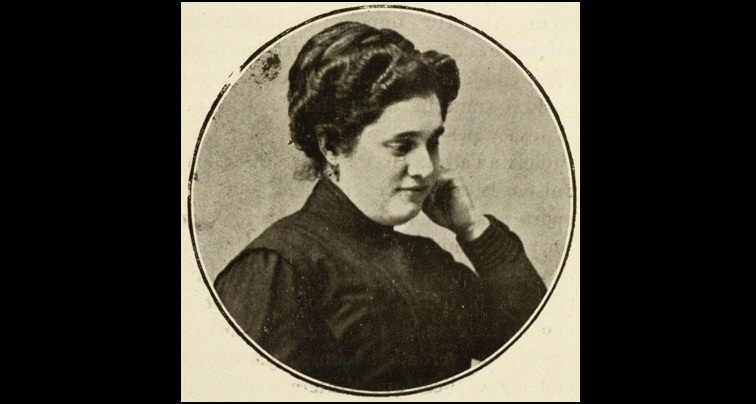
Maria Baldó Massanet. / Photo: Viquipèdia


Soledad Bengoechea
This article tells the story of a remarkable woman: Maria Baldó Massanet, who led a rich and eventful life. Teaching was her true vocation, with a particular focus on the education of women, though she also developed a keen interest in folklore. A prominent feminist of her generation, she was equally drawn to politics. As a member of Esquerra Republicana de Catalunya (ERC) from its emergence in the early 1930s, Baldó combined all these different facets of her life, devoting herself to them with remarkable energy and wisdom. During the Spanish Civil War (1936–1939), she dedicated much of her effort to advancing the cause of women’s emancipation through education and to promoting the teaching of the Catalan language.
Although her family was Catalan, she was born in Hellín (Albacete) in 1884. While still young, her family returned to Catalonia. She trained as a teacher and qualified at the age of twenty-two. Folklore soon became one of her great passions. A pupil of the distinguished folklorist Rossend Serra i Pagès, she published studies such as Notes sobre música popular valenciana (“Notes on Valencian Folk Music”), La festa tradicional alcoiana de moros i cristians pel dia de Sant Jordi (“The Traditional Alcoy Festival of Moors and Christians on Saint George’s Day”) and Valor pedagògic del folklore (“The Educational Value of Folklore”). At the same time, her love of the natural world led her to become an active member of the Centre Excursionista de Catalunya.
She married the publisher Josep Serra i Chartó, with whom she had two children: Alfons, who would later become a distinguished philologist, and Núria. Her first marriage was cut short by tragedy when she was widowed in 1911 at the age of just twenty-seven. Three years later, while serving as headteacher of a state school, she remarried. Her second husband was the educator Lluís Torres i Ullastres.
A prominent feminist campaigner, Baldó gave a course entitled “Female Culture” at the Ateneu Barcelonès in 1910, later publishing it in book form. Two years later, she published the article “Sobre l’ensenyança escolar femenina” (“On Female Education”) in the magazine Feminal. She subsequently published El libro del hogar (The Book of the Home), reissued on several occasions, in which she reflected from a feminist perspective on the education women received at the time and on women’s participation in paid employment. In 1914, she took part in a series of lectures on women’s education alongside prominent feminist figures such as Carme Karr, Dolors Monserdà and the socialist educator Leonor Serrano.
Maria Baldó was tireless in her commitment to education and the promotion of the Catalan language. One example of this commitment was her role within the Associació Protectora de l’Ensenyança Catalana, where she served as vice-president of the Comissió de propaganda in 1920. She also served as secretary of the Societat Barcelonina d’Amics de la Instrucció.
Much of her professional career was closely linked to La Farigola. On 27 March 1922, the school was inaugurated as the first girls’ school established by Barcelona City Council’s School Board—today the Escola La Farigola de Vallcarca. Baldó became its first headteacher and worked closely with Manuel Ainaud to ensure that state-trained teachers could take up positions within the newly created municipal school groups. She also sat on the selection panel responsible for appointing teachers. During the same period, she assumed the position of Dean of Barcelona’s Teachers. Her social concerns likewise led her to work as an unpaid assistant lecturer at the Barcelona Escola Normal.
Baldó also became a well-known public speaker through her radio broadcasts. These broadcasts reflected her principal interests and covered subjects ranging from literature and children’s games to women’s education. Her interests extended even further: she advocated the creation of specialised schools for women’s education and vocational preparation, as well as programmes designed to prepare women for motherhood.
The Missions Pedagògiques, established in 1931 during the early years of the Spanish Republic, became another of Maria Baldó’s major areas of involvement. Working alongside her was Herminio Almendros Ibáñez, educator, writer and one of the leading pioneers of Freinet pedagogy in Spain. The Missions Pedagògiques were a far-reaching project of cultural outreach sponsored by the Republican Government through the Ministry of Public Instruction and supported by the Museo Pedagógico Nacional and the Institución Libre de Enseñanza. Long championed by both institutions, the initiative succeeded in bringing together intellectuals from a wide variety of backgrounds around a shared project focused primarily on rural communities. As Director-General at the Ministry of Public Instruction, Rodolfo Llopis played a central role in designing and implementing the programme. Like so many other Republican initiatives, this ambitious project—so necessary in a country still burdened by widespread illiteracy—was dismantled at the end of the Civil War. In 1933, Baldó became secretary of the Comitè Executiu del Congrés d’Educació Social. That same year, she also joined the Executive Committee responsible for organising ERC’s Women’s Day. Shortly afterwards, now fully committed to the defence of the Republic, she endorsed the Manifest intel·lectual a favor de la llibertat i contra el feixisme (Manifesto of Intellectuals in Favour of Freedom and Against Fascism) and supported the creation of the Front d’Acció per a la Defensa de la Cultura (Front for the Defence of Culture).
Characteristically tireless, when the Civil War broke out she became fully involved in the Republican educational project. She joined the Consell de l’Escola Nova Unificada (CENU, Council of the Unified New School), established in Barcelona on 27 July 1936, only days after the outbreak of the conflict. The organisation sought to create a new educational system that would be free, unified, secular, co-educational and conducted in Catalan, replacing the existing confessional model. The new school system was to be inspired by rationalist principles that placed work at the centre of education, while ensuring that children from working-class backgrounds could progress from primary school to higher education according to ability. On CENU’s recommendation, Baldó was appointed chair of the Comissió d’Adaptació del Personal Docent dels Organismes Tècnics de la Generalitat a les Necessitats de la Guerra (Commission for the Adaptation of Teaching Personnel within the Generalitat’s Technical Services to the Demands of War).
At the same time, she became president of the Lyceum Club of Barcelona, modelled on similar women’s cultural associations already established in several European and American cities. In April of that same year, on the eve of the conflict, she took part in the First National Congress of the Associació Protectora de l’Ensenyança Catalana, a historic institution founded in 1898 by Francesc Flors i Calcat. Its principal aim was to promote education in Catalan, establish schools and improve teaching materials. The paper she presented on that occasion was entitled “The Home and the School”.
In the midst of the Civil War, on 6 and 7 November 1937, the First National Women’s Congress was held at the Palau de la Música in Barcelona. Convened by the principal political and trade-union organisations of Catalonia, it brought together more than 800 delegates who, firmly committed both to the defence of the Republic and to women’s emancipation, resolved to establish the Unió de Dones de Catalunya (Union of Women of Catalonia).
Under the leadership of the prominent ERC figure Maria Dolors Bargalló (1902–1980), the organisation became the leading feminist body in Republican Catalonia, undertaking an extensive programme of social, political and cultural activity that was brought to an abrupt end only by defeat in the Civil War. Maria Baldó herself was elected vice-president of its Executive Committee. The congress took place against the backdrop of the struggle between democracy and dictatorship, a climate that fuelled an unrelenting campaign for women’s freedom and equality. During the same period, she also served as General Secretary of La Dona a la Reraguarda (Women on the Home Front), a section of the Generalitat’s Comissariat de Propaganda.
When the Civil War finally came to an end, Maria and her husband went into exile in France, settling in Toulouse, where she would spend the remainder of her life and eventually die in 1964. She knew that the victors would never forgive her political and educational activities. Yet even in exile she remained remarkably active. In Toulouse she directed the Residence for Catalan Intellectuals, an institution attached to the Ramon Llull Foundation, established by the Generalitat of Catalonia in exile to support displaced Catalan cultural and intellectual life.
Throughout her years in France, Baldó maintained close ties with ERC. In 1948, she was elected president of the party’s women’s section in Haute-Garonne.
Source: educational EVIDENCE
Rights: Creative Commons