


- Face to face
- 3 de June de 2026
- No Comment
- 16 minutes read
Sergi López: “Actors — and really anyone at all — should be involved in the world they live in”

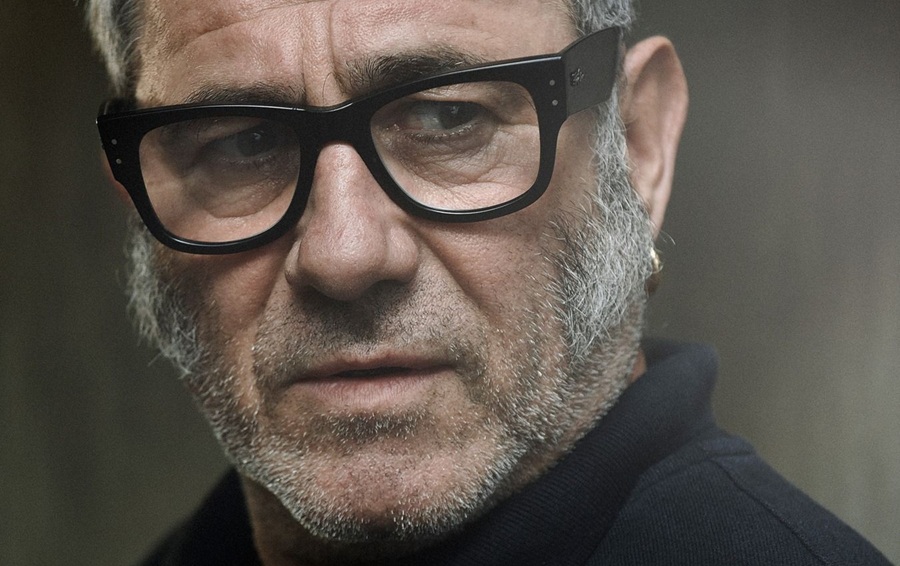
Sergi López/ Photo: courtesy of the author
FACE TO FACE WITH
Sergi López, actor


Sergi López is one of the Catalan actors with the strongest international presence in contemporary European cinema. Born in Vilanova i la Geltrú, he first became involved in amateur theatre, taking part — among many other things — in productions of Els Pastorets1. After beginning theatre studies in Barcelona, he decided to move to France to train at Jacques Lecoq’s school, a decisive stage in both his artistic and personal development. That commitment to training and constant learning explains much of the solidity and naturalness he has shown as an actor over the years.
In his early theatre days, he shared the stage with Toni Albà in productions such as BRAMS and la kumèdia dels herrors, a play they also wrote and directed together. And it is precisely Toni Albà himself — a mutual friend and the one to blame for this interview — who has put us in touch with Sergi today.
Sergi’s film career began in France with director Manuel Poirier, and he gained international recognition through Western and especially Harry, He’s Here to Help, the film for which he won the César Award for Best Actor, becoming the first non-French actor ever to receive the distinction. Since then, he has combined film, theatre and television work in Catalan, Spanish, French and English, delivering memorable performances in films such as Pan’s labyrinth, Black Bread, Map of the Sounds of Tokyo or Rosa’s Wedding.
You started out doing amateur theatre in Vilanova i la Geltrú. When did you realise acting could become something more than just a hobby?
Honestly, it took me quite a while before I realised acting might actually become a stable profession for me. In fact, with the first production Toni Albà and I did together, BRAMS, we bought an old van and did four or five gigs. What I did realise straight away was that this was the first thing I’d ever done with the feeling that I might do it professionally. But I never imagined it would last very long. I didn’t really know what I was doing. Afterwards I kept doing theatre, then I started making films, and I still wasn’t convinced any of it would last. It was only over time that I started realising what was happening. And then, in 1996, when I saw newspapers in Cannes referring to “Sergi López, film actor”, I realised people genuinely saw me as a professional actor. Even then, though, I said it rather cautiously, thinking one day the whole thing might suddenly come to an end.
You began theatre studies in Barcelona before moving to France. Why did you decide to leave for France and study at Jacques Lecoq’s school? What did you find there that you couldn’t find here?
Well, it all started when I met Toni Albà. I already knew who he was from seeing him around Vilanova. I’d watched him perform and knew he was an actor who lived just a couple of streets away from my house. I used to see him walking around with foreigners, actor friends and artists. So one day, after doing a clowning course in Barcelona, we went looking for him. The truth is that theatre courses just weren’t enough for me anymore. I wanted to perform in a real theatre, with people and an audience.
And what did you say to Toni?
“We want to do a clown act — could you help us?” That’s how we met him and ended up creating BRAMS. And it was there that Toni first told us about Jacques Lecoq’s school in France. It was incredibly expensive, but he said that if we could somehow save enough money, it would be worth it. So when I finally managed to save some money, I thought: right, I’ve got the money, I’m going there and blowing the lot.
Does talent simply arrive, or is it something you have to work at? What role have effort and discipline played for you?
(Long pause) For me, effort and discipline are a price you have to pay. But what has really saved me has been passion. I’m naturally lazy — I don’t particularly like working — and effort and discipline are concepts that give me a headache, things I’m not especially fond of. But because I have this passion and vocation for acting, that passion ends up carrying me along and making me work with discipline and effort… because in the end you need those things. You have to train, and you have to approach the profession rationally, with discipline and rigour. The one thing that’s non-negotiable is passion.
“Because I have this passion and vocation for acting, it ends up carrying me along and making me work with discipline and effort… because in the end you need those things”
And talent?
Talent is something intangible. You discover it gradually over time; you feed it, you help it grow. Even in football, you might have talent, but without a ball, how do you express it? Talent needs a playing field where it can be put into practice, and in theatre you can’t do it alone. You need training, you need to keep growing. Even self-taught performers like Pepe Rubianes learned by performing in front of audiences.
And in your own case?
Well, when I went to Lecoq, I was convinced I wouldn’t make it beyond the second year and they’d tell me: “Right then, off you go — back to Vilanova”. But gradually I developed whatever talent I had, and what truly saved my life was discovering this passion for acting. With time, I’ve realised I probably do have a certain talent for performing, but when you act you’re not always fully inspired, and it never really ends. You’re constantly searching for a kind of naturalness, a truthfulness that sometimes simply doesn’t come.
In your early years you worked closely with Toni Albà. What do you remember about that period, and what has his friendship meant to you over the years?
I owe him everything. When I met him, he had just come out of Lecoq, he was incredibly motivated — though to be fair Toni has always been incredibly motivated in general — and he opened the doors of paradise to us. The very day we first met him, he said: “Come round tomorrow and we’ll start improvising”. And from there Toni kept pulling us forward and showing us that improvisation is an incredibly powerful tool for creating theatre. It changed my life. It opened my eyes and gave me hope, even though I was someone who’d never done particularly well at school, not especially disciplined and not terribly fond of effort. Suddenly I realised I could actually create theatre.
“I find it harder and harder to distinguish between acting and improvising. Even if you don’t change the text, you still perform it as though it were the first time”
Do you improvise often?
Yes. More and more. I find it harder and harder to distinguish between acting and improvising. Even if you don’t change the text, you still perform it as though it were the first time, and little things change.
What role did director Manuel Poirier play in your life?
Another huge one — another figure like Toni Albà. They were people who had so much to teach me, and Poirier was one of them. He was looking for a character for a film, La petite amie d’Antonio (1992), but he didn’t work in a methodical way, looking for technically reliable or conventionally professional actors. He looked for people. He wanted a twenty-five-year-old character with a Spanish accent, and without really noticing it I suddenly found myself entering the world of cinema.
And from there came quite a number of films with Poirier?
Exactly. But the thing is, I’d never done cinema before, and my first experiences came with him and his very particular way of filming. Poirier didn’t want constructed characters. He didn’t want to see actors — he wanted humanity, he wanted to see people. With time I’ve realised how important it was to enter cinema through that door: the door of acting naturally, improvising and adapting to situations thanks to that director. For me, it was an extraordinary school, an incredible experience.
You became the first non-French actor to win the César Award for Best Actor for Harry, He’s Here to Help. Incidentally, I still have the DVD at home. What did that award mean to you personally and professionally?
(Another long pause) Honestly, I still don’t entirely know. It all felt rather strange. I didn’t really know what face I was supposed to put on when receiving an award. I imagine people who work in sport or competitive environments probably understand prizes more easily, but in artistic work it’s never entirely clear who is “the best”. When I won the César, I was left a bit stunned, not quite understanding what was happening to me, and only later did I gradually become conscious of it.
“My reputation just sort of grew on its own after I trained at Lecoq’s school in Paris”
Do you think no one is ever a prophet in their own land?
No, I don’t think that at all. My reputation just sort of grew on its own after I trained at Lecoq’s school in Paris. I didn’t leave in order to become successful; I simply found work, managed to save some money and went to France. Everything else happened almost by accident, and at no point have I ever felt underappreciated at home. I’ve been extraordinarily fortunate in the way life has treated me.
Have you ever thought that a film or theatre award was given to someone who didn’t deserve it? Why do you think these situations sometimes happen in the cultural world?
They happen because it’s impossible to be truly fair with artistic awards. All awards are unfair. Giving a prize for Best Actor or Best Actress is a complete minefield. For example, I won the César for Harry, but I remember that among the nominees there was also the great German actor Bruno Ganz, whose career was far longer and more important than mine. Yet they gave the prize to me. Why? Because Harry had been seen by two million spectators and his film by one hundred thousand. It’s as brutal as that. Awards are what they are: promotion, marketing. So the whole idea of “the best actor” doesn’t really exist. Everything is volatile and intangible.
Has anyone especially important in the profession ever shown admiration for your work?
Once I met Michel Piccoli and he actually knelt before me because of my role in Harry. I immediately told him: “No, no, please, get up”. And I’ll tell you something else: whenever you work with a major star, after ten seconds you realise they’re simply another person, someone completely normal. I think meeting Dario Fo would probably have impressed me, but I’ve never really had specific idols.
Not even in football?
No, not even in football.
You’ve played very different kinds of roles: disturbing characters such as in Harry, He’s Here to Help, authoritarian figures such as in Pan’s Labyrinth, or more intimate and human roles in Black Bread or Rosa’s Wedding. Is there any role or genre you still haven’t explored and would like to?
No, not really. What I have noticed is that in theatre — especially in productions we’ve written ourselves — my comic side always ends up coming out. In cinema, on the other hand, I haven’t done that many comedies, though I don’t particularly feel the need to do comic roles there either, nor do I actively ask for them. As long as I can keep making films and theatre in roles I really enjoy, I still think this job is a pretty amazing gig.
“As long as I can keep making films and theatre in roles I really enjoy, I still think this job is a pretty amazing gig”
In such a long career there must have been successes, but also disappointments and frustrations. What has been the most difficult moment in your personal and professional development?
Honestly, that’s never really happened to me because — and once again we come back to Toni Albà — through him I discovered my own ability to invent theatre. And that shaped everything afterwards. I’ve always been able to make theatre and I’ve never been short of roles to play. To the point where I’ve gone to auditions for film roles and realised, together with the director, that things simply weren’t working for either of us. I know this probably sounds irritating — I’m a terrible example — but honestly things have almost always gone well for me.
Family, friends and fellow actors are often decisive in an artistic career. To what extent has your environment helped you remain true to yourself?
The people you mention have certainly played a decisive role, though perhaps not an absolutely essential one, because many things probably came naturally to me from the beginning. My mother, my partner, my brother, my children and my closest friends have always been delighted when things went well for me, but they’ve never idolised me. Living surrounded by people who value you for who you are rather than for your professional success has helped keep my feet on the ground, and that has always been very healthy for me. Besides, many of the films I’ve made have been auteur films or in French, and my closest circles haven’t always particularly liked them. Theatre is different, though: when people laugh, that’s unquestionable proof that something is working.
Alongside your artistic career, you’ve also remained committed to various social causes. Do you think actors have a public responsibility beyond the stage or screen?
Yes, absolutely. Though I’d say every citizen — everyone — has a political responsibility towards the people around them. It’s true that actors are given a kind of public platform that gives you visibility and influence in some way, and that brings responsibility with it. Actors — and really anyone at all — should be involved in the world they live in.
Finally: what’s the latest project, play, film or initiative that’s exciting you at the moment?
Well, funnily enough, a friend of mine and I are currently trying to write a screenplay for a feature film.
Any clues?
Well, it’s a project without huge ambitions. First, we need to write the script and take things step by step. The idea is to write it, direct it, act in it — basically do the whole thing ourselves. The clue I can give you is that it’ll be a comedy, and it’ll feature characters dressed as devils from Els Pastorets.
Just like when you started out doing amateur theatre in Vilanova with Els Pastorets1.
Exactly. And I hope it won’t be my last performance. Take care, “Rabadà2”.
___
1 Els Pastorets are traditional Catalan Christmas folk plays combining the Nativity story with comic scenes, shepherd characters, devils and angels.
2 Rabadà is one of the two comic shepherd protagonists in Els Pastorets, and the surname of the interviewer.
Source: educational EVIDENCE
Rights: Creative Commons