


- Opinion
- 22 de June de 2026
- No Comment
- 6 minutes read
Paideia

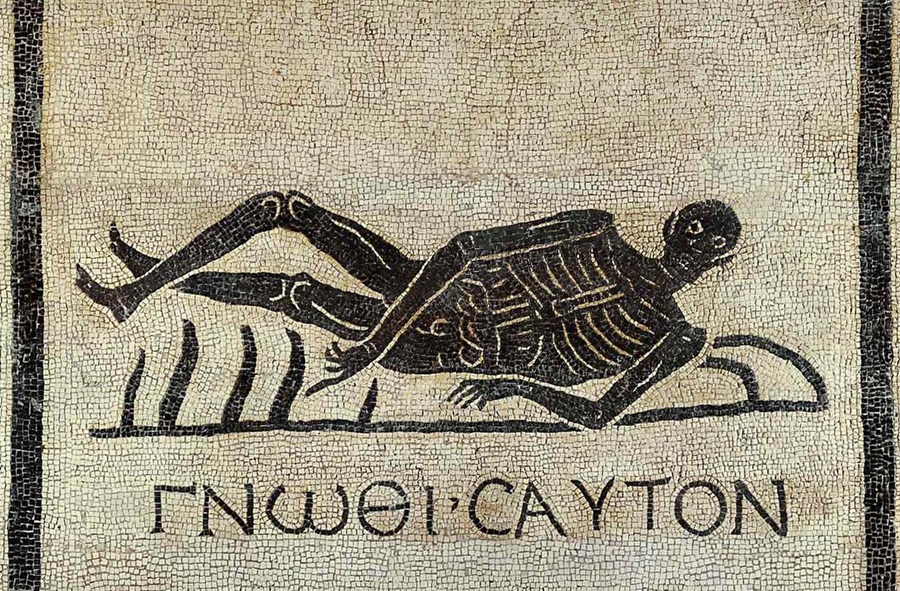
By The artist is unknown. – Lessing Photo Archive: http://www.lessing-photo.com/p3/110103/11010329.jpg
THE GREAT SCAM. Opinion section by David Cerdá


“Every people that reaches a certain stage of development is naturally inclined to practise education. Education is the principle by which the human community preserves and transmits its distinctive physical and spiritual character […] Man can preserve and perpetuate his social and spiritual form of existence only through the forces by which he has created it, namely conscious will and reason. […] Even man’s physical nature and qualities can be transformed through conscious education, raising his capacities to a higher plane. Yet the human spirit advances progressively towards self-discovery. Through knowledge of the external and internal worlds, it creates better forms of human existence. The nature of man, in its dual physical and spiritual constitution, creates the conditions necessary for preserving and transmitting its distinctive form and requires physical and spiritual institutions whose totality we call education. In education, as practised by man, there operates the same vital, creative and formative force that spontaneously impels every living species to preserve and perpetuate its type. Yet in education this force attains its highest intensity through the conscious effort of knowledge and of a will directed towards the achievement of a purpose.
From this follow several general conclusions. First, education is not an individual possession but belongs, by its very essence, to the community. The character of the community is imprinted upon its individual members […] Nowhere does the influence of the community upon its members acquire greater force than in the constant effort to educate each new generation in accordance with its own conception of life.
Education shares in the life and growth of society, both in its outward destiny and in its internal organisation and spiritual development. Since social development depends upon an awareness of the values that govern human life, the history of education is essentially conditioned by changes in the values recognised by each society. The stability of accepted norms corresponds to the solidity of educational foundations. From the dissolution and destruction of norms arise weakness, uncertainty and even the complete impossibility of any educational endeavour […]
To place this knowledge, as a formative force, at the service of education and, through it, to shape true human beings in the same way that the potter moulds clay and the sculptor carves stone, is a bold and creative idea that could only have matured in the spirit of that artistic and philosophical people. The highest work of art to which they aspired was the creation of the living human being. The Greeks were the first to recognise that education must also be a process of conscious formation. ‘Properly fashioned and without defect, in hands, feet and spirit’: these are the words with which a Greek poet of the age of Marathon and Salamis described the essence of the most difficult human virtue to acquire. Only to this type of education can the term formation properly be applied, in the metaphorical sense first employed by Plato when referring to the educational process. The German word Bildung (formation, cultivation) conveys more vividly than any other the essence of education in the Greek and Platonic sense. At once, it signifies artistic and plastic formation and the image, ‘idea’ or normative ‘type’ that hovers before the mind of the artist. Wherever this idea reappears in history, it is an inheritance from the Greeks, and it reappears whenever the human spirit abandons the notion of training directed towards external ends and reflects instead upon the true nature of education. The fact that the Greeks regarded this task as both great and difficult, and devoted themselves to it with unparalleled energy, cannot be explained solely by their artistic vision or by their theoretical spirit […] They are expressions of an anthropocentric sense of life that can neither be explained nor derived from anything else and which permeates every manifestation of the Greek spirit”.
The passages above are no more than extracts—from barely three pages of its eleven hundred—from Paideia, Werner Jaeger’s masterpiece, published almost a century ago and readily available in any public library. Paideia and pedagogy share the same root, pais (“child”): while the former embodies the ideal of forming the complete human being, the latter aspires to provide the means by which the child may be guided towards that ideal.
Now tell me what Jordi Adell or César Bona have been saying in their latest interviews, because I am terribly interested. And do not forget to let me know when they publish another book—I would not want to miss it.
Source: educational EVIDENCE
Rights: Creative Commons