


- HumanitiesLiterature
- 27 de May de 2026
- No Comment
- 6 minutes read
Hydraulic fantasies: Verne and Bogdanov

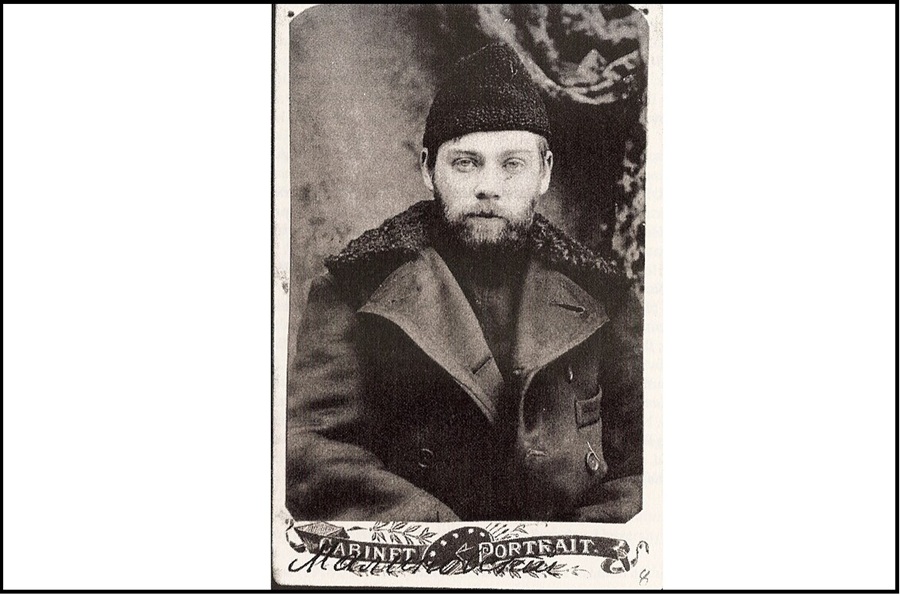
Alexander Bogdanov in 1904 / Wikipedia



Jules Verne published the last book he was able to revise during his lifetime in 1905: L’Invasion de la mer (Invasion of the Sea). Seven years later, Alexander Bogdanov — communist physician, psychiatrist and former close collaborator of Vladimir Lenin before his expulsion from the Bolshevik Party in 1909 — published his novel Engineer Menni. It is difficult to imagine two more radically different temperaments than those of Verne and Bogdanov. The Russian revolutionary lacked entirely the bohemian and bourgeois background that still clung to the ageing French master. Yet Verne’s influence upon Bogdanov appears undeniable. Indeed, Invasion of the Sea and Engineer Menni share an almost identical premise: the construction of a vast canal system intended to culminate in the creation of an artificial sea.
From that point onwards, however, the differences multiply. Verne’s novel — though already marked by the sombre anxieties of later life — remains fundamentally a hymn to imperial militarism. The enemies of the engineer Schaller — Hadjar, his mother and their Tuareg companions — are admired for their fierce and passionate spirit, yet they are treated almost as part of the natural world rather than as human societies. Verne admires them as he might admire a lynx or a jaguar, without ever fully recognising the social or cultural structures of the tribes resisting the material progress represented by France. Although not all the colonial soldiery portrayed in the novel is beyond reproach, the story ultimately culminates in victory over both Nature and local cultures manu militari. Structurally, the work itself is fragile: little more than a reconnaissance expedition lacking true adventure, intrigue or any psychological or physical labyrinth. Like all Verne’s novels, however, it survives through geographical fascination, descriptive exuberance, Balzacian solidity and the narrative resourcefulness of a seasoned writer.
By transferring his narrative to Mars — albeit a profoundly human Mars — Bogdanov is free to indulge his cosmist dreams and calmly construct a labour utopia relatively unburdened by the constraints of the real world. After an opening movement that is admittedly moralistic and somewhat indigestible, the novel improves considerably once the bureaucratic intrigues leading to the downfall of its central protagonist begin to unfold. It is there that the book’s most striking prophecies emerge. For this is the truly valuable aspect of so naive a novel: Bogdanov’s remarkable capacity to anticipate the limits and contradictions of a Revolution that had not yet taken place.
Verne and Bogdanov share a powerful enthusiasm for blueprints, excavations, pharaonic budgets and heavy machinery. Yet the fundamental distinction between them lies elsewhere. Bogdanov projects his work towards the future using the conventions of the romantic serial novel, whereas Verne writes against the backdrop of a dying world — that of positivist optimism — with a technical imagination that would shape the whole genre of speculative fiction throughout the twentieth century. Far more naïve and rough-hewn than Verne, Bogdanov nevertheless writes with the vigour of youth. His epic aura, populated with castles and ancient dukes, places him closer to fantasy literature — specifically to the magical geographies of Michael Moorcock and the epic sagas of Frank Herbert.
Verne is a summation; Bogdanov, an embryo. Both are deployed across the same narrative framework of hydraulic schemes at once extravagant and pharaonic. The Soviet Union itself was forged from dreams and horizons remarkably similar to those imagined by the old Bolshevik doctor, a resemblance that became especially evident during the 1930s — the years of industrialisation and agricultural collectivisation — and later under Nikita Khrushchev, when the space race accelerated and the great irrigation programmes of Central Asia took concrete form.
In the 1930s, Stalin’s emissaries forced the nomadic Kazakh tribes to settle on collective farms and surrender all their livestock. The horsemen preferred to slaughter their animals rather than hand them over, and matters worsened further when they were compelled to survive in the open steppe without roofs or tools, because those collective farms existed nowhere except on paper. In scarcely three years, more than a million people died of starvation. Bogdanov, the philosopher of empiriomonism, had predicted with remarkable accuracy the bureaucratic manoeuvres and endemic corruption that would follow. Yet few paid much attention to the strange man who died attempting to demonstrate on himself the effectiveness of his blood-transfusion system.
During the 1960s, the Soviet authorities diverted the rivers of Kazakhstan in an attempt to transform the republic into a gigantic cotton-producing region. The result was the drying up of the Aral Sea, the destruction of the fishing industry and the emergence of immense salt deserts as subterranean salts rose to the surface. The canals built by the thousands of prisoners condemned to toil and die there proved almost entirely useless, since the water either evaporated or seeped away through excessively porous soils. Such was the fate of the hydraulic dreams cherished by the Marxist republicans of the 1890s — men who, fortunately for themselves, never lived to witness the outcome of their cosmological reveries.
In the end, one is left wondering what a truly Vernean novel might have looked like had its setting been Mars rather than Tunisia or Algeria.
Source: educational EVIDENCE
Rights: Creative Commons