


- Cover
- 26 de October de 2026
- No Comment
- 13 minutes read
Eduard Estivill: “We still cannot interpret dreams correctly”
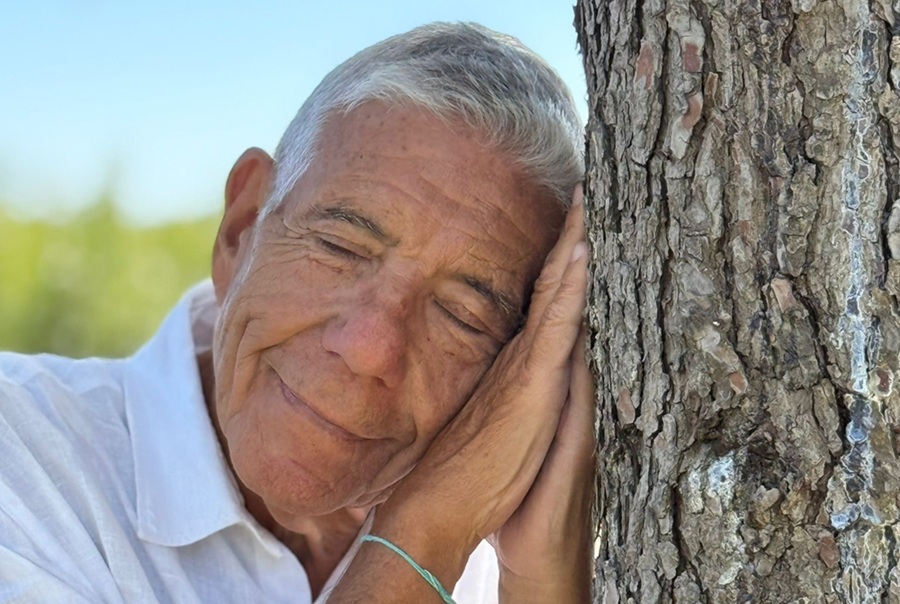
Eduard Estivill Sancho / Photo: Courtesy of the author
FACE TO FACE WITH
Eduard Estivill,sleep medicine specialist


Dr Eduard Estivill Sancho is a Catalan doctor internationally recognised for his pioneering work on sleep disorders. After graduating in Medicine and Surgery in Barcelona, he continued his studies abroad, particularly in the United States, where he became familiar with leading centres for medical research and sleep medicine. This experience had a profound influence on both his scientific outlook and his approach to patient care.
On returning to Barcelona, he continued his clinical and research work. In 1989, he founded the Sleep Disorders Unit at the Institut Dexeus, which would go on to become a leading centre for the diagnosis and treatment of sleep disorders in children, adolescents and adults. There, he helped develop clinical research combining biological approaches with behavioural therapy.
Alongside his medical practice, Dr Estivill has distinguished himself as a populariser, with books on sleep and sleep disorders that have had a major social impact. Translated into numerous languages, his books have shown how his career combines scientific rigour, constant effort and a clear commitment to bringing medical knowledge closer to society, all, as he tells me, in order to improve people’s quality of life through a good night’s sleep.
How did your time studying in the United States influence your understanding of medicine, and how did you experience the hippie movement of that period on a personal level?
The truth is that that stay changed my life. I came from a city like Barcelona in 1965, where there was still political, cultural and social repression. We were not even allowed to sing in Catalan, as it was forbidden. In this respect, the United States meant opening up my mind, understanding that there are people who live differently, but above all, it taught me to be tolerant. I understood that there are neither black nor white, but infinite shades of grey. In this way, I became fully integrated into life in California, where the hippie way of life was flourishing, a lifestyle of which only the more folkloric aspects reached us here. In reality, it was a much deeper ideology, involving a cultural and social revolution that encompassed everything from music and sexual relationships to international politics. This changed my mind, as well as my mental language. In fact, when I arrived in the United States, I didn’t know a word of English.
When you returned to Barcelona, why did you decide to get involved in forming a music group, and what did the experience bring you?
It all stemmed from my experiences in the United States. While I was there, I did everything the Americans did, such as surfing, playing baseball, playing American football and playing in a band. I was also the only foreign student in the small town of Carlsbad, which at the time had about 10,000 inhabitants, compared with around 100,000 today. It was an idyllic seaside town between San Diego and Los Angeles, where I lived in a house that was nothing like the family flat in Barcelona, where I lived with my father, mother, siblings, grandmother and dog. So when I returned to Barcelona, I brought with me all the musical experience I had gained in that place, full of stimulation and happy memories. I didn’t want to leave, but Spanish military service forced me to. Back in Barcelona, I got in touch with friends with whom I had been in the Boy Scouts, singing scout songs in a small group called Grills Grillats. That was how I met Joan Boix, Xesco Boix’s brother. The two of them had both been part of a folk group with Pau Riba, the Batista brothers and the Casajuana brothers. Joan Boix and I first formed a duo, which gradually grew until, three years ago, we gave our final concert at the Palau de la Música, with the venue completely full. In total, we spent more than fifty years singing and recorded over 150 songs. We never made a living from music, but I would say we were the most professional amateur band around.
“We never made a living from music, but I would say we were the most professional amateur band around”
Did you have any hits during that musical period?
Ramon Casajuana translated “Puff the Magic Dragon”, and together we popularised the song in Catalan throughout the region.
What do you think music has brought to your life?
Music has helped me enormously and, above all, has meant that I have never had to take Prozac or other antidepressants, because music has always made me happy.
What led you to decide that 1989 was the right time to set up the Sleep Disorders Unit at the Institut Dexeus?
After graduating in medicine, I specialised in paediatrics and neurophysiology. I then worked for eight years as a paediatric neurologist at Vall d’Hebron Hospital and for another eight years at Sant Joan de Déu. There, I performed and interpreted electroencephalograms on children with problems. In short, in order to keep them still, we had to wait until they were asleep. In this context, the opportunity arose to go to the United States to study sleep, and I left behind all the work I had in Barcelona, including a permanent post, to pursue my curiosity about sleep, something I was simply very enthusiastic about. I was fortunate enough to go to Detroit to study sleep medicine. When I returned to Barcelona, the Institut Dexeus invited my colleague, Consol Almanach, and me to set up a sleep disorders unit. We were thus pioneers in the field, which eventually earned us prestige, and to date we have treated more than seventy thousand patients.
What were the main lines of research undertaken in that unit, and what results would you highlight?
At the Sleep Disorders Unit, we had a very clear idea of developing three lines of work. The first was clinical care, in order to keep up to date with all the new developments and treatments that emerged, so that we could provide the best possible care for our patients. The second was research, by taking part in and conducting clinical trials for pharmaceutical companies and medical-device manufacturers. The third line was communication. In the United States, I was taught very well that things not only have to be done properly, but also need to be explained very well, using words that people can understand. This made us leading sources of medical information on the radio and in the press. The same can be said of social media, as it has become the new paradigm of communication.
“I always say that sleep begins when we open our eyes in the morning, because everything that happens during the day affects us at night”
What basic rules would you recommend for sleeping better?
Poor sleep is a symptom associated with more than forty possible causes, but one is particularly common. Everything that happens during the day can overstimulate us and make it difficult to sleep at night. To address these sleep problems, we need to change our behaviour. I always say that sleep begins when we open our eyes in the morning, because everything that happens during the day affects us at night. So the answer is not simply to take pills, because they will not help you switch off properly when it is time to go to bed. What helps is adopting good sleep-hygiene habits and, where appropriate, following behavioural therapy.
From a scientific point of view, why do humans dream, and what purpose do dreams serve?
Scientifically, we know that we still cannot interpret dreams correctly, but we do know how they are formed. When we are awake, we take in information and emotions, which our brain stores. All this forms a database—our AI, if you like. When we need this information while awake, the brain retrieves it and brings it together coherently so that we can explain it. Everything therefore makes sense when we are awake. But while we sleep, we dream, particularly during a phase called REM (rapid eye movement) sleep, when the brain loses its ability to combine information coherently. As a result, the stories that emerge are often completely unreal and random. That is also why we rarely see these stories through to the end.
How have your early experiences been key to the success of your professional career?
Everything I experienced in the United States was fundamental because it exposed me to a very different social and cultural environment. When I returned to Catalonia, another political, social and cultural transformation was taking place. These experiences, together with my natural curiosity, have kept me alert and open to new developments. For example, I am now researching applications of AI in my field. So both what I experienced at that particular time and my own personality have shaped my career.
What role have hard work and perseverance played throughout your career?
I am a very positive person, and that also makes me very persistent. I don’t know if you know this, but when I was a Boy Scout, one of the things we did was choose an animal as a symbol. I chose the gorilla, and my fellow scouts gave me the nickname “Constant Gorilla”. Whenever I have something to do, I really get stuck into it and keep going until it turns out well. The same was true of the amateur band I played in. We were so determined to do things properly that, if we couldn’t, we felt there was no point in going on stage. That is where all that perseverance and seriousness came from. In short, hard work and persistence have helped me enormously.
“We are fortunate that sleep is something that accompanies us throughout our lives, from birth to death, and our outreach can help many people”
Do you consider the communication of knowledge important for good education?
Absolutely. That is why the public outreach we do in sleep medicine is so comprehensive and why we continually post it on social media, so that people around the world can consult it, sleep better and perhaps be a little happier. We are fortunate that sleep is an activity that accompanies us in this world from the moment we are born until we die, and our outreach can help many people.
To what extent have your family background and upbringing influenced the kind of doctor and communicator you have become?
My family background and upbringing have been fundamental to my life. I come from a very humble family—although “humble” is a euphemism, because we were dirt poor. I remember living with my grandparents as a child because my parents could not even afford to rent a place of their own. My grandparents rented too, and I remember that neither my parents nor my grandparents ever went on holiday. At most, we would go to the beach in summer or have paella one Sunday, but little more than that. My mother always told me, “We won’t give you money, but we will give you an education so that you can make your way in life”. And that is what happened. My mother had extraordinary emotional intelligence. She encouraged my father to progress at the factory where he made glasses, and she helped him obtain a small qualification so that he could open an optician’s shop and make a better life for himself.
Where did your gift for communicating medical knowledge come from?
Nothing is innate, but there is such a thing as epigenetics: everything you see around you can, in one way or another, help you move forward. Being a communicator is also part of your personality and what you learn. And, as I said, music has helped me enormously with communication. When I step on stage to give a talk, I feel comfortable. It is almost as if I were singing “Puff the Magic Dragon” to the audience, and people appreciate it because they feel that I am communicating with them in that way.
Could you tell us about your latest project, book or research area?
We are constantly doing a great deal of work at the clinic. There are quite a lot of us, and we are led by the director, my daughter Carla Estivill. She has a degree and a doctorate in chemistry and has also become an expert in sleep. We are carrying out a number of studies, one of which concerns a new medicine to treat the common problem of insomnia in women going through the menopause. I am also planning a new book, due out soon, about aspects of sleep that have not been discussed very much, such as social media and exercise. At my age—nearly 80—I am still doing lots of things all the time: giving talks, walking a great deal, exercising regularly, playing golf three times a week, playing tennis on Saturdays, and seeing patients one day a week. All these activities keep me going.
Does sleep give us a better destiny?
Ultimately, our hope is to make many people happy.
Source: educational EVIDENCE
Rights: Creative Commons