


- Cover
- 19 de October de 2026
- No Comment
- 11 minutes read
Tim White: “Facts rule in life, law, and science”

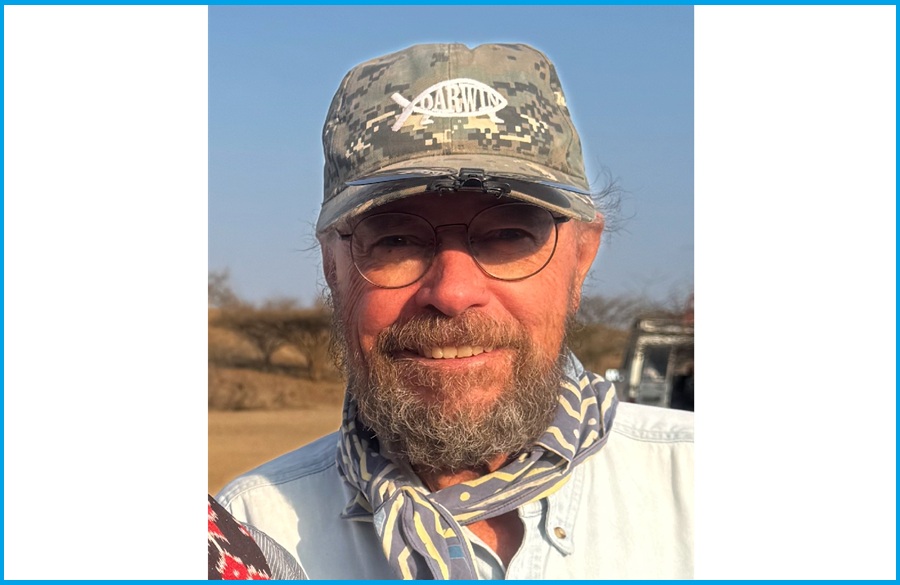
Tim White / Photo: Courtesy of the author
FACE TO FACE WITH
Tim White, American paleoanthropologist and Professor of Integrative Biology at the University of California, Berkeley.


The connection between Professor Tim White and the present interviewer, Dr David Rabadà, is rooted in admiration, scientific continuity, and time. Professor White was born in 1950 and Dr Rabadà in 1967, a difference of seventeen years that places them in distinct scientific generations. Yet, for the younger Rabadà, White’s work became influential at a decisive moment. In 1974, the discovery of Lucy by Donald Johanson and his colleagues marked a turning point not only in palaeoanthropology but also in the personal trajectory of a seven-year-old boy in the Catalan village of Vila-rodona, Spain. That discovery, together with the opening of a small palaeontology gallery at the local museum of his hometown, led David Rabadà to decide, at a very early age, that he wanted to become a palaeontologist.
More than half a century later, these two scientists meet in conversation. Professor White’s measured manner, intellectual generosity, and long experience in the field have helped shape one of the most influential careers in the study of human evolution. This interview brings together a childhood inspiration and a lifetime of scientific enquiry.
Professor Tim White is internationally recognised as one of the leading figures in modern palaeoanthropology. He is Professor of Integrative Biology at the University of California, Berkeley, where he also serves as Director of the Human Evolution Research Center. He is, furthermore, co-director of the Middle Awash Research Project, alongside Berhane Asfaw, Yonas Beyene, and Giday WoldeGabriel.
He completed his undergraduate studies in Biology and Anthropology in 1972 at the University of California, Riverside. From the outset of his career, fieldwork in eastern Africa played a central role in his scientific development. In 1974, he joined Richard Leakey’s research team in Kenya and subsequently collaborated with Mary Leakey on the study of fossil material from Laetoli, Tanzania.
Professor White has been directly involved in some of the most significant fossil discoveries related to early human evolution. Among them, the identification and analysis of Ardipithecus ramidus, dated to approximately 4.4 million years ago, offered new perspectives on early hominin anatomy and locomotion. He was also a key contributor to the naming and research on Australopithecus afarensis, including the partial skeleton popularly known as Lucy. Throughout his career, he has combined meticulous field research with rigorous anatomical analysis, shaping contemporary debates on human origins and the interpretation of the fossil record.
You graduated in Biology and Anthropology in 1972 at the University of California, Riverside. When did your interest in human evolution first emerge, and what initially drew you to this field?
The TIME/Life books Evolution and Fossil Man gifted by my grandmother and the relevant issues of National Geographic magazine during the 1960s moved me from a grade school fascination with dinosaurs into a focus on geology, archaeology, and paleontology.
You remain actively engaged in research after several decades of scientific work. What continues to motivate you to study human evolution?
The need for new evidence to extend our knowledge of the past.
“The need for new evidence to extend our knowledge of the past”
In 1974 you worked with Richard Leakey’s team in Kenya. How did you first come into contact with him, and how would you describe Richard Leakey in three words?
He lectured at the University of California at Riverside where I was a student, following in his father Louis Leakey’s forays into California archaeology. Political, domineering, insecure.
You also collaborated with Mary Leakey on fossil material from Laetoli, Tanzania. Later, you were involved in the discovery and study of Ardipithecus ramidus. When you first examined these fossils, did you anticipate the profound impact they would have on interpretations of bipedalism and early human evolution?
Yes.
Since Darwin, human bipedalism has often been presented as an adaptation with clear long-term advantages, yet it remains unclear how such a trait could initially evolve without those future benefits. Your work on Ardipithecus offered new interpretations of early bipedalism. In your view, how and why did bipedalism begin to evolve in our ancestors?
It was the product of natural selection on ancient quadrupedal apes. Not selection for “future benefits,” but rather selection for reproductive advantages. The best model for how that could have happened is outlined by my colleague Owen Lovejoy at Kent State University.
Together with Donald Johanson and other colleagues, you helped make the discovery of Australopithecus afarensis, known as Lucy, one of the most influential fossils find of the twentieth century. Which prevailing ideas about human evolution were altered by this discovery? More broadly, do you consider human evolution to have followed a linear path, or a more complex pattern?
Contrary to some popular opinion and promotional hype associated with the 50th anniversary of its discovery, the Lucy partial skeleton’s primary influence was not scientifically transformative. Rather, the associated publicity of the fossil combined with the media environment of the 1970s to help increase palaeoanthropology’s international public visibility. Scientifically, these Afar fossils confirmed what was already known by the 1950s about the role of Australopithecus in human evolution. Au. afarensis was a little older than previous discoveries, showing that the genus lasted longer than previously thought. And these Ethiopian fossils confirmed that bipedality and small male canines had evolved long before brain expansion and stone tool manufacture. Regarding human evolution in general, the South African fossils had also shown by the 1950s that human evolution involved more than a single species lineage.
“The Lucy partial skeleton’s primary influence was not scientifically transformative”
A full skeletal reconstruction of Lucy is currently being prepared at the American Museum of Natural History in New York. From your perspective, can such a reconstruction contribute new scientific knowledge, or is its primary value educational and related to public dissemination?
Such attempts to illustrate organisms that now exist only as fossils are subject to a wide variety of issues. They rarely contribute new scientific knowledge, but rather use fossil-based knowledge and knowledge of living relatives to effectively–if and when done by experts in the field–engage learners of all ages and demonstrate the reality of human evolution.
The Spanish sites of Atapuerca are very known in human evolution. Their former coordinators, Juan Luis Arsuaga, Eudald Carbonell, and José María Bermúdez de Castro interpret the accumulation of human remains at the Sima de los Huesos from Atapuerca as the earliest example of intentional human burial, while others suggest it resulted from carnivore activity combined with later water transport. Which interpretation do you find more convincing, and why?
I have not studied the evidence on which the differing claims are based, so I am not qualified to offer an opinion on this particular question.
“Many “species” that have been proposed are actually merely names given to single fossils or sets of fossils. I am certain that many of these names are not biologically realistic at the species lineage level”
In research on human evolution, theoretical assumptions and scientific interests sometimes influence interpretation. Do you believe that all the hominin species proposed in the fossil record are valid, or do some descriptions go beyond what the evidence supports?
Many “species” that have been proposed are actually merely names given to single fossils or sets of fossils. I am certain that many of these names are not biologically realistic at the species lineage level, and are evidence of taxonomic inflation rather than an actual biodiversity of hominid species lineages across the last six million years of our evolution.
What is your view on Homo antecessor from Atapuerca? Should it be regarded as a distinct species, or rather as a biological variant within Homo erectus?
This is an insoluble nomenclatural issue because of the many different species concepts in use today, and because of the limited fossil record available from which it can be currently addressed. Ongoing excavations currently enlarging the available Atapuerca samples are expected to resolve this issue.
Human evolution is a well-documented natural process, yet some religious perspectives argue for divine intervention or intelligent design. From a scientific standpoint, how can such claims be addressed clearly and effectively?
Science fact takes the form of physical and biological evidence. Much evidence for human evolution is already available. In contrast, claims about divine intervention or intelligent design are opinions, feelings, conjectures, or stories that are not based on facts. Furthermore, such narratives are inconsistent with the many indisputable facts, including fossils, that constitute reality-based knowledge. Facts rule in life, law, and science.
“Claims about divine intervention or intelligent design are opinions, feelings, conjectures, or stories that are not based on facts”
Do you think your professional achievements are linked to your early academic training, the transmission of knowledge you received, and a strong ethic of effort and discipline?
All of the above.
Finally, thank you for taking the time to share your reflections. Could you tell us about your next project, publication, or ongoing line of research?
My active field and laboratory research teamwork continues on the Miocene of Türkiye and the Plio-Pleistocene of the Middle Awash study area in Ethiopia. Our most recent project contribution describes the 100,000-year-old discoveries and was just published in the Proceedings of the National Academy of Science. Additional announcements of older project findings are in various stages of preparation and will be published when ready.
Source: educational EVIDENCE
Rights: Creative Commons