


- Humanities
- 13 de March de 2026
- No Comment
- 7 minutes read
Reading the noise. Text, image and sabotage in the work of Ferran Destemple

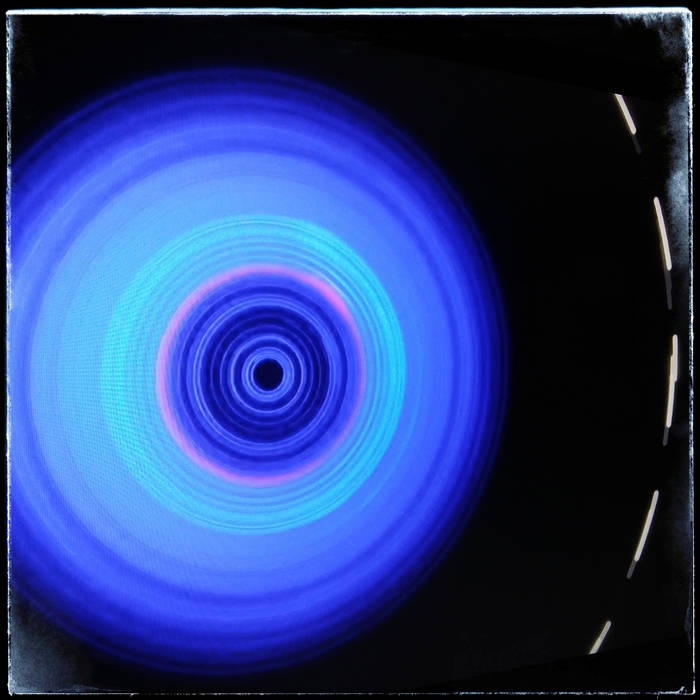
Poefonías, by Ferran Destemple. / Photo: https://ferrandestemple.bandcamp.com/album/poefon-as


Cesc Fortuny i Fabré
Ferran Destemple belongs to that select group of artists whose work behaves like a malfunctioning artefact — something that at first glance seems absurd and useless. To follow his work, therefore, is to accept from the outset that there is no clear roadmap and that understanding his proposal will not be easy. What we do find, however, is a system of residues: an assemblage of fragments that does not aspire to synthesis but to meaning.
In Destemple’s work, text does not present itself as a vehicle of meaning but as a working material, much like oil paint or brushes. Words, signs, images, film frames and typographic debris coexist on the same plane. In this context, language ceases to be a tool of communication and becomes a devouring system. It consumes itself, reuses itself, plagiarises itself, contaminates itself. Writing does not merely narrate; it absorbs, chews over and regurgitates all kinds of material — almost always discarded. Hence the importance Destemple assigns to collaboration, to working in tandem, to the blurring of authorship understood as the sublimation of the ego. The aim is not to sign a work but to allow the work to sign itself, with all its basting stitches left visible.
This logic runs through both his printed publications and his audiovisual projects. In pieces such as Cinefán, text no longer simply accompanies the image, nor does the image illustrate the text; the two interfere with one another. Film editing becomes a form of writing, while writing adopts the rhythm of montage. The voice-over does not explain what we see, nor does what we see confirm what is being said. Between the two an alternative space opens up — a narrow gap in which the reader-viewer must take on their share of the work.
That gap is crucial. In a cultural landscape obsessed with constant pedagogy, Destemple’s work stands firmly at the opposite extreme. Ambiguity is not a flaw to be corrected but the only possible narrative in a world where the accumulation of data has drained any story of its effectiveness. We live surrounded by texts, yet we no longer know how to read them.
In Destemple one can hear distant echoes of Surrealism and Dadaism, though without the epic tone of historical rupture. The symbol appears eroded, displaced, almost ironic. His imaginary world lies closer to a Burroughsian drift than to symbolic mysticism. He works through the cut, the splice and the accident as method.
References to popular culture operate according to the same logic — without nostalgia or homage. When recognisable characters, icons or structures appear — classical cinema, comics, or media imagery — they do so only to be neutralised. High culture and low culture mingle not in order to reconcile but to reveal that the distinction itself ceased to be meaningful long ago. A superhero may enter into dialogue with a classical sculpture without either emerging unscathed.
This logic of appropriation also runs through his editorial work. Projects such as La Rita Cooper Edita function as laboratories in which the book ceases to be a stable container and becomes instead a mutating device: a fanzine, a portable museum, or an intervened object. The medium is not neutral, for it shapes reading, fragments it and forces it to shift. Reading Destemple means accepting that the text may be incomplete, disordered, or even absent in the conventional sense of the term.
Asemic writing occupies a central place here. By renouncing recognisable words, the text approaches the image without ceasing to be writing, communicating in another way. It is a radically contemporary gesture: at a moment when language has been colonised by slogans, catchphrases and the tutorials, perhaps the only way out is to write without words, allowing the line to speak through its own opacity.
There is in all this an intimate delirium, though nothing grandiloquent. It is not an epic of the self but rather an exposure of its everyday fragility. The work does not seek to impose itself on the reader; it seeks to involve them in an unstable, provisional experience, always on the verge of coming apart. Technique — montage, cutting, reproduction — appears not as a guarantee of control but as yet another form of necessary self-deception that allows one to carry on.
In this sense, the fusion of text and video is not merely a crossing of disciplines but a coherent response to a fragmented cultural landscape. The page is no longer enough, nor is the screen. Destemple works in that interstice where no medium is sufficient unto itself. His work offers no solutions, not even clear questions. What it proposes, rather, is a way of inhabiting the noise without pretending it can be silenced.
To savour Ferran Destemple is to accept that meaning does not lie at the end of the journey. It lies instead in the detours, the interferences, the dead zones of discourse. Where language fails and the image fractures, something resembling a precarious truth emerges — not definitive, but strangely persistent. Like a hum that refuses to disappear even after every device has been switched off.
He graduated in Philology and later completed a postgraduate qualification in Aesthetics and Theory of Contemporary Art. An experimental and visual poet, he also works in mail art, among many other related disciplines — and by “related” one should understand above all the mixtures between them. His work wanders between fields that are sometimes closely connected and sometimes surprisingly distant. He has collaborated with a number of specialist journals, radio programmes and various publications. He has held more than twenty exhibitions and received several awards. For those interested in these details, it is worth visiting the site https://www.autismosautomaticos.net/, where his full curriculum can be consulted.
Source: educational EVIDENCE
Rights: Creative Commons