


- Opinion
- 6 de March de 2026
- No Comment
- 9 minutes read
Is the Catalan model of inclusive education truly inclusive?

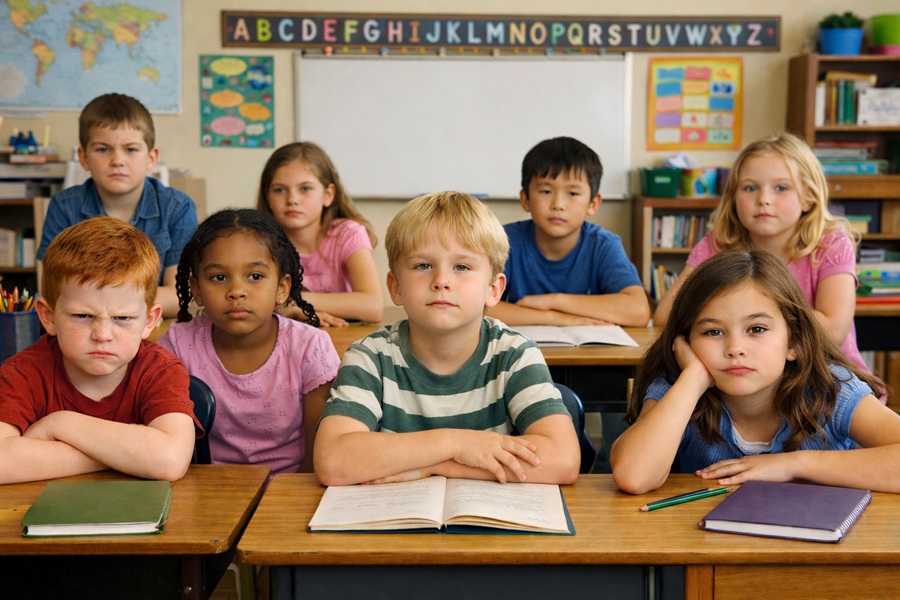
Image created by IA.


Felipe J. de Vicente Algueró
The Fourth Additional Provision of the Organic Law Amending the Organic Law on Education (LOMLOE) introduced a far-reaching and decisive regulation concerning pupils with disabilities. The provision reads as follows: “The Government, in collaboration with the education authorities, shall develop a plan so that, within ten years, in accordance with Article 24.2.e) of the United Nations Convention on the Rights of Persons with Disabilities and in fulfilment of the fourth Sustainable Development Goal of the 2030 Agenda, mainstream schools are equipped with the necessary resources to provide the best possible support for pupils with disabilities”. This policy — transferring pupils with disabilities, many of whom were previously educated in special schools, into mainstream settings — has been described as the model of the “inclusive education”. Many affected parents opposed the measure, preferring their children to remain in special schools, but their voices went largely unheard.
The history of inclusive education is a long one. It began, unsurprisingly, in the United Kingdom, birthplace of comprehensive education. The principal intellectual force behind British inclusive education was Helen Mary Warnock, Baroness Warnock. Born into a distinguished banking family, she was educated at Oxford and later taught there. A philosopher by training, specialising in existentialism, she had a brother with autism — a personal circumstance that shaped her later involvement in educational policy. Warnock authored several influential works on education and wrote for the Times Educational Supplement. In 1974, a Labour government appointed her to chair a committee examining the education of children with special educational needs in mainstream schools. The resulting report strongly supported integration and ultimately informed subsequent legislation.
Yet Baroness Warnock did not take long to become disillusioned with the way her recommendations were implemented. In an article published in The Telegraph, she offered a sober reassessment of inclusive education in England. Her words are worth recalling: “What the committee actually recommended was that the large number of children with moderate learning difficulties who were already in mainstream schools should have their needs identified and met where they were”. From that starting point, she envisaged a cautious and case-by-case extension of integration, ensuring that inclusion would genuinely benefit each child. Her principal criticism concerned the way her conclusions had been interpreted: “The committee as a whole never proposed that all children should receive the same education, nor that special schools should be abolished. That was, and remains, an extreme position”. Warnock’s change of heart was welcomed by parents who preferred special schooling. As early as 2005, the president of an association representing such parents remarked: “Inclusion has been used by politicians as a politically correct panacea, but thousands of parents know they have been sold a false prospectus, and that their children — those who need the most help — have suffered in mainstream schools” (Daily Telegraph, 9 June 2005).
That extreme position appears to be the one adopted by LOMLOE and, in this regard, by its most fervent advocate: the Generalitat of Catalonia (Decree 150/2017 of 17 October, on educational provision within an inclusive education system). Under this decree — which would likely have startled Baroness Warnock — all pupils are to be educated in mainstream schools, and only exceptionally may parents request placement in special schools for those with the most severe conditions (Art. 18.1). In the United Kingdom, the shortcomings of radical inclusion stemmed from the practical impossibility of equipping every school with sufficient resources and from a maximalist interpretation of inclusion. Responsibility was shifted onto mainstream teachers, who often lacked the specialist training required for highly complex cases. It seems that the English experience has not been fully taken into account here.
LOMLOE explicitly invokes the United Nations Convention on the Rights of Persons with Disabilities (25 November 2016). It is an extensive document, containing numerous recommendations to states regarding inclusive education and extending the concept of inclusion beyond disability to encompass poverty and other barriers preventing millions of children worldwide from accessing schooling. It distinguishes clearly between “integration” and “inclusion”, presenting the latter as the desired goal. Yet the model of inclusive education proposed by the United Nations is highly demanding, arguably utopian: “Inclusion involves a process of systemic reform embodying changes and modifications in content, teaching methods, approaches, structures and strategies in education to overcome barriers, with a vision serving to provide all students of the relevant age range with an equitable and participatory learning experience and the environment that best corresponds to their requirements and preferences”. Seen in this light, one might reasonably ask whether what exists in Spain is not genuine inclusion but merely integration — akin to the English model that proved unsustainable. As the UN text itself makes clear: “The placement of students with disabilities within mainstream classes without accompanying structural changes, for example in organisation, curricula and teaching and learning strategies, does not constitute inclusion”.
In short, true inclusion requires structural transformation of the entire education system — a formidable undertaking. In practice, Spain has not achieved inclusion but rather simple integration, arguably to the detriment of all pupils: those with specific needs and those without. Anyone wishing to see how radically the Spanish system would need to change — from teacher training to classroom infrastructure — can consult the detailed report of the Spanish Centre for Research and Documentation on Disability (Centro Español de Investigación y Documentación sobre Discapacidad), grounded entirely in what it terms “inclusive pedagogy”, to which all teachers and curricula are expected to conform. According to the report’s authors, inclusive training outweighs even subject-specific expertise. Their recommendations include: “University training for teachers must be different. They must be taught ways of delivering inclusive and participatory lessons. The public authorities must become more involved in teacher training. And curricula — the frameworks that determine which subjects are taught and what must be learned — must be changed”.
Pupils with special educational needs form only one subgroup within the broader Spanish category of pupils requiring specific educational support, which also includes dyslexia, high ability and ADHD. Only in the case of pupils with special educational needs is there serious debate about placement in special schools. Pupils with special educational needs represent approximately 4% of pre-university students in Spain; 70% are boys. Around 85% are enrolled in mainstream schools. The most common conditions are autism (nearly 30%), intellectual disability (26%) and severe behavioural disorders (around 15%, predominantly boys). When the wider group of pupils requiring educational support is included, the proportion of students with disabilities or significant behavioural challenges in mainstream classrooms becomes substantial — arguably unsustainable without effectively transforming all mainstream schools into specialised centres, which appears, in essence, to be the ambition of the inclusive pedagogy framework.
The reality of schooling for pupils with special educational needs is complex. Over the past decade, the number of pupils with special educational needs enrolled in special schools relative to total enrolment has increased by 23.6%, although the majority remain in mainstream education. It is estimated that 92% of those pupils leave compulsory schooling without formal qualifications. Bullying figures are equally troubling: rates affecting pupils with disabilities reportedly reach 80% in mainstream settings and are virtually non-existent in special schools. On these indicators, the model can hardly be deemed successful. Mass and indiscriminate mainstreaming, as promoted by LOMLOE, has not yielded improved outcomes for pupils with special educational needs. The Spanish version of the “inclusive education” is inclusive in name only; it is integrative rather than transformative. The label functions more as political messaging than as structural reform, while placing additional burdens on mainstream teachers beyond what they can realistically shoulder. To put it more bluntly, the Spanish — and particularly the Catalan — model of inclusive education risks becoming a poorly executed policy experiment, costly in both financial and human terms. Yet it allows policymakers to claim compliance with United Nations recommendations.
Moreover, the concept of inclusion has at times been stretched for ideological rather than practical reasons. In effect, the right of pupils and their families to a more personalised education — more readily achievable in special schools — has been constrained. As Albert Campabadal, President of the Spanish Council for the Defence of Disability and Dependency, has argued: “LOMLOE dismisses special education from the outset because it assumes it is not inclusive, and that is a mistake. For a child with a disability, inclusive education is education that provides all the support he or she needs and prepares them as well as possible for life beyond school. If special education achieves that, it is as inclusive — or more so — than mainstream schooling. Not all children with disabilities have the same condition or degree of severity. For some, mainstream education may be the most inclusive option; for others, special education will be”. Campabadal is the founder of Grupo SIFU, which employs over 8,000 people, half of them with disabilities. His experience of inclusion is practical rather than theoretical — and therefore not easily dismissed.
Source: educational EVIDENCE
Rights: Creative Commons