


- History
- 21 de April de 2026
- No Comment
- 8 minutes read
Leonor Serrano Pablo, a pioneer of the Montessori approach in Catalonia
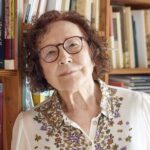
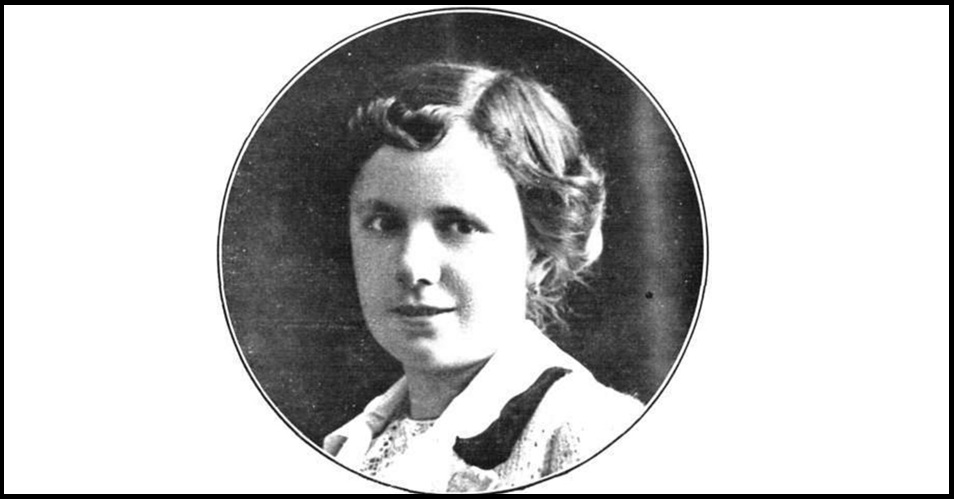
The educator, jurist, lawyer and feminist writer Leonor Serrano Pablo. / Source: Wikimedia, “Les mestres pensionades a Roma”, La Ilustració Catalana (581).


Soledad Bengoechea
Leonor Serrano was a teacher who played a key role in introducing and promoting the Montessori approach to early childhood education in Catalonia. She was born in Hinojosas de Calatrava (Ciudad Real) on a cold 22 February 1890 and died in Madrid in 1942. Throughout her adult life, she combined her work as a teacher and a lawyer with a firm commitment to women’s rights.
As a child, she obtained a scholarship that enabled her to leave her village school and study as a boarder for ten years at the Colegio del Sagrado Corazón in Madrid. She later qualified as a senior primary teacher at the Escuela Normal in Guadalajara, while also helping to support her family, who came from a modest rural background—as continuing her studies. Between 1909 and 1912 she attended the Escuela de Estudios Superiores de Magisterio in Madrid, where she encountered the reformist educational ideas associated with the Institución Libre de Enseñanza, founded in 1876 by Francisco Giner de los Ríos. This pioneering initiative established the first educational institution in Spain independent of both State and Church, initially focused on higher education and later extended to primary and secondary schooling, until it was brought to an end by the outbreak of the Civil War in 1936.
In 1913, Serrano joined the first cohort of school inspectors open to women—a significant milestone. After initially serving as an assistant inspector, she moved to Barcelona, where she soon secured a permanent position, and in 1915 she was appointed provincial inspector.
Her arrival in Barcelona coincided with the period of the Mancomunitat of Catalonia1 (1914–1923/25), marked by a strong commitment to educational reform and to the principles of the Escola Nova, a pedagogical movement that had emerged in Catalonia in the late nineteenth century, and advocated active learning in contrast to more traditional forms of instruction. In 1914, she collaborated with the educator Joan Palau Vera in early trials of the Montessori approach—an educational framework designed to foster children’s spontaneity and autonomy within a carefully prepared environment that supports their self-directed development.
At the initiative of the influential Catalan educator Eladi Homs, six teachers funded by the Barcelona Provincial Council and City Council were sent to attend the Second International Montessori Course organised in Rome that same year by Maria Montessori. Serrano was among them. Montessori’s ideas made a profound impression on her, and she went on to play an active role in disseminating this approach in Catalonia. In July of that year, she also took part in the first Summer School, contributing to training courses aimed at introducing teachers to Montessori principles under the direction of Palau Vera, a Valencian educator of Venezuelan origin.
During her early years in Barcelona, Serrano used both her public interventions and her writings to call on the authorities to ensure universal access to schooling, including at the early years stage. She also advocated the establishment of school canteens, which she regarded as essential if women were to be able to enter the workforce.
In 1918, she became involved in initiatives aimed at expanding educational opportunities for women, notably through the Institut de Segon Ensenyament de Barcelona, founded in 1910 under the impetus of Hermenegildo Giner de los Ríos, a city councillor and former secretary of the Institución Libre de Enseñanza.
In 1924, during the dictatorship of Primo de Rivera (1923–1930), she was awarded a grant by the Junta de Ampliación de Estudios2 to visit schools and educational initiatives in Belgium, France and Switzerland, with particular attention to vocational and adult education. These experiences were reflected in her books La Enseñanza Complementaria Obrera and La educación y las profesiones femeninas.
Her refusal to denounce teachers who used Catalan in schools, together with her opposition to the dictatorship, led to her exile from Catalonia, along with a group of inspectors that included her husband, Josep Maria Xandri. In 1926 she was first posted to Castellón, then to Huesca, and later, in 1929, to Zaragoza. Despite these difficult circumstances, these were years of considerable intellectual productivity. During this period, she completed her secondary education and went on to study law, graduating at the age of forty.
Upon returning to Barcelona, she devoted herself fully to her work as an inspector and to her legal practice. She also began contributing regularly to the newspaper Las Noticias, in a column significantly entitled “Tiempos Nuevos” (‘New Times’). In the more open political climate ushered in by the Second Republic in 1931, Serrano became actively involved in the defence of women’s rights and feminism. She channelled this commitment politically by joining the Unió Socialista de Catalunya (USC), where in 1932 she assumed responsibility for Culture and Women’s Action within the party’s executive committee, and contributed to Justícia Social, the official publication of the USC.
During the Civil War (1936–1939), she was dismissed from her post as inspector by Wenceslao Roces, Undersecretary for Public Instruction under the communist minister Jesús Hernández, and stripped of all her rights. Although she appealed, the penalty was merely commuted to forced retirement on reduced pay—still a severe sanction.
The Francoist bombing of Barcelona brought personal tragedy: both her husband and her son, Andreu Xandri, were killed. She initially went into exile in France but returned in 1939 to care for her elderly mother. Living in poverty in Madrid, she survived on the small income she earned from private tuition. Eventually, she was recognised and reported, and brought before the Tribunal de Responsabilidades Políticas3. While proceedings were still being initiated, she died on 24 April 1941.
In November 2018, a municipal nursery school in Barcelona was inaugurated in her name.
___
1 An administrative body established in 1914 that brought together the four provincial councils of Catalonia. It played a key role in modernising infrastructure and promoting cultural and educational reform, including support for innovative pedagogical movements.
2 A Spanish public institution founded in 1907 to promote scientific research and educational modernisation by funding scholarships, international study visits and academic exchanges. Closely linked to the ideals of the Institución Libre de Enseñanza, it played a central role in connecting Spanish scholars with leading European centres until its dissolution during the Civil War in 1939.
3 A special court established by the Franco regime in 1939 to investigate and punish individuals deemed politically disloyal during the Civil War.
Source: educational EVIDENCE
Rights: Creative Commons