


- Humanities
- 2 de February de 2026
- No Comment
- 16 minutes read
Marta Vericat: “The pet-keeping paradigm is a profoundly unequal relationship”

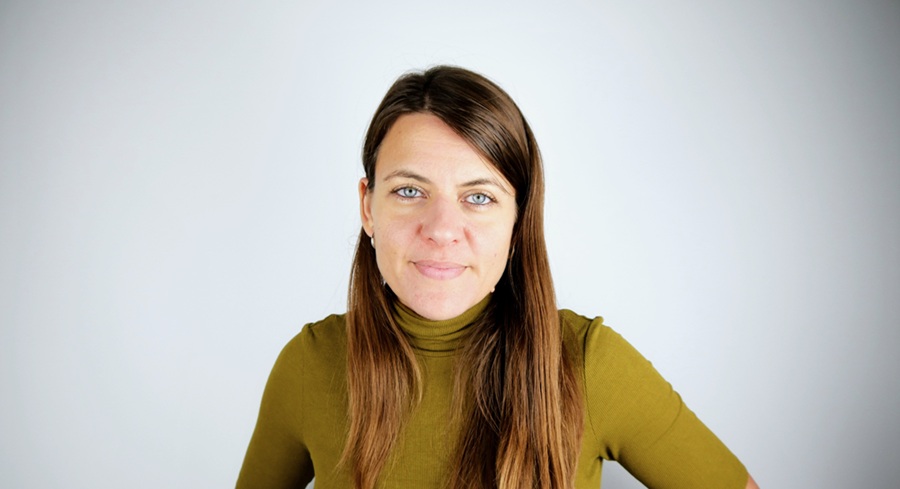
Marta Vericat. / Image provided by the author



Marta Vericat (Barcelona, 1984) holds a PhD in Human Sciences from the University of Girona and graduated in Philosophy from the UNED. In 2018, the Autonomous University of Barcelona published her pioneering book Filosofía y toros. Un debate ético. She now returns with Mascotisme. Un problema d’ètica animal, recently released by the Enoanda imprint.
How did animal ethics become your central concern? Did you seek it out, or did it find you?
It’s a bit of a chicken-and-egg question: most likely, both things developed in parallel. I’ve always been a curious and sensitive person in relation to my surroundings, and that has made me particularly attentive to the presence of animals in everyday life. Those observations, together with living with the cats I have at home — who have been a fundamental source of inspiration — gradually gave rise to a persistent sense of unease and, with it, to countless questions about the relationships we establish with animals and the bonds we build with them.
I can’t pinpoint the exact moment when I decided to approach animal ethics from a more theoretical angle, but there did come a point when I felt the need for a solid framework to support and continue developing the animal rights activism I was already engaged in on the ground.
“Pet-keeping is an essential issue of our time and calls for arguments, common sense, and sound reasons capable of going beyond superficial conversations”
Animal ethics deserves its own space and should be treated with the same seriousness as any other academic issue. It’s true that there is now more interest than there was a few years ago, and more studies and research from different disciplines. Even so, it remains striking that pet-keeping has not been addressed with the same rigour or breadth as other central concerns in animal ethics, such as experimentation, meat production, hunting or fishing. And yet pet-keeping is an essential issue of our time — one that calls for arguments, common sense and sound reasons capable of going beyond superficial conversations.
You write: “There is insufficient knowledge about the prehistory of animal domestication”. Does your book try to fill that gap? What worries you most, ethically speaking, when you think about pet-keeping?
This part of the book doesn’t set out to fill that gap in relation to the prehistory of animal domestication. Going back to origins and bringing in the evolutionary perspective of dogs and cats is mainly about offering a contextual framework — a look at the past that helps us better understand the present. It’s less about explaining where we come from than about understanding why we are where we are. Looking back allows us to denaturalise the current state of affairs and to remind ourselves that the forms of relationship we now see as obvious or inevitable are, in fact, the product of contingent historical processes — processes that are open to change and therefore open to transformation.
What worries me most is the regime of meaning that sustains pet-keeping, and the moralising benevolence that surrounds it. The dominant discourse, built around the language of love, neutralises moral conflict and makes critical thinking more difficult. This highly normalised narrative produces a kind of ethical blindness: it prevents us from recognising the structures of domination involved in domestication. This domination doesn’t usually take openly violent forms. Instead, it presents itself as a kind of affectionate normality, as a relationship without locks or visible bars — and that is precisely why it is so effective. When power isn’t perceived as power, when dependence is confused with protection, the deeply anthropocentric and, in many ways, carceral dimension of our relationship with animals disappears from view.
What do you mean by the “utopia of understanding”?
By “utopia of understanding” I’m referring to the problem of otherness — in other words, the radical impossibility of fully understanding pets precisely because they belong to a different species. No matter how much we know about their habits, their patterns of behaviour or even some of their biological mechanisms, there will always be aspects of their experience of the world that remain beyond our reach.
“By ‘utopia of understanding’ I’m referring to the problem of otherness — in other words, the radical impossibility of fully understanding pets”
We often humanise animals, and the moment we project anthropomorphic categories onto them we tend to believe that we are establishing a relationship of empathy. In reality, what exists is an unbridgeable ontological gap. We interpret their experience of the world from an inevitably human perspective — one we cannot escape — and in doing so we construct the false illusion that they are fully intelligible to us. That illusion of understanding becomes a subtle form of control: because we think we know what they are and what they need, we no longer see the problem in speaking on their behalf or in imposing on them a world made to our own measure.
This need to leave no room for opacity stems from a deeply human discomfort with whatever resists us, with what cannot be fully translated into our own language. That epistemic limitation isn’t, in itself, a bad thing. The problem arises when we’re not honest enough to recognise the partial nature of our knowledge, or our biological and cognitive limits as a species, and instead develop theories and projections that distort reality in order to explain what is inaccessible to us. When that happens, we risk turning what we don’t understand into a poorer version of what we do understand. The result is an image of the animal that feels close and familiar, but is in fact a construction that says far more about us than about them.
“This need to leave no room for opacity reflects a deeply human discomfort with whatever resists us”
Acknowledging this limitation doesn’t mean giving up on caring for animals. On the contrary, it may be the first step towards relating to them more cautiously. Nor does it release us from moral responsibility; rather, it forces us to exercise that responsibility with greater humility and with fewer anthropocentric projections. Denying this epistemic limit becomes a key mechanism of domination, because we don’t dominate only through material power, but also by telling ourselves that we know, that we understand, that we act in the other’s best interests.
What do you think is most urgent to change right now? Where would you start?
A good place to start would be to question the very paradigm of pet-keeping and to dismantle the moralising benevolence that still dominates our moral imagination when it comes to animals. We need to talk about it openly and to problematise pet-keeping — not for the sake of provocation, but because as long as we don’t, we continue to normalise forms of instrumentalisation that are often hidden behind the language of affection and good intentions.
For me, what’s at stake isn’t just improving specific practices, but changing the way we think about this relationship altogether. That means revisiting the language we use, introducing more doubt and fewer automatic certainties, and stopping taking so many things for granted.
I’d begin by rethinking the ideas and narratives we rely on when we talk about pets, so that we can start to see dogs and cats for what they are — not only for what they represent or for the place they occupy in our lives.
In the final reflections of the book, you write that: “To reflect on pet-keeping is also to reflect on power and unequal relationships”. Could you expand on that? Do we live in a culture that glorifies pet-keeping?
When I say that reflecting on pet-keeping also means reflecting on power and inequality, I’m pointing to the fact that this relationship is never neutral or symmetrical. Even if we’re reluctant to see it this way, pet-keeping is a profoundly unequal relationship.
“We decide where they live, who they live with, what they eat, when they go out, whether they reproduce or not — and even when their life comes to an end”
Although we often experience it in terms of affection, care or companionship, the reality is that it’s a relationship in which one party has the power to decide almost every fundamental aspect of the other’s life. We decide where they live, who they live with, what they eat, when they go out, whether they reproduce or not, and even when their life comes to an end. That is power — and it is considerable power. This power of decision isn’t incidental; it’s the very structure of the relationship itself. The problem is that it’s concealed behind the language of love and good intentions. We tell ourselves we act for their own good, and often that’s true, but that doesn’t make the relationship any less asymmetrical. Affection doesn’t cancel out control. Reflecting on pet-keeping therefore also means asking ourselves what we do with this power, and how legitimate it is to decide the life of another being. It’s an uncomfortable question, but an unavoidable one if we want to be more honest about how we relate to animals.
We do, in fact, live in a culture that constantly glorifies pet-keeping: in advertising, on social media, in film, in the media more broadly. The image of the pet forms part of an ideal of the good life — a kind of emotionally desirable normality. The issue isn’t that this generates affection, but that it turns pet-keeping into something almost beyond question. It’s assumed to be good, natural, morally positive, and it becomes very difficult to introduce a critical perspective without seeming to attack love for animals. This glorification makes the most uncomfortable aspects of the relationship invisible: control, dependence, lack of freedom. When we only see the benign side, we stop asking questions. That’s precisely why it’s necessary to disrupt this comfortable consensus and start looking at the phenomenon with greater complexity and less idealisation.
Your book is based on a PhD thesis defended in 2024, yet it reads very much like a fully-fledged philosophical essay. What was that rewriting process like?
At first, I thought it would mainly be a matter of cutting the thesis down, reorganising it and making it more readable. But it quickly became clear that what was really needed was to rethink it altogether. There was a significant gap between what a doctoral thesis demands and what I wanted the book to be — so I ended up rewriting almost everything.
“We live in a culture that constantly glorifies pet-keeping: in advertising, on social media, in film, in the media”
It was also a kind of mourning process, because I had to let go of many pages that had taken a great deal of effort to write and that had once seemed indispensable. At the same time, it was very liberating to discover that I could write differently — with more freedom and a stronger personal voice. Moving from the thesis to the book was also a lesson in how to say things more directly, with fewer precautions and in a more stripped-back way.
Is there a particular author who has been especially important for you?
I don’t really believe in having a single reference author, but there are books that change the way you see the world and never quite leave you. For me, one of those moments was reading Un veterinario encolerizado by Charles Dante. I remember it as a book that deeply unsettled me, because it put into words many intuitions and discomforts I already had. It helped me see that what I experienced as personal contradictions or unease were actually part of a much deeper problem.
I was also very struck by discovering that an author like Charlotte Perkins Gilman had already reflected on many of these issues more than a century ago. When I read If I Were a Man, and especially the passage in which she describes the life of a dog, I had the strange feeling of reading something that was both very old and very current at the same time.
More than academic references, these books have been companions — texts I’ve returned to over the years and that have helped me sharpen my way of looking at things.
What kind of feminism do you defend?
That’s a particularly relevant question at a time when feminism often appears fragmented, or when we’re told there are many different “feminisms”. I understand feminism — not feminisms — as a political movement with a clear agenda. And precisely for that reason, I think many contemporary discourses that fail to take on its core demands are, in effect, appropriating the name without engaging with its substance.
When I talk about feminism, I’m referring to radical, abolitionist feminism — one that understands the oppression of women not as a matter of identity or self-perception, but as a concrete political and material reality, rooted in sex and in the patriarchal organisation of society.
“The feminism I defend is radical in the literal sense of the word, because it seeks to go to the root of the problem: the patriarchal system”
This feminism starts from the premise that women constitute a social class oppressed by the simple fact of being born female. That oppression cuts across every area of life and takes very concrete forms: male violence against women; sexual and reproductive exploitation; prostitution, pornography and surrogacy; economic inequality; and the disproportionate burden of care work.
The feminism I defend is radical in the literal sense of the word because it aims to address the root of the problem, which is the patriarchal system itself. Within that framework, abolitionism isn’t an optional extra, but a logical consequence. It’s not about making institutions that sustain oppression more “dignified”, but about working to abolish them altogether — whether we’re talking about prostitution or any other form of exploitation based on women’s bodies.
This way of understanding feminism connects directly with my approach to animal ethics from an intersectional perspective. Not because women and animals are the same, but because the mechanisms of domination, the instrumentalisation of bodies and the legitimisation of exploitation share deep structural similarities. The same system that turns women’s bodies into resources also turns animals’ bodies into available material. An intersectional perspective doesn’t dilute conflicts; it helps us understand more clearly how they are structured.
Are you writing at the moment? What are your immediate plans?
Yes. I’m currently working on an article about pet-keeping, with the aim of developing aspects I wasn’t able to explore fully in the book and that still seem particularly interesting to me. More specifically, the article looks at men’s relationships with their dogs in comparison with women’s relationships with theirs, as an expression of broader social models.
“I find it very telling that the world of dog training is heavily masculinised”
One of the central threads of the piece is the way dog training is framed through ideas such as hierarchy and leadership, control and obedience. I find it very telling that this field is so heavily masculinised: most figures of authority and recognised ‘experts’ are men, while women, in general, continue to take on the bulk of everyday care work.
The article reflects on the extent to which these differences reproduce deeply ingrained gender patterns, and on how those patterns also shape what we understand by ‘having’ a dog. Ultimately, what interests me is showing that pet-keeping isn’t a neutral practice, but a space where questions of power and gender intersect.
I’m also preparing another article on robotic pets in Japan and China, approached from an ethical and cultural perspective. I’m interested in what it says about our societies that we are creating artificial substitutes for relationships that were, until recently, exclusively with living beings. The article raises questions such as whether, through technology, we’re trying to preserve the form of the bond with pets while removing its moral weight.
Source: educational EVIDENCE
Rights: Creative Commons