


- Face to face
- 1 de December de 2025
- No Comment
- 11 minutes read
Juan Jesús Donaire: “The transmission of knowledge is essential”
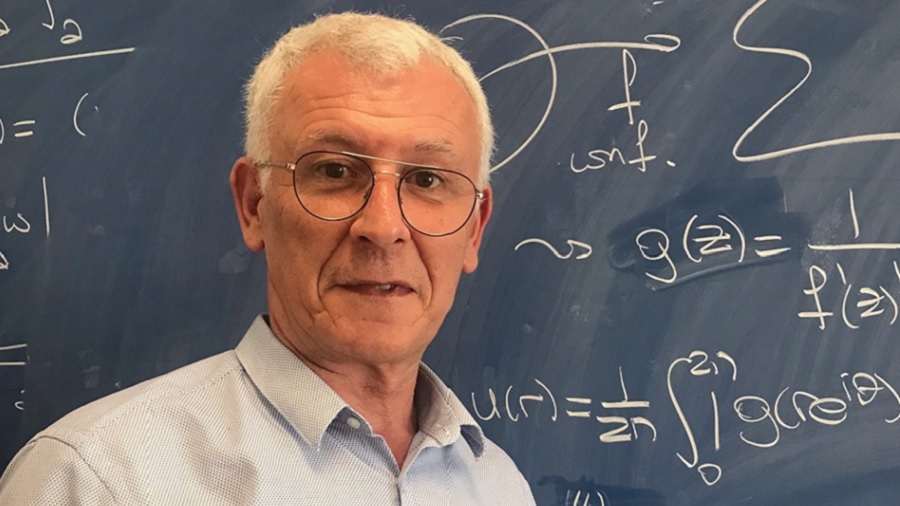
Dean Juan Jesús Donaire. / Photo: Courtesy of the author
FACE TO FACE WITH
Juan Jesús Donaire, Dean of the Faculty of Science at the UAB


On 1 October, the Dean of the Faculty of Science at the UAB stated categorically in La Contra of a well-known newspaper that “children must not be treated as guinea pigs for experimental methods”. He did not make this claim lightly or rashly, but grounded it in solid and verifiable evidence. Juan Jesús Donaire Benito is Senior Lecturer in Mathematical Analysis in the Department of Mathematics at the Universitat Autònoma de Barcelona (UAB). He graduated in Science at the UAB on 1 January 1990, and obtained his PhD in Mathematics, also at the UAB, on 19 November 1995.
He has carried out research stays in several international institutions, including the Technical University of Berlin, the California Institute of Technology, the Université de Montréal, and the Universidad Autónoma de Madrid. Since September 2022 he has served as Dean of the Faculty of Science at the UAB, a position to which he was elected in an extraordinary session, and which involves leading the academic, teaching, and institutional management of the faculty. Previously, he held various responsibilities such as coordinating the Mathematics degree and the Department’s doctoral programmes. He has also been Vice-Rector for Academic Policy, Vice-Rector for Staff and Academic Planning, and has collaborated with AQU Catalunya on faculty accreditation processes.
Dr Donaire, you and me completed both our graduation and PhD studies in the same years. Both degrees gave us the theoretical and methodological foundations that underpin our professional careers. What role did your schooling play in enabling you to complete your degree and later your PhD?
My schooling was essential because I was fortunate to have excellent teachers who left a deep and lasting mark on me. I remember my Spanish language teacher, who awakened in me a love of literature and an understanding of the classics. But I also had fantastic teachers during the old EGB (the former compulsory education stage) and Batxillerat (the previous upper-secondary stage) who, in their own way, shaped my future path by prompting me to ask interesting questions with rigour, high standards, and passion. I also had an exceptional mathematics teacher who was absolutely pivotal for my later career. In short, I was taught by people who embodied their discipline in an exemplary manner.
You have undertaken research stays in Berlin, Caltech, and Montreal. What role did personal effort play during these periods at international research institutions?
Those stays were purely for research. Once I had finished my doctoral thesis, I left in order to distance myself a little from the place where I had trained, and to find new questions, new horizons, and new lines of inquiry with scientists who could have a positive influence on my future. That is how I came to know leading figures from whom I learned an enormous amount. Of course, it required effort on my part, leaving my family behind, but ultimately it was extremely rewarding, because it allowed me to discover other ways of seeing the mathematical world.
“I believe there is now a certain disorientation, with too many educational innovations that, I suspect, have not been sufficiently thought through”
How did these experiences shape your view of university teaching?
If anyone had the answer, we wouldn’t be facing the problems we have now. My sense is that there is currently a degree of disorientation, with far too many educational innovations that, I suspect, have not been carefully considered. And without wishing to accuse anyone—God forbid—I sometimes feel that the school sector follows a slightly erratic logic, claiming that society is changing rapidly and that therefore new solutions and methodologies are needed, but without sufficiently taking into account a group that is essential if we want to understand what is actually happening: the teaching profession.
Very often the Education Department, together with certain gurus linked to it, issues guidelines and new methodologies that completely ignore a reality that teachers can describe perfectly well. I believe this is extremely serious because such unproven directives simply lead to educational failure. For example, years ago we designed at the UAB a programme for high-ability students, and when we consulted experts in the field—specifically on project-based learning—one of them told me that there was not a single serious peer-reviewed article demonstrating that project-based learning works.
What role should the transmission of knowledge play in lower and upper secondary education?
The transmission of knowledge is fundamental, even if stating this today seems unfashionable. Knowledge is often devalued because of a hypothesis that is false and untested: the assumption that students will be able to learn by themselves without a teacher who is expert in the subject. But it is obvious that learning new things requires prior knowledge—properly explained by properly trained teachers.
“What I fail to understand is this explicit, current renunciation of knowledge for its own sake, as though it were something questionable. There is nothing wrong with knowing a lot”
I can ask myself what the most abundant element in the universe is—hydrogen—but if I do not know what a chemical element is, I will understand very little. And then there is something else, where perhaps I am mistaken, being just a mathematician, but knowing things—anything—is fundamental. Knowing who Ausiàs March was may not have an immediate or pragmatic application, but it situates me in history, in my country, and in general culture; it also makes me a better citizen. Furthermore, mathematical developments from over a century ago found applications in new theories such as relativity or chaotic systems. So what I fail to understand is this explicit, current renunciation of knowledge for its own sake, as though it were something questionable. There is nothing wrong with knowing a lot.
You have taught in a wide range of degrees—Mathematics, Applied Statistics, Chemistry, Physics, Environmental Science, Computational Mathematics, and Data Analytics. What, in your view, is the essential component of a good secondary education system?
In an ideal system, the first requirement is resources—not creating new administrative positions every other day in the Education Department, but resources in the classroom: material resources and human resources. That means smaller class sizes and teachers who are genuinely knowledgeable and expert in their subjects. To teach physics, the first thing you need is to know physics. Strangely enough, for some sectors this is considered revolutionary. But I suspect the scientific community generally agrees that teachers must be experts in their subjects and fully command the content they have to teach, along with the appropriate didactics.
“To teach physics, the first thing you need is to know physics. For some sectors this is, paradoxically, considered as revolutionary”
From your experience as coordinator and vice-rector, what other qualities should teachers have?
A teacher must, above all, treat their students with respect and without arrogance. This prevents fear and frustration and enables students to learn better what their teachers seek to teach them. The second essential point is mastery of their subject, together with a solid, non-improvised organisation of the course: knowing clearly where we begin and where we want to end up, and what activities need to be integrated. And finally, good coordination is essential, valuing the work teachers do and listening to experienced secondary school teachers. You only have to look at social media to see what many teachers are expressing. Perhaps we only need to pay a bit more attention to them to find solutions to the problems they face.
You coordinated the Mathematics degree and you have held vice-rector positions. This gives you a clear view of teaching design, academic planning, and educational policy. What do you think of the mathematics teaching methodology promoted by Innovamat?
This is a tough question. Look, I do not know Innovamat in great depth, but when I speak with mathematics teachers who have a strong background in the subject, they tend to be highly critical of Innovamat—especially on basics such as addition and subtraction. Innovamat makes these operations very complicated, extremely complicated in fact, under the banner of a more playful and friendly methodology rather than a genuinely didactic one. What is more, Innovamat is dangerous because it encourages the idea that it can replace the teacher, reducing them to a secondary role. Yet teachers could teach these skills much better, much faster and much more efficiently, enabling students to learn more effectively—albeit with less “play”.
But the Education Department has invested heavily in Innovamat.
Yes, but we tend to think that we need to invest more in education, rather than asking what we invest in. What if we invested in concrete necessities such as training more teachers, improving the supply of subject specialists, and strengthening language immersion support for newly arrived pupils?
Singapore spends relatively little on education, yet gets top PISA results. Perhaps the issue is not how much we spend, but where and in which proven didactics.
Exactly. We are forgetting to fund the obvious: staffing levels, class sizes, specialist teachers, and language immersion. And above all, restoring prestige to the teaching profession. Right now there is a shortage of secondary school teachers. And why? Quite simply because salaries are too low and graduates are paid far better elsewhere—sometimes twice as much. If we lack teachers, there is a very simple way to fill vacancies: pay secondary school teachers more. Teaching is a very demanding and consequential job, and it must be recognised financially, given the enormous effort it requires.
“You ask me how to improve STEM? By doing the opposite of what is currently being done. Bundling subjects together (area-based learning and the like) does not seem effective”
How do you view the future of STEM education (Science, Technology, Engineering, Mathematics)?
You ask me how to improve STEM? Well, by doing the opposite of what is currently being done. This business of bundling subjects (area-based learning and the like) does not seem effective. And there is another problem: the pseudoscientific theories that circulate in our society. In such a context, scientific literacy becomes essential, yet the root cause is the widespread lack of scientific culture. People need scientific knowledge in order to know what to think, what to consume, and how to educate. But the number of hours devoted to mathematics and science in our schools has fallen considerably over recent decades, which leads to a poorly educated population with limited scientific literacy—less critical and therefore more easily manipulated. We urgently need to increase, within the current curriculum, the hours dedicated to mathematics and science if we want to foster a socially critical mindset.
Finally, what project are you currently working on that could contribute to improving education at a national level?
I have set up a network of Catalan science faculties to make the Education Department see that it is getting things wrong. One of the partners is the Faculty of Geology, led by its dean, Dr Albert Solé.
Well, I think we are on the right track.
Source: educational EVIDENCE
Rights: Creative Commons