


- Face to face
- 9 de February de 2026
- No Comment
- 6 minutes read
Xabier Bañuelos: « Student–teacher ratios should be reduced»
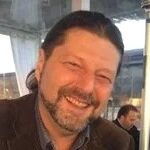
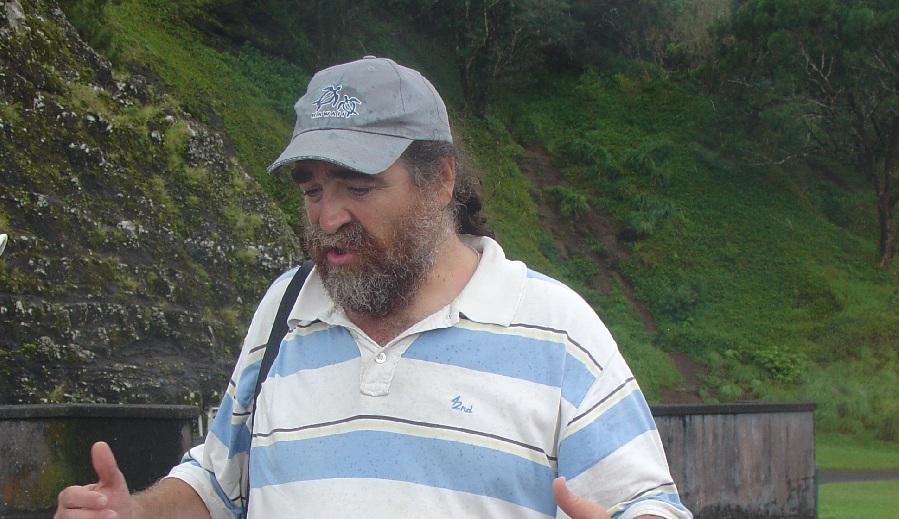
Xabier Bañuelos / Photo courtesy of the author
FACE TO FACE WITH
Xabier Bañuelos Ganuza, journalist


I first met this outstanding National Geographic journalist in Hawaii back in 2015, when we happened to cross paths on a geological field trip around the archipelago. It quickly became clear to me that travel was his specialist field. And although his professional work spans print, radio and television—he coordinates, for instance, the travel segment of Más que palabras on Radio Euskadi—it still never ceases to amaze me that he manages to find so much time to advise, on a voluntary basis, organisations and public administrations involved in community development, participation and human rights. As if that were not enough, he is also a travel designer and guide—though very much of the unconventional kind.
I see you also collaborate with the programme Aventureros on Radio Vitoria. Have you got any new projects coming up?
At the moment, I’m working with the Basque Government on the design of a system to recognise professional competences acquired through voluntary action. I’m also developing field-based course–expeditions for teaching Earth sciences in countries such as Australia and Canada, among others. Right now, I’m preparing a course on travel and a workshop on communication and critical understanding for the Aulas de la Experiencia at the University of the Basque Country.
“Building up and consolidating a broad body of theoretical and practical knowledge helped me structure what I knew, broaden my horizons and set realistic goals”
What positive links would you draw between your professional projects and the education you received?
Building up and consolidating a broad body of theoretical and practical knowledge helped me structure what I knew, broaden my horizons and set realistic goals. Going on to university later gave me more specialised knowledge and provided me with the tools I needed to develop professionally. That said, I should point out that being able to combine my studies with professional work during my university years was a crucial complement. It allowed me to put what I was learning into practice and to face real challenges, which helped me progress in a solid way. Later on, the experience I had accumulated from an early stage enabled me to move into advisory work, programme and project management, and training.
So, overall, are you happy with the education you received?
Although during my training years I did notice shortcomings in the education system—some of them serious—on the whole I’m satisfied. That’s largely because I was aware that no system is without flaws. I was able to identify the ones that affected me most and, in doing so, make the most of both its strengths and its weaknesses.
“The current system, which differs in many ways from the one I had to deal with, has improved in some areas, but it is still far from perfect”
Looking at today’s education system, and if you had gone through it, do you think your professional career would have turned out better or worse?
The current system, which differs in many ways from the one I had to deal with, has improved in some areas, but it is still far from perfect. I imagine that, had I studied within it, the outcome would have been much the same.
Why do you say that?
Because, without considering myself self-taught by any means, and while acknowledging what I gained from my years in the education system, a large part of my learning has come from hands-on practice and from holding positions of responsibility in my professional work. And that affects not only technical and instrumental skills and intellectual background, but also motivation.
So, how do you think the current education system could be improved?
To highlight a few points, I think student–teacher ratios should be reduced. There should be a proper balance between scientific and technical knowledge and the humanities, and teaching should be more closely connected to social reality, with a strong focus on the values of human rights, participation and solidarity. There also needs to be a healthy balance between theoretical content and professional practice. All of this, of course, requires genuine political will and adequate investment, so that public education has sufficient resources to make these changes a reality.
Source: educational EVIDENCE
Rights: Creative Commons