


- Techno-ethics
- 23 de January de 2026
- No Comment
- 11 minutes read
Teaching in times of anxiety

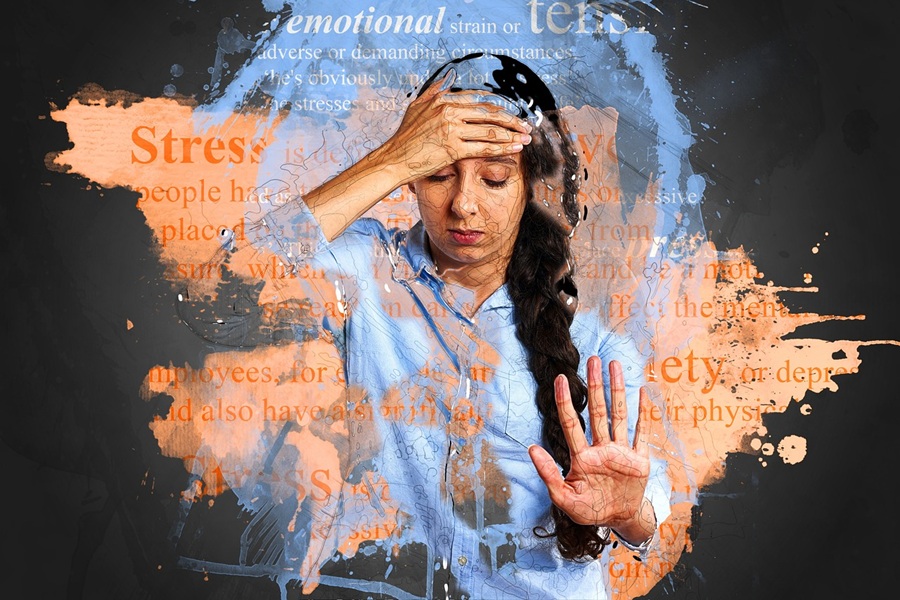
Photo: Pete Linforth – Pixabay



Felipe J. de Vicente Algueró
The international press has widely reported a piece of news that was presented as a major novelty: the Australian government announced that, from 10 December, a series of measures limiting children’s access to social media would come into force. These measures were the result of lengthy debate and careful study. The government established a body known as the eSafety Commissioner, which was tasked both with informing public opinion and with proposing measures to legislators. The overall framework of this digital policy is set out in the document Online Safety Amendment (Social Media Minimum Age).
Not all media coverage of the issue has accurately reflected the substance of this policy, often simplifying the story and suggesting that children would be entirely barred from the internet. In reality, access to the internet is not restricted as such and remains open, for example, for educational purposes. Minors will still be able to search for and watch videos, read posts and access information. What the law does is to set a minimum age of 16 for adolescents to be able to sign a contract or open an account on social media platforms. Responsibility is placed on large companies—such as Instagram, YouTube, TikTok and Facebook—which must ensure the age of those wishing to open an account. The Australian government has indicated various methods for age verification, and failure to comply may result in substantial penalties. These restrictions aim to minimise incentives to spend excessive time in front of screens or to access content that may harm children’s health and wellbeing.
On 5 November, the European Parliament approved a non-legislative report by 483 votes in favour, 92 against and 86 abstentions, expressing concern about the risks to minors’ physical and mental health online and calling for greater protection against manipulative strategies that may increase addiction and undermine children’s ability to concentrate. The resolution, in line with the Australian approach, sets 16 as the age at which adolescents may open social media accounts. In its resolution, the European Parliament makes the following recommendations:
- banning the most harmful addictive practices;
- banning sites not complying with EU rules;
- action to tackle persuasive technologies, such as targeted ads, influencer marketing;
- banning engagement-based recommendation systems for minors;
- protecting minors from commercial exploitation;
- urgent action to address the ethical and legal challenges posed by generative AI tools including deepfakes, companionship chatbots, AI agents and AI-powered nudity apps (that create non-consensual manipulated images).
Both the Australian government and the European Parliament have taken these steps on the basis of highly alarming reports on children’s access to the internet. In the Australian case, the eSafety Commissioner published a particularly revealing report, which includes the following data:
- 96% of children aged 10 to 15 had used social media, and the vast majority had used a communication platform to chat, send messages, make calls or video calls (94%);
- 86% had played online video games;
- 71% had encountered content associated with harm;
- 57% had seen hate content online;
- 52% had experienced cyberbullying;
- 25% had personally experienced online hate;
- 24% had experienced online sexual harassment;
- 23% had been subjected to stalking, surveillance or harassment without consent;
- 14% had experienced harassing behaviour online;
- 8% had suffered image-based abuse.
The European Parliament’s report highlights that 97% of young people go online every day and that 78% of those aged between 13 and 17 check their devices at least once an hour. At the same time, one in four minors shows problematic or dysfunctional smartphone use—that is, behavioural patterns indicative of addiction. In Spain, according to the Instituto Nacional de Estadística, 85% of children aged between 12 and 14 own a smartphone. Six out of ten minors sleep with their phone, and 49% of adolescents spend more than five hours a day online. In March, the Consejo de Ministros submitted to parliament a draft organic law aimed at protecting minors in digital environments, but nothing further has been heard of its legislative progress.
Political positions on children’s access to the internet are the result of studies and analyses carried out by specialists who have warned of the damage that early and indiscriminate access to certain platforms—purely commercial in nature and therefore designed to generate addiction among minors—can cause. A pioneering analysis was that of the neurologist Manfred Spitzer, in Digital Dementia (Barcelona, 2013). According to the German scientist, computers do not improve pupils’ performance; rather, they reduce our capacity for concentration, lowering our overall levels of analysis and reasoning. Another pioneer was the French neuroscientist Michel Desmurget, who published The Factory of Digital Idiots: What Screens are doing to Our Children (Barcelona, 2020), a bestseller in France. In the foreword, Desmurget notes that in Western countries adolescents aged between 12 and 18 spend more than six hours a day using digital devices. Francisco Villar, a clinical psychologist and expert on child suicide, also highlighted the negative effects of constant online connectivity among minors in statements to El País, calling for access to be restricted until the age of 16.
More recently, however, the thinker who has had the greatest influence on governments is Jonathan Haidt, author of The Anxious Generation, published in 2024. Haidt is a psychologist and Professor of Ethical Leadership at New York University, and his engagement with this topic dates back further, notably with The Coddling of the American Mind (2018). At the 2024 World Economic Forum in Davos, Haidt was a keynote speaker and addressed a large audience on the problems associated with premature access to the internet. One striking sentence summarised his argument: “We have overprotected children in the real world and underprotected them online”.
For Haidt, today’s young people are unhappier, both in comparison with previous generations and with older cohorts; they are an anxious generation. After more than a decade of stability or improvement, adolescent mental health collapsed in the early 2010s in the United States. Emergency-room visits for self-harm also rose sharply. In his book—whose reading I would particularly recommend to teachers, and even more so to those who are parents of teenagers—there is abundant data illustrating this “anxiety”. Haidt’s description of the changes experienced by American adolescents and young adults can be extrapolated to other countries where internet use among minors has become epidemic. It also provides a key to understanding many of the phenomena we observe in our classrooms.
Haidt proposes four solutions for children and their relationship with technology, and the measures adopted by Australia and the recommendations of the European Parliament are no coincidence:
- do not give children a smartphone until at least the age of 14;
- do not allow access to social media until at least the age of 16;
- schools should be phone-free environments;
- give children far greater independence in the real world.
We will see how far these policies go, but in many countries groups of parents have already begun to organise, because if you are the only one who keeps your child phone-free, applying these recommendations becomes extremely difficult. In Barcelona, the movement Adolescencia libre de móviles (phone-free adolescence) emerged and has since spread across several regions, attracting thousands of supporters. In The Anxious Generation, Jonathan Haidt explores the nature of childhood, including why children need play and independent exploration in order to mature and become competent adults. As Haidt argues, we have replaced a play-based childhood with a phone-based childhood. It seems fitting to end this article with a paragraph from his Davos speech, which encapsulates the ultimate goal of these four measures:
“Ultimately, our mission is to restore childhood—the kind of wonderful, fun, exciting childhood that we all had, filled with conflict, failure, exploration, adventure, risk-taking, intense emotions, and all those experiences you had not with your parents, but when you were out there, away from the safety of home”.
With the author’s permission, I would add: we have moved from a childhood and adolescence filled with books, knowledge, effort and the cultivation of concentration to one saturated with screens, digital competences and total distraction. Teaching in times of anxiety is as difficult as loving in times of cholera. I very much doubt that users on TikTok know who Gabriel García Márquez was.
Source: educational EVIDENCE
Rights: Creative Commons