


- Humanities
- 18 de December de 2025
- No Comment
- 8 minutes read
The historical Jesus

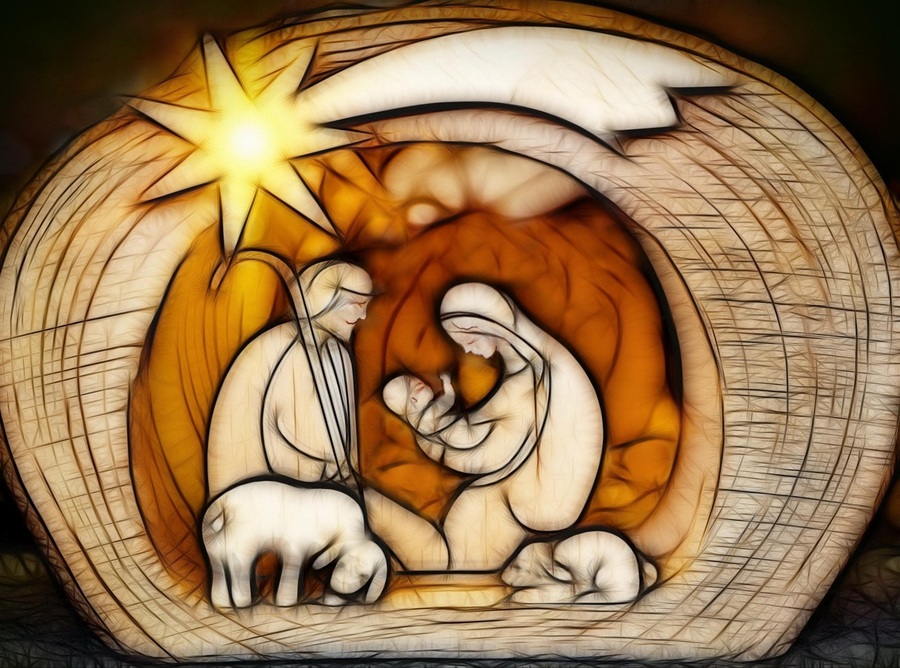


Today we know that the historical Jesus bore little resemblance to the Christ fashioned by the Christmas tradition. The two figures were, in fact, poles apart and far from being one and the same. On this point—though it is never mentioned in sermons—there is broad consensus among biblical scholars. After decades of research, there is ample evidence to conclude that the Gospel image of the Christ of peace was largely a creation of the earliest Christian communities. The circumstances in which the Gospels were written, the pressures of an increasingly menacing Roman Empire, and the growing power of the Church all contributed to the transformation of the earlier, historical Jesus into the Christ of faith that has prevailed ever since. A Latin proverb may offer some shelter here: cave ab homine unius libri—beware the man of a single book. And perhaps at Christmas we should remind ourselves that the image of the infant Jesus was itself fashioned from a single book: the Bible and its New Testament. Even a cursory reading of the Gospels reveals more paradoxes than one can easily reconcile. To resolve their contradictions, we must operate at another level: we must understand how the Gospels were composed and, in doing so, turn the entire narrative on its head.

Once we add what we now know about the social context of the time, together with other documents that have since come to light, the falseness of the traditional image of the Nazarene becomes apparent. Take, for instance, Jesus’s birthday—our Christmas. Tradition asserts that he was born on 25 December in the year AD 1. Yet this dating arose more from social convenience than historical rigour. Under the Roman Empire, years were counted from the foundation of Rome, ab urbe condita (A.U.C.). By the sixth century, the empire had entered a long twilight and Rome was no longer the administrative centre. A new calendar was needed, this time grounded in Christian chronology, and the two great Churches—Eastern and Western—competed for authority: one working to a solar calendar, the other to a lunar one for certain feasts. Easter, for instance, was not celebrated on the same day by both congregations. Under Pope Julius I, efforts began to unify these criteria. The pontiff ordered a monk in his service to determine the year of Christ’s birth, for the new calendar had to be anchored to that event. Yet no one actually knew when—nor even where—Jesus had been born. This monk, Dionysius Exiguus, set out to establish the date and erred repeatedly.
His first mistake was to work with the Roman calendar, whose first month was March. By drawing on various approximations, Dionysius concluded that Jesus had been born in 754 A.U.C.—a paradox, for the Gospels insist that Jesus and Herod were contemporaries, yet Herod the Great died in 750 A.U.C., that is, 4 BC—four years before Jesus’s proposed birth. Either the evangelists were wrong in placing Jesus and Herod in the same period, or the monk failed to notice the contradiction.
His second mistake lay in assigning 1 January of the year 1 to Jesus’s presentation to society—his circumcision, the rite by which the father acknowledged the child as his own and incorporated him into the Jewish community, into the covenant with Yahweh. This berit, this covenant, traditionally took place on the eighth day after birth. Subtracting eight days from 1 January 754 yields 25 December 753—the supposed date of Jesus’s birth. By coincidence, this was also the birthday of a pagan sun god, Mithras, still venerated by some early Christians, and which the Church was keen to absorb into Christian practice. The objective was clear: to dilute pagan festivities by folding them into the evangelical ones, contradictions notwithstanding. After all—irrespective of whether the intention was to subsume Mithras’s birth into Christ’s— 25 December was at odds with the Gospel accounts. The notion that shepherds slept in the open in late December hardly supports a winter nativity.

Dionysius’s third mistake was arithmetical, a consequence of his age. He declared that the moment Jesus was born, the year AD 1 had already elapsed; there was no year zero. Thus, between 753 and 754 A.U.C. two years were effectively counted, not one. One jumped directly from 1 BC (753 A.U.C.) to AD 1 (754 A.U.C.), bypassing zero altogether. A newborn normally begins life at age 0 and celebrates the first anniversary a year later. Jesus, by contrast, appears to have begun life with one year already gone, though he would celebrate his first birthday in AD 2. The monk can hardly be blamed: at the time, people used Roman numerals, not the Arabic numeral system with its zero, and Dionysius almost certainly lacked the conceptual tools to imagine one. This context ensured that every subsequent turn of the century or millennium was celebrated a year late: the second century began in 101, not 100; the second millennium in 2001, not 2000.
Despite these missteps, Dionysius’s calendar spread. After the sixth century, with the Roman Empire dismantled, the Christian custom of dating historical events by Jesus’s birth gradually replaced the old Roman scheme, ab urbe condita. By the eighth century, his calendar—still without a zero—was widely used. Indeed, the zero itself did not enter European mathematical culture until the early thirteenth century, when Leonardo of Pisa—Fibonacci—helped spread the Indo-Arabic decimal system throughout Europe, including the place-value digit zero, through his Liber Abaci, published in 1202. For this and other reasons, the millennium that technically fell in 1001 caused little stir—unlike that of 2001, accompanied by apocalyptic fears that, needless to say, came to nothing. Perhaps the only lesson is that we should pay no heed to millenarian prophecies when the year 3001 comes around.
Given Dionysius’s constraints—and the paradoxes between his calendar and the Gospels—one modest conclusion remains: we do not know when Jesus was born, nor when a new millennium ought to be celebrated. It is worth recalling that in antiquity only prominent families recorded birthdays, and Jesus came from a humble household. Among the lower classes anniversaries were not customary, and as the Gospels tell us nothing of Jesus’s early years, we are left completely in the dark —and without so much as his birthday candles. Christmas, understood as the nativity of Jesus, is a vast fiction, a monumental fabrication.
Bibliography:
Rabadà, D. 2025. El Jesús Histórico. Editorial Hilos de Azul.
Source: educational EVIDENCE
Rights: Creative Commons