


- Face to face
- 18 de March de 2026
- No Comment
- 13 minutes read
Jordi Garcia Fernández: “We have found a molecule that reduces autism in mice”

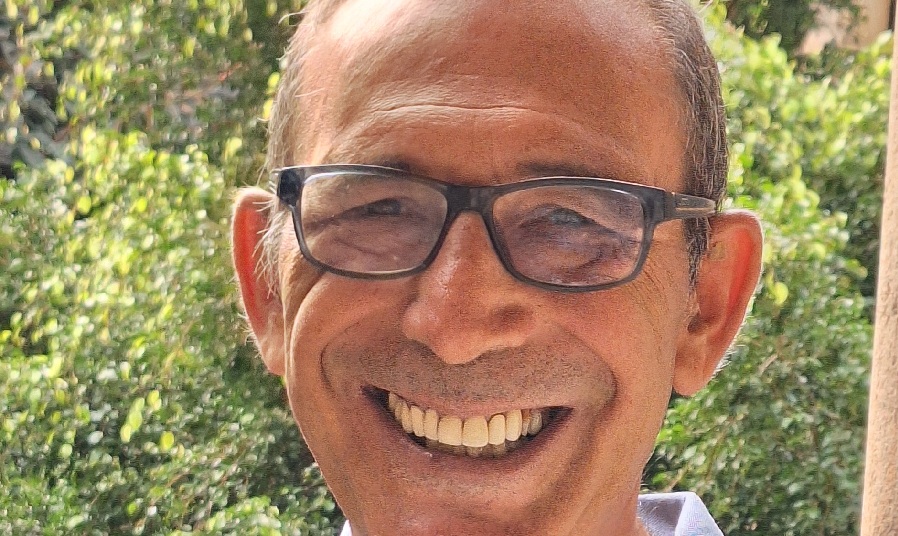
Jordi Garcia Fernández/ Photo courtesy of the author
FACE TO FACE WITH
Jordi Garcia Fernàndez, vici-rector for research at the University of Barcelona


I was introduced to the Vice-Rector for Research at the University of Barcelona during an informal gathering, and two days later we ran into each other again at an event organised by the Fundació Catalana per a la Recerca i la Innovació (Catalan Foundation for Research and Innovation). Such a coincidence made it clear that this interview could not wait.
Jordi Garcia Fernández was born on 22 November 1963 in Barcelona. He studied Biological Sciences at the University of Barcelona, graduating in 1987 before completing his PhD in 1992 under the supervision of Emili Saló i Boix. After completing his PhD, he moved to the laboratory of Peter Holland at the University of Oxford. One of his most significant contributions was the identification of a complex of genes known as ParaHox. Shortly afterwards, together with Peter Holland, he published their findings in the prestigious journal Nature in 1998. These newly identified genes revolutionised and expanded the Modern Synthesis of evolutionary theory, as they play a key role in the morphological and physiological complexity that emerges during embryonic development. The discovery also opened up important avenues for therapeutic research in conditions such as diabetes, autism and other diseases.
Dr Garcia later returned to the University of Barcelona, where in 2006 he became one of the youngest full professors—perhaps the youngest—to head the Department of Genetics, Microbiology and Statistics. In 2007 he was also appointed Honorary Research Fellow at Merton College, Oxford. Since January 2021 he has served as Vice-Rector for Research at the University of Barcelona, while leading the Evo-Devo (Evolution and Development) research group, which studies how evolutionary novelties arise through genomic regulation and architecture. His work has been widely covered in both national and international media.
The importance of having strong mentors and a solid academic environment during the early stages of training, combined with personal effort, often determines the quality of a doctoral thesis. Your doctoral thesis entitled Isolation, Characterisation and Analysis of the Temporal and Spatial Expression of Homeobox Genes in Planarians, marked the emergence of a promising young biologist. How did completing your PhD under the supervision of Emili Saló i Boix influence your career?
It was something of a mutual infatuation for two reasons that brought us together. First, we both played basketball. Second, he was a young scientist who had just returned from abroad after learning new techniques in molecular biology and DNA research and wanted to try different approaches. Strictly speaking, he was not my doctoral supervisor, because we worked side by side in the laboratory. In fact, we spent three years without obtaining any results. But in the final year we achieved some remarkable findings concerning genes, which led to my first publication in the prestigious journal Nature. Publishing in Nature does not necessarily mean that the work is technically superior—it simply needs to be genuinely new.
More Nature papers followed during your postdoctoral stay in Oxford, working with new research groups, new techniques and a renewed scientific perspective. What did you learn during that period in Oxford that proved decisive for your professional development?
That the most exciting aspect of science lies in trying to demonstrate something that has never been demonstrated before. There is always a risk involved, but when you succeed the feeling is extraordinary. In Oxford, that meant identifying one of the genetic foundations underlying the origin of vertebrates through the study of Hox genes. Once again, as with my doctoral supervisor, my mentor in Oxford—Peter Holland—was very young, only three months older than me. That made him an enthusiastic researcher eager to make new discoveries.
“The most exciting aspect of science lies in trying to demonstrate something that has never been demonstrated before. There is always a risk involved, but when you succeed the feeling is extraordinary”
Together with Peter Holland you made a discovery that is still highly relevant for the research group you now lead in Evo-Devo. The discovery of a gene cluster marked a turning point in your career and greatly increased your international visibility. What exactly are we talking about?
We are referring to Hox and ParaHox genes, which are extremely important genes involved in the development of the body and which form the conceptual foundation of Evo-Devo.
What exactly is Evo-Devo?
It is a discipline that seeks to explain how molecular changes in the genes that regulate embryonic development have been crucial for the evolution and increasing complexity of organisms. Evo-Devo helps explain, for instance, why the human brain is more complex than that of pre-vertebrate organisms.
Given the importance of Evo-Devo within contemporary evolutionary theory, do you know whether this discovery is explained in secondary education?
For most secondary school teachers it remains largely unknown, even though the field emerged around twenty-five years ago.
“Evo-Devo helps explain why our brain is more complex than that of pre-vertebrate organisms”
Perhaps teachers need more opportunities to deepen their subject knowledge and fewer superficial training courses. If we want schools to cultivate high-level scientific researchers, impactful research and a genuine scientific culture, we must set new professional priorities. In your own case that seemed quite clear. For instance, in 2000 you declined to lead the European amphioxus genome project. Why did you decide not to take part?
I had just returned from Oxford to Barcelona, and the conditions for doing science at universities here were extremely difficult, with serious limitations in terms of space and equipment. On top of that there was an enormous teaching load. Under those circumstances, I did not feel it was realistic to lead a project as large as the early genome-sequencing projects of that time. It is worth remembering that the human genome was published in 2001. However, in 2017 the amphioxus genome appeared on the cover of Nature, and two of my students were among the authors of that article, along with myself.
So, directly or indirectly, you were still involved in the amphioxus genome project. In your view, what is the main limiting factor in research in our country? Funding? Political commitment? Institutional constraints?
First, the lack of funding. Second, the bureaucratic burden, which means that scientific leaders spend more time managing than researching. And I would add a third factor: the disconnect between public research and private industry. What we lack is a productive sector in Spain that genuinely believes science matters—that investing in science is essential in the long term.
“What we lack is a productive sector in Spain that genuinely believes science matters—that investing in science is essential in the long term”
In the United States, collaboration between public and private institutions in research is routine. I recall that Joan Oró, while working for NASA, once remarked that the Spanish public sector tends to distrust private involvement in research. Many researchers also argue that training new scientists requires considerable time and funding, whether public or private. Unfortunately, those who excel in research in our country often end up doing more management than mentoring new talent. How can management responsibilities and research be balanced without sacrificing academic quality and the transmission of knowledge? In other words, how can advanced research be combined with university teaching and the training of doctoral and master’s students?
As best as one can. My position as Vice-Rector for Research involves many hours of management, so my research time has been greatly reduced. I now have a younger colleague who oversees the day-to-day work of the group. As a result, I have had to reduce both research and teaching, although I still greatly enjoy teaching. When I am in the classroom, I switch off my phone, put administrative matters out of my mind and focus entirely on what I enjoy as a lecturer—hoping that many of my students enjoy it as well.
How important are a strong academic foundation and personal effort in the world of research?
Effort is obviously essential. But the idea of a strong academic foundation makes me wonder what exactly we mean by it. Much of research depends on knowing how to locate the information you need. Education therefore cannot rely solely on memorisation; it must also teach people to think, to be critical and to develop competences.
Are you referring to Jacques Delors’ original concept of competences as a set of knowledge enabling the development of skills, values and techniques?
Yes, exactly—not the interpretation found in current education laws.
And what kind of student were you?
I struggled in subjects that relied heavily on rote learning, but I did very well in those that required connecting ideas, thinking and critically engaging with knowledge. Throughout all this, a culture of effort was essential.
“Evo-Devo will make it possible to design new therapies for diabetes, amyotrophic lateral sclerosis (ALS) or autism”
What difficulties did Evo-Devo encounter in establishing itself within the Spanish university system?
We did not quite fit anywhere: neither among those studying embryonic development, nor among those focused on DNA, nor even among evolutionary biologists. That created a certain degree of isolation. Evo-Devo represented a revolution at the end of the twentieth century because it demonstrated that small changes in key developmental genes were responsible for major evolutionary innovations such as the human brain or the limbs of vertebrates. The discipline therefore studies which genes have changed and how those changes have generated major evolutionary innovations. In a sense—and some people say this—we represent a kind of new “New Synthesis” within the Modern Synthesis of evolutionary theory.
Are there practical applications arising from Evo-Devo?
Yes. The implication is that when one of these key genes fails, diseases often emerge. Evo-Devo will make it possible to design new therapies for diabetes, amyotrophic lateral sclerosis (ALS) or autism. In the case of autism, we have identified a molecule that reduces autism-like behaviours in mice.
What three personal qualities are essential during academic training and early research in order to build a scientific career like yours?
First, passion. Second, passion. And third, even more passion. In other words, passion cubed. That is what fuels curiosity and sustained interest. Even so, many discoveries ultimately come down to a word that I actually have tattooed beside me. Can you see it?
Serendipity!
Exactly. A fortunate accident—a discovery made unexpectedly. But it is not mere chance, because if you are not searching for it, you will never find it. The discovery of penicillin was serendipitous; ParaHox and Evo-Devo were not.
“The discovery of penicillin was a case of serendipity, but ParaHox and Evo-Devo were not”
How should the education system encourage the emergence of new researchers?
First, stimulate students’ curiosity rather than overwhelming them with data. Challenge them to ask good questions. Second, make it clear that not everything has already been discovered. Students often assume that textbooks contain all existing knowledge, so teachers should highlight what remains unknown in order to awaken their curiosity. Finally, teachers must convey their own passion for the subjects they teach.
And for those who aspire to reach international levels such as yours, what advice would you give?
Achieving international recognition depends on many factors. Passion, curiosity, ability and hard work are not always enough—you also need a certain amount of luck. Imagine that my doctoral thesis had produced no results after three years; I might not be where I am today. But luck alone is not enough. It was also necessary to persist and not give up at the first obstacle. More than perseverance, it meant exploring alternative paths that had not previously been considered.
So we might say it was a combination of luck, ingenuity, experience and knowledge. On that note, one final question comes to mind. How did your parents influence your professional path? What effort did they make to support you? And finally, did the public education and university system serve as a means of social mobility for you?
I am deeply proud of my origins. My mother came alone to Barcelona at the age of seventeen from Nerja, in Málaga, to work as a domestic servant in the homes of Catalan bourgeois families. My father, who was born in Barcelona, experienced hunger during the post-war years. At the age of twelve he had to leave school to work. He used to look at a school in the Sants neighbourhood where he saw children playing basketball in the playground. His life’s dream was that his children would attend that school—Montserrat. And that is what happened: he managed to enrol both my brother and me there. After that I continued in a state secondary school, then a public university, and later received state scholarships for my doctoral studies.
The most beautiful thing I have ever written was half a page that I wrote the day after my father died and read at his funeral. When I finished reading it, everyone present was in tears. It is the piece of writing that has come most deeply from within me.
Source: educational EVIDENCE
Rights: Creative Commons