


- Opinion
- 11 de March de 2026
- No Comment
- 6 minutes read
Emopopulism

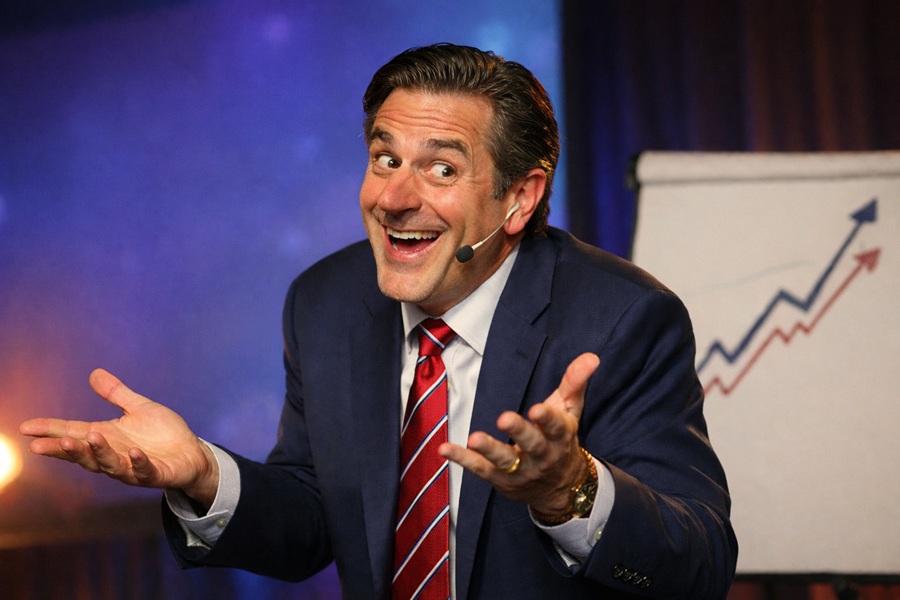
Image created by AI.



For reasons that need not concern us here, I have had to attend two literary festivals as a member of the audience. I am not a regular on that kind of terrace: I more often frequent concerts of savage music, as well as specialised conferences in history and philology—such as a magnificent one on Republican and exile journalists organised by the FEMMEM group at the Autonomous University of Barcelona. I must admit that I was taken aback by what I saw and heard, amid long and intense rounds of applause.
At the first literary evening, a well-known Barcelona-based writer of historical novels asserted, categorically, that nineteenth-century historians had not gone down to investigate what had actually happened, but rather what people believed had happened in that turbulent century of riots, civil wars, bombardments, and absurd situations. And he said this without batting an eyelid. Yet such a claim entails ignoring, at the very least, what has taken place in historiography over the past forty years, since Cultural History—which studies precisely this: what “people” thought, their ideologies, beliefs, hopes, and subcultures of those at the bottom—became hegemonic within the historical profession. The author went on to argue that fiction reaches much further than any history book, which he portrayed as contemptibly rigid, vertical, and elitist. For my part, I know of no competent historian who confines themselves to writing about petty skirmishes, kings, and princesses: that stage was thankfully overcome decades ago.
Two days later, I found myself at another panel on narrative fiction, this time led by a writer given to extravagant gestures and not lacking in charisma. The audience applauded wildly. Instead of literature, what was being discussed were distorted memories and pain in the face of bombings that took place ninety years ago. And once again, the same accusation surfaced: historians as a kind of malign flock, incapable of understanding “the people”, unable to express the suffering of the defeated and the humiliated. Yet I fear that the most rigorous and professional historiography of the last thirty years has done little else than scrutinise precisely these issues—albeit with more refined analytical tools.
I leave with the impression that at these festivals one speaks of anything except books and literature. It seems that a sort of pietism of memory has taken hold: a cult of the memory of the pain of the dead, a kind of constructivist religion of the self that barely conceals a certain underlying poverty of invention. These discourses strike me as paternalistic, schematic, simplistic, and manipulative. Where there is mediocre literature (and yet we have excellent prose writers and poets; there is no reason to elevate only these gymnasts of emopopulism), what we find instead is a discourse built around convenient themes, an excess of opportunism, libidinal capitalism, and a suspicious, semi-industrialised use of historical memory.
Suddenly, it dawns on me: these are not writers. They are televangelists. And the symposia resemble fashion shows. Everything is rushed, everything superficial, everything made easy. In the audience: social catharses, emotional venting, liturgies of consumerism disguised as humanitarian evenings. This particular variety of emopopulism—or a new Enlightened Despotism, though one of the Dark Enlightenment, that is, plain and simple Dis-enlightenment—is everywhere: in news bulletins, in political speeches, and literature seems unable to escape consolatory thesis novels or moralising self-help in disguise.
You will notice that I have mentioned no names, because I would rather highlight the forest than the individual trees—and, in any case, it is not entirely a bad thing that bad books should be bought en masse. Many publishers have confessed to me that thanks to the rubbish they are able to finance the careers of serious authors. Still, I did not expect such a brazen exploitation of the ultra-rhetorical machine, that outdated romanticism so thickly studded with clichés. Perhaps I am expecting something that simply cannot be given. What I do know is that it irritates me to be offered one thing under the guise of another. I have the feeling that we have returned to the age of Saint Vincent Ferrer’s preaching, master of populist tricks and theatrical effects—and the whole affair is beginning to unsettle me.
It seems that nuance and rigorous research, along with social and literary exploration, have become clandestine activities, supposedly practised by the envious, the resentful, the obsolete, and the gullible. An irritating little crowd left outside the market, and therefore squawking from shadowy pulpits. Each week a new “greatest figure of the century” appears, or someone once again proclaims that Pilar Rahola is the new Mercè Rodoreda. That sort of thing. As if without hydrogen-fuelled pharaonism and banal grandiloquence it were impossible to reach—or to construct—an intelligent readership. In reality, there is a market for liberal prose, for appeals to mental maturity, irony, critique, and unexpected, oblique narrative forms, if only we are capable of transcending a noise as suffocating as the one that surrounds us daily. Only then can we go on to discover who the real dupe is: the disconsolate, the needy, or the disoriented.
Source: educational EVIDENCE
Rights: Creative Commons