


- HistoryHumanities
- 24 de March de 2026
- No Comment
- 7 minutes read
Rural women teachers during the Second Spanish Republic: a sketch



Soledad Bengoechea
From 14 April 1931, a series of reforms were undertaken in Spain, with education standing out as one of the most significant areas of change. The Republic devoted a considerable share of its political energy to transforming the education system. During the first republican biennium (1931–1933), the government planned to build 27,000 schools, although for various reasons the project was eventually reduced to 16,000. Many innovations that had previously existed only as isolated experiments were widely implemented, and numerous pedagogical proposals were put forward that would have been extremely difficult to implement under other circumstances.
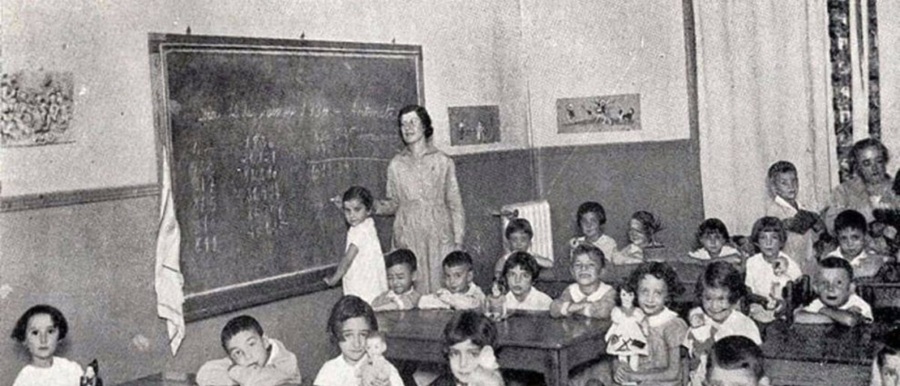
According to the press dossier available on the website of the documentary Las maestras de la República [The Teachers of the Republic], republican women teachers symbolised the broader project of social and cultural transformation promoted by the Second Spanish Republic. Public education—accessible, of good quality and grounded in the principle of equality—was one of the fundamental aims of the new regime, and teachers were regarded as the very heart of the school and as role models for their pupils.
Republican women teachers embodied the ideal of the modern and independent woman. They championed a range of causes and, in many cases, linked their educational work with broader aspirations for social transformation and with political or trade-union engagement.
Josefa Rodríguez Álvarez, better known as Josefina Aldecoa, a Spanish writer and educator, once wrote: “Republican women teachers, trained in mixed classrooms for the first time, spoke of equality in remote and impoverished villages. They opened a window to freedom and replaced the black attire traditionally worn by rural women with the colours of freedom and hope”.
Remote and impoverished villages… Why not speak, then, of rural women teachers? It should be noted that the professional environment of rural women teachers was far from easy. They worked in rural areas that posed serious difficulties for the exercise of their profession: a lack of school infrastructure, the almost complete absence of hygienic and health measures, and frequent resistance from parents to changes introduced in school life. These problems constituted some of the principal obstacles to the pedagogical innovations and methodological reforms that these teachers sought to introduce in their classrooms.
In those republican years, illiteracy rates were extremely high—particularly among women—and in rural areas the shortage of schools was dramatic. It was precisely to these neglected regions, which formed the majority of an overwhelmingly agrarian society, that many teachers—most of them recently trained—were sent: they became rural women teachers. In general, they were young women who, after completing their studies at teacher-training colleges, obtained their teaching qualifications and then sat the civil service examinations or underwent further training in order to secure a post. In this way, they achieved a degree of economic independence which, although it did not bring many luxuries, allowed them to leave the family household and begin a new life. This new life also involved an ambitious and passionate educational project, inspired by the ideas of the New Education movement and by the principles of active pedagogy. During those years the figure of the rural woman teacher became firmly established as a driving force for social change, an agent of transformation and a defender of the most disadvantaged social groups.
No longer defined by the traditional moral authority of religion, rural women teachers became citizens and professionals uniquely capable of socialising the children in their schools. As far as circumstances allowed, they also sought—through the education of children—to shape the families of rural communities into democratic social beings committed to learning.
Within a broader project of social reform, the Republic regarded education as a central instrument of social transformation and therefore assigned it a fundamental role. The most influential doctrine behind the republican educational project was that of the Institución Libre de Enseñanza moement, a pedagogical initiative that operated in Spain for more than half a century (1876–1939) and had its headquarters in Madrid.
For the first time in Spanish history, it was established that a lack of financial resources should not constitute an obstacle to study. The Republic assumed the responsibility of guaranteeing access to all levels of education for those Spaniards without economic means. In the context of Spain at the time, this represented a highly significant development.
Cándida Bueno: A Catholic rural teacher, raped and executed in 1936
Cándida Bueno was one of many teachers murdered during the Spanish Civil War. No fewer than twenty-nine teachers were killed by men from the Nationalist forces in the province of Zaragoza alone. Cándida herself was a practising Catholic.
As historian Natalia Salvo explains, Cándida Bueno was born in the Aragonese village of Castiliscar in 1912. In that same locality she worked as a teacher, and nearby—in Farasdués—she was executed by firing squad in 1936.
A firm defender of the educational ideals of the Second Republic, Bueno began teaching at a very young age in the school of her own village, where she promoted educational initiatives that were highly innovative for the time. Although she belonged to a middle-class landowning family, she supported the Republican government’s Agrarian Reform Act.
With the outbreak of the Civil War, however, many republican women—especially those who had been active in politics or in teaching—became targets for the Nationalist forces, which frequently employed gender-based violence against them: head shaving, forced ingestion of castor oil and sexual assault. Cándida Bueno was one of the women subjected to such violence.
On 4 September 1936, less than two months after the war had begun, she was arrested together with her brother Manuel. The accusation was that she had removed crucifixes from the village school. Yet another possible motive has also been suggested: her rejection of the advances of a military officer who had been courting her.
Later oral testimonies recounted that, during her imprisonment, Cándida was subjected to repeated sexual abuse by her jailers and that, at the site of her execution, she was raped by three of her executioners. On 16 September 1936, she was executed by firing squad together with her brother.
Many years passed before any form of recognition was granted. Finally, on 21 March 2022, the town council of Castiliscar approved the renaming of the village school “Cándida Antonia Bueno Iso (1912–1936), teacher of Castiliscar executed in Farasdués”.
Source: educational EVIDENCE
Rights: Creative Commons